Project #001 · U.S. Navy · World War II
Francis Wilmer Davison
Chief Motor Machinist's Mate, United States Navy
September 12, 1906 – November 16, 1987
A foot locker, a name, and a life remembered.
A Foot Locker, A Name, and a Life Remembered
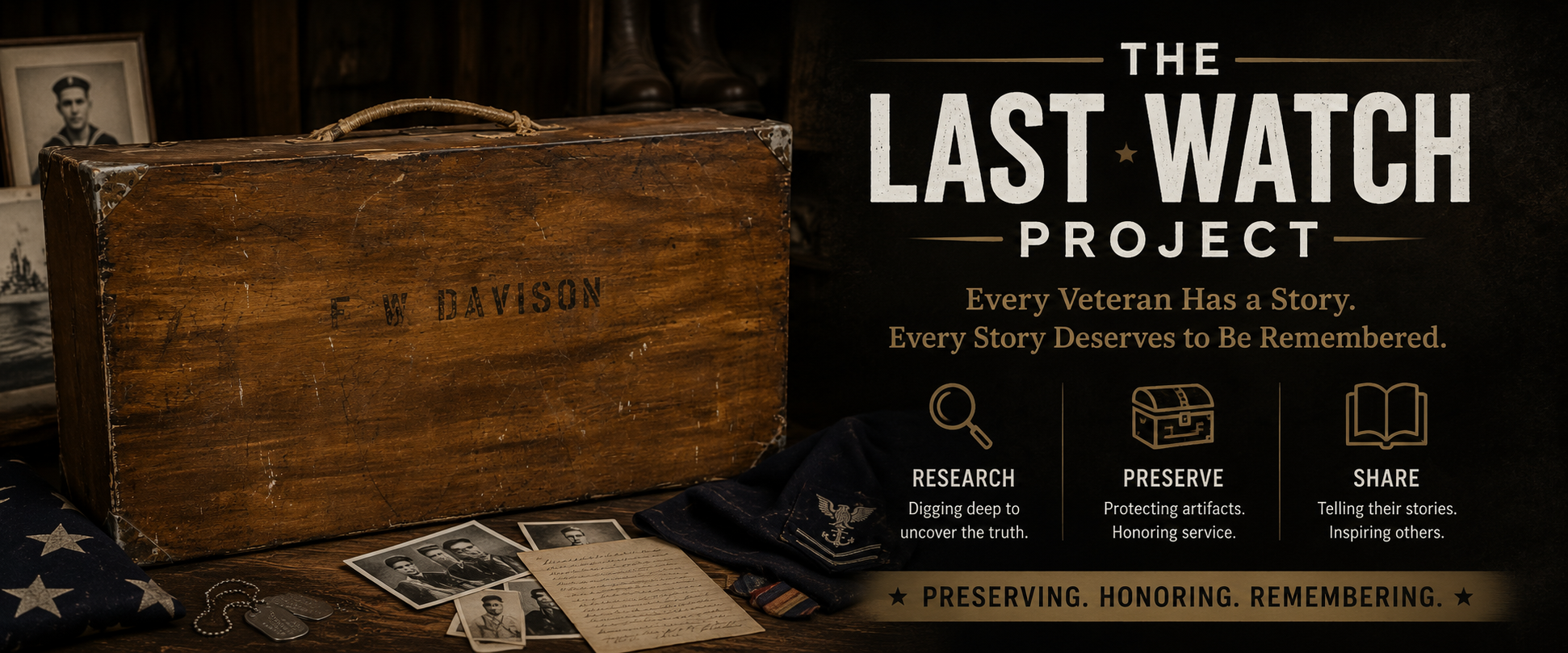
The story of Francis Wilmer Davison began not with a military record or family photograph, but with a World War II Navy foot locker bearing his name. For decades, the locker survived as a tangible reminder of the sailor who once carried it. While family members preserved memories, photographs, and personal connections to Francis, many details of his life and service remained scattered across records, archives, and surviving artifacts. Through military records, census documents, newspaper archives, family history research, cemetery records, educational archives, and preserved memorabilia, a more complete picture of Francis "Moe" Davison has begun to emerge. His story reflects the experience of countless members of America's Greatest Generation — ordinary citizens who answered the call to serve, returned home, and quietly built lives that would shape their communities for decades to come.
Maritime Roots and Family Heritage
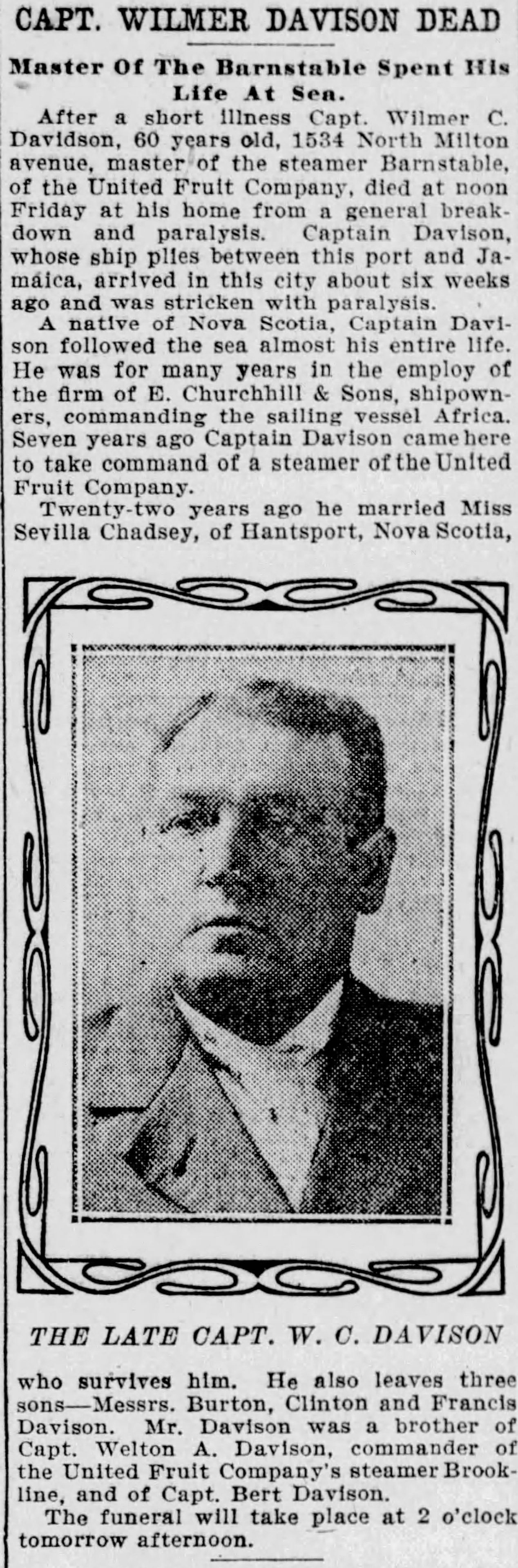
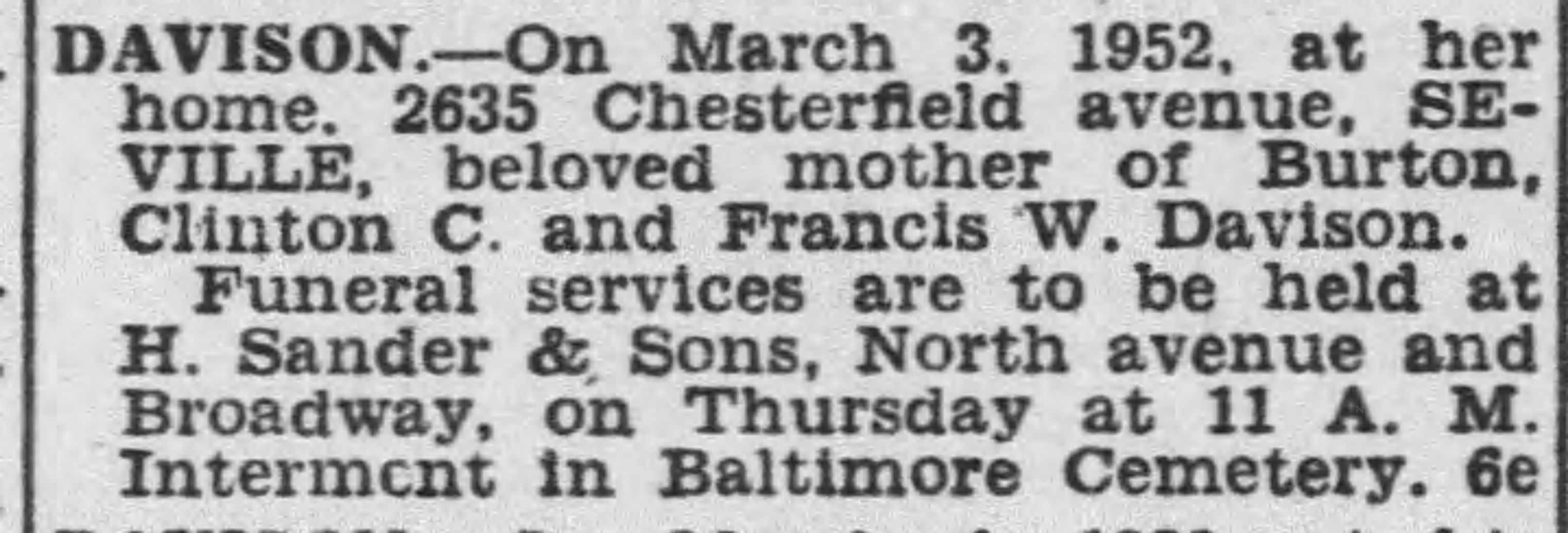
Francis Wilmer Davison was born on September 12, 1906, during a period of transition for the Davison family. His parents, Wilmer Charles Davison (1848–1909) and Olivia Seville Chadsey Davison (1868–1952), relocated from Nova Scotia, Canada, to Baltimore, Maryland, around the time of his birth. Most surviving records identify Maryland as his birthplace, though a small number reference Nova Scotia. Regardless, Baltimore became the city he called home throughout his life.
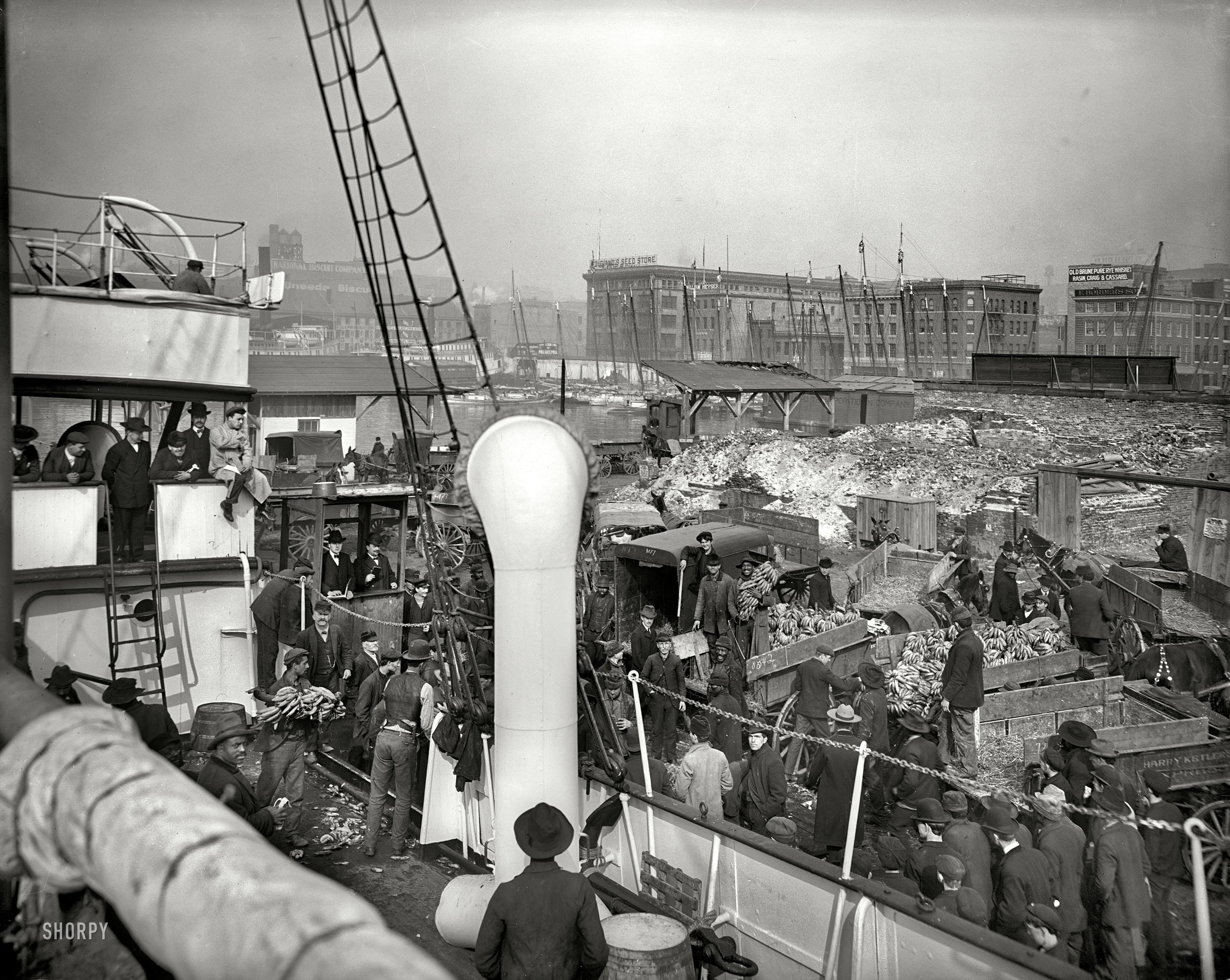
The Davison family possessed a deep maritime heritage stretching across multiple generations in Nova Scotia. Francis's great-grandfather, Captain Asa Davison (1814–1872), was a sea captain. Several of Asa's sons — including Captain Michael B. Davison (1839–1913), Captain Wilmer Charles Davison (1848–1909), and Captain Welton Davison (1861–1921) — followed their father into maritime careers, establishing a family tradition that would span multiple generations. Francis's father was employed by the United Fruit Company, a shipping and produce company known for importing goods from Central America and the Caribbean into ports along the eastern United States. Decades later, Francis carried that same connection to the sea into military service with the United States Navy.
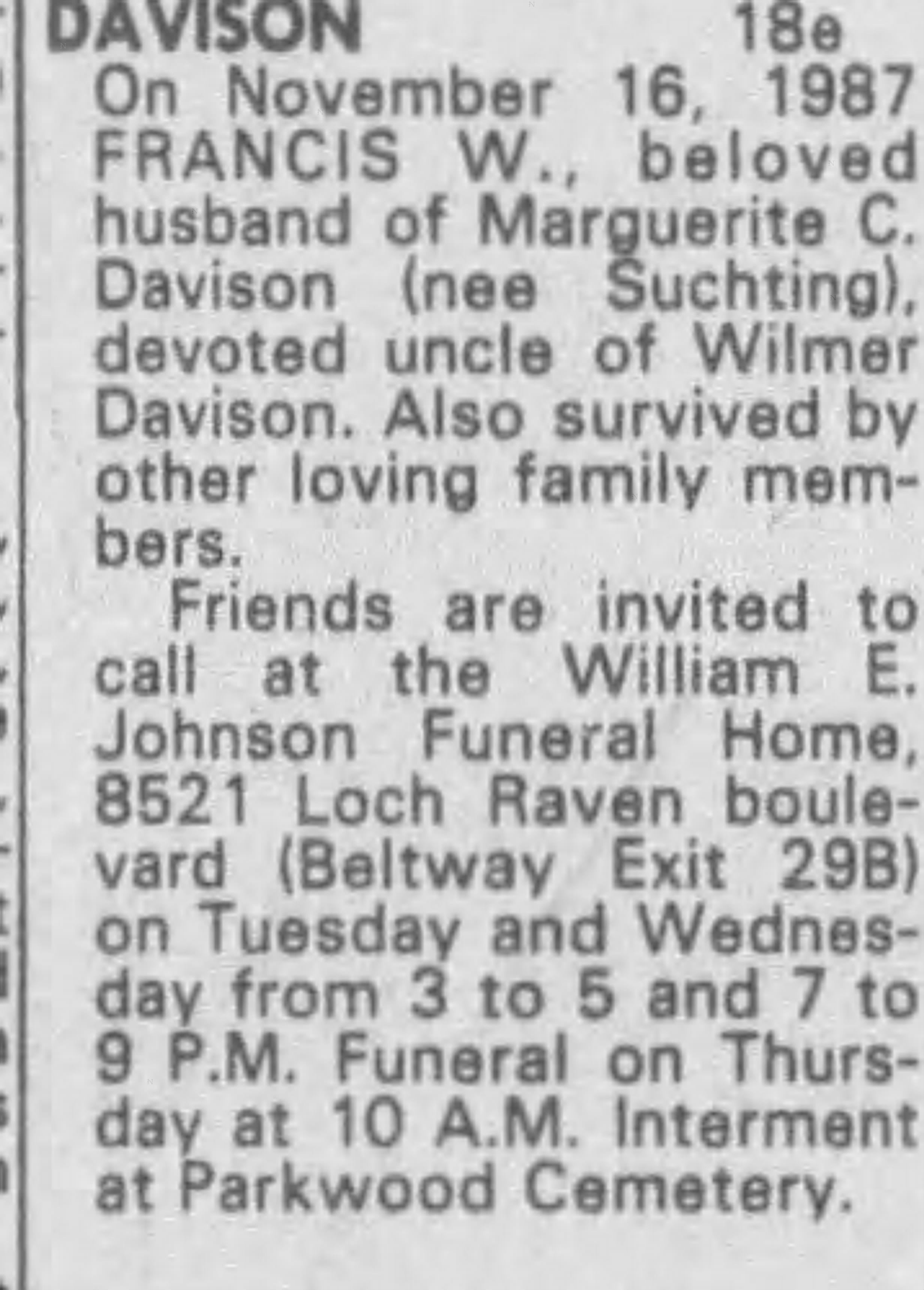
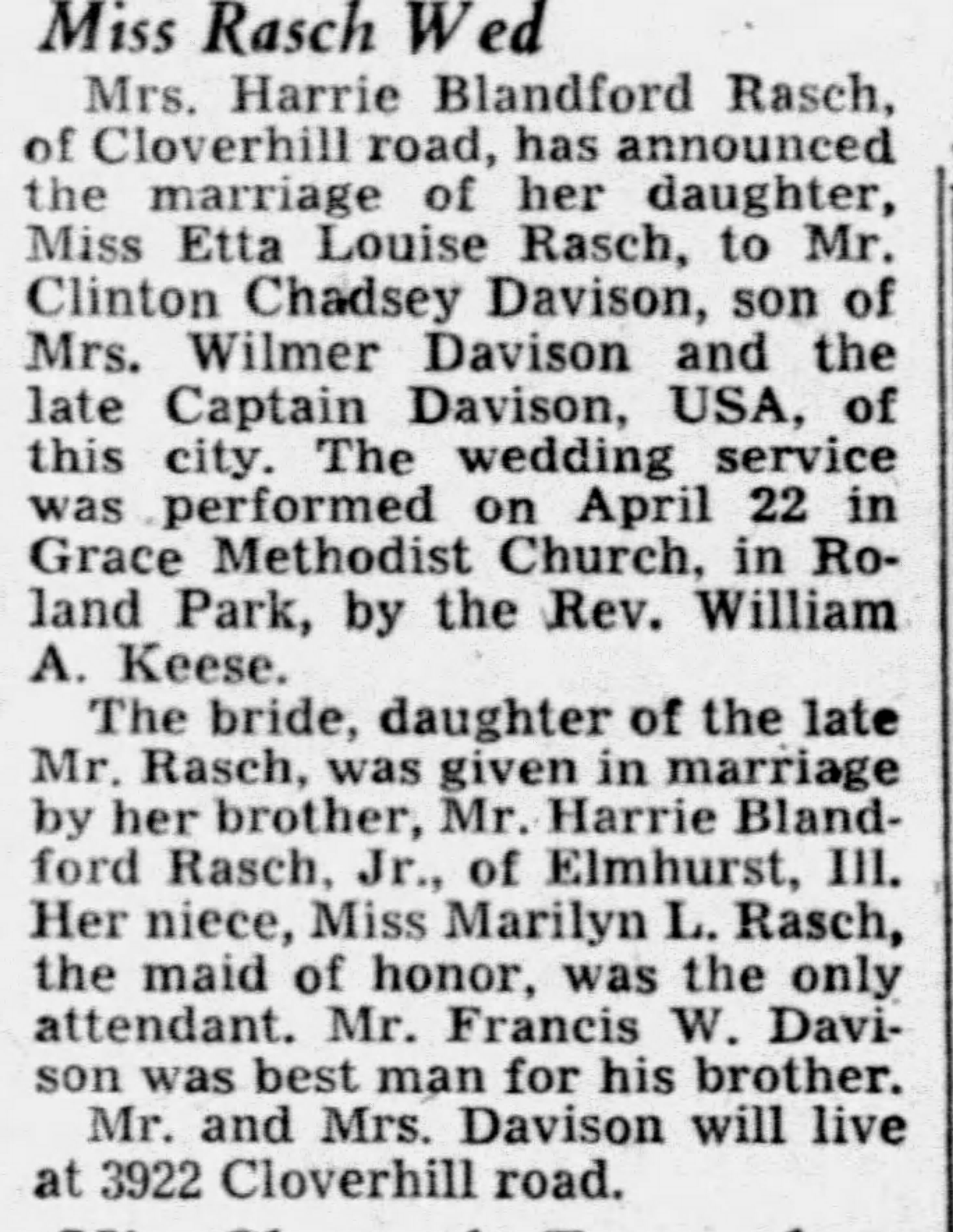
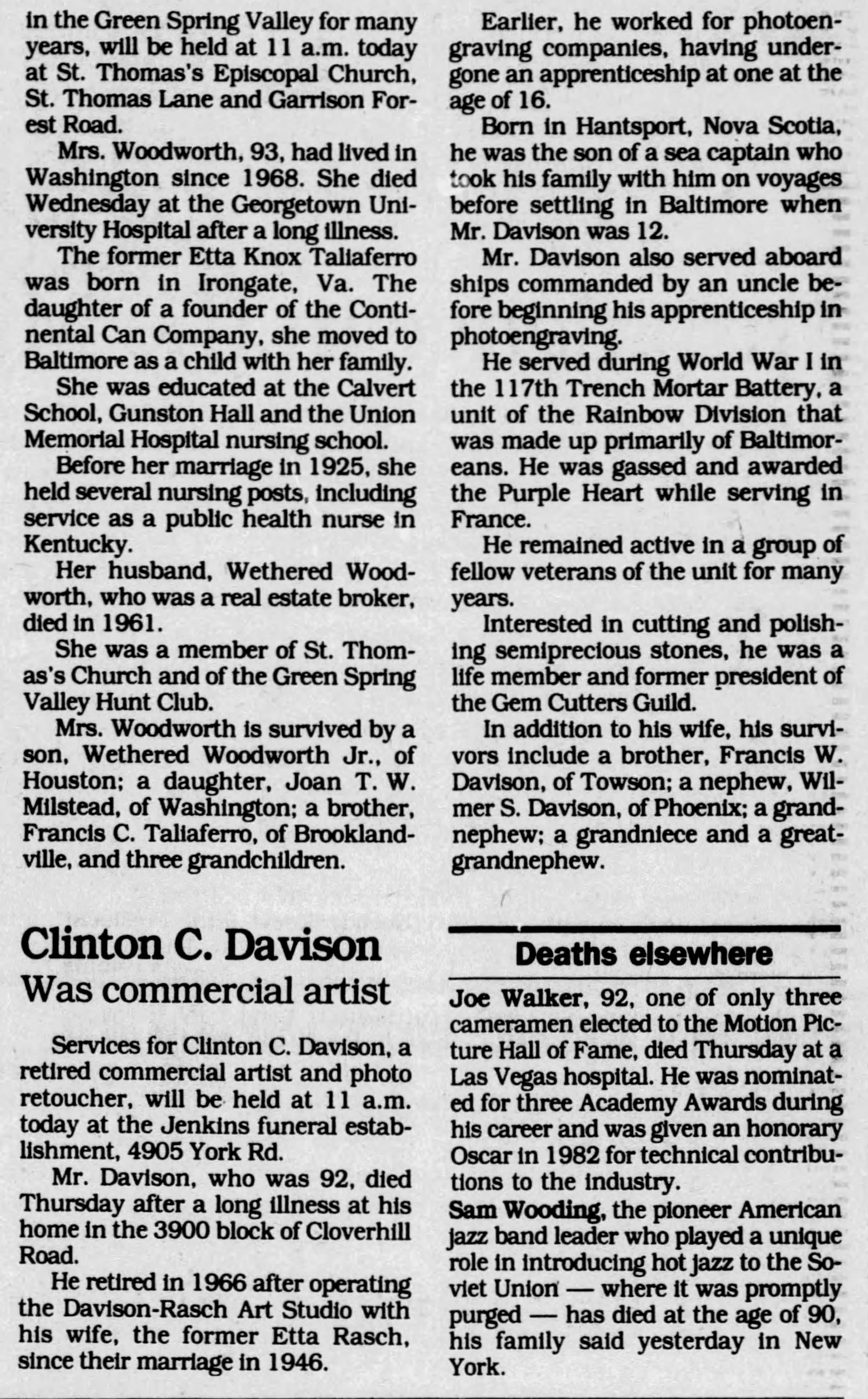
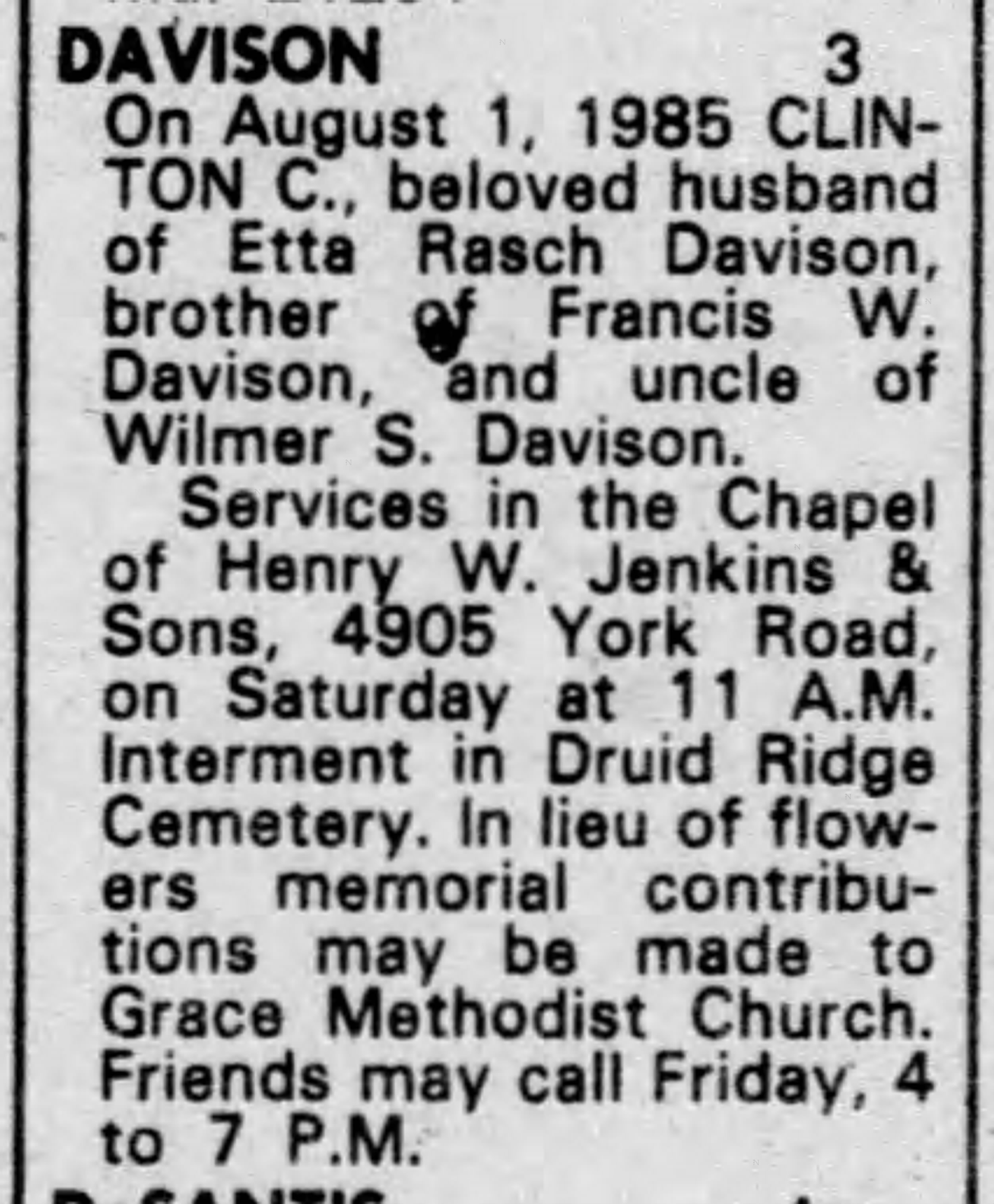
Francis was one of four sons. His brothers included Burton Otto Davison (1890–1977) and Clinton C. Davison (1892–1985), while another brother, Paul Davison (1899–1899), died in infancy. While Francis and his wife, Marguerite Christina Suchting Davison, left no direct descendants, their memory lives on through extended family members on both the Davison and Suchting sides of the family — several of whom continued a tradition of military service.
Education and Early Career
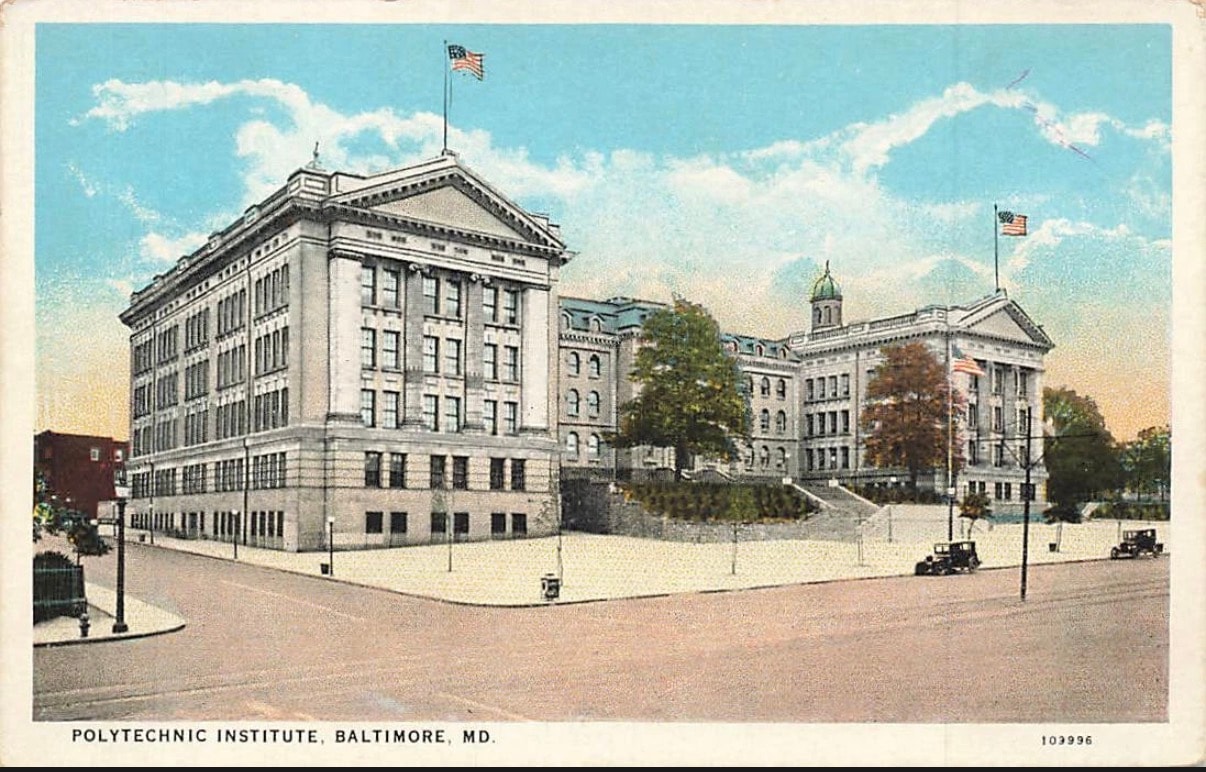
Francis attended the prestigious Baltimore Polytechnic Institute, one of Baltimore's leading technical schools. There, he developed the mechanical and technical skills that would shape both his civilian career and his military service.
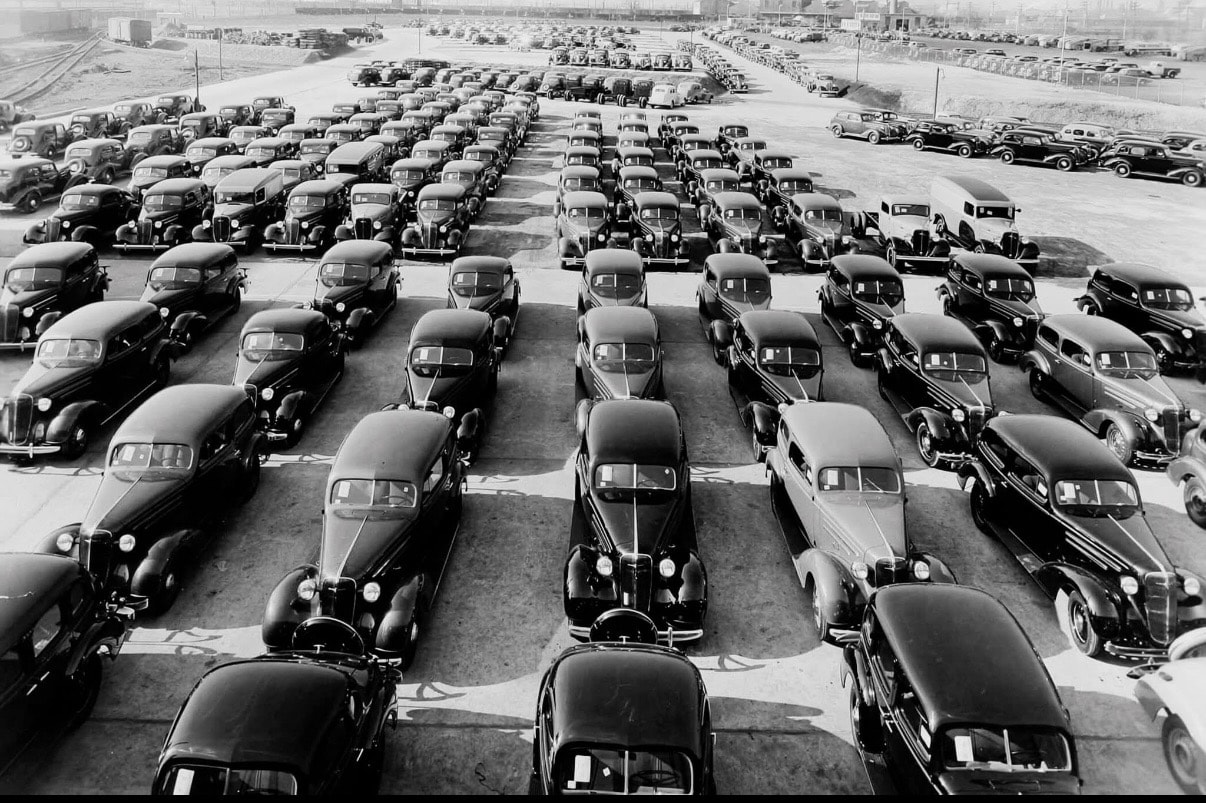
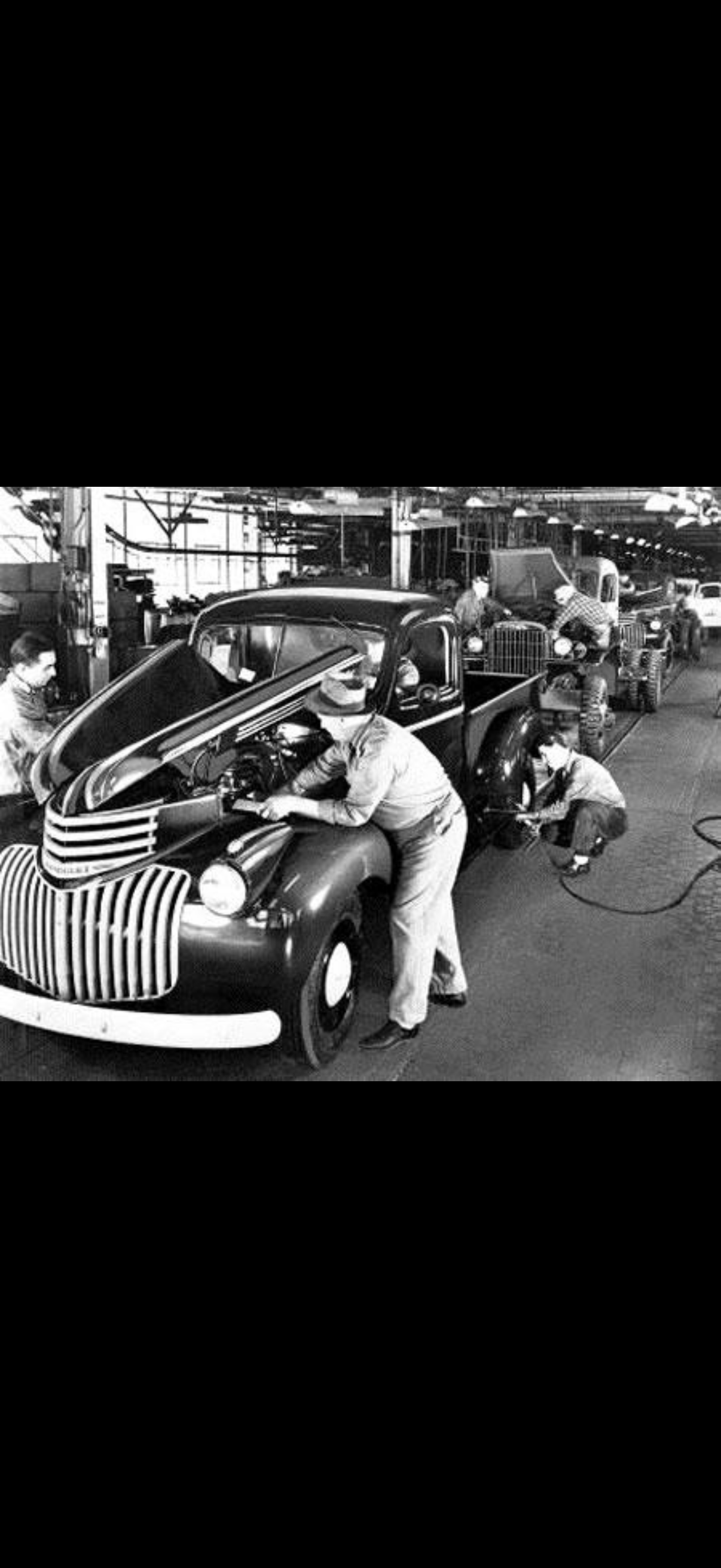
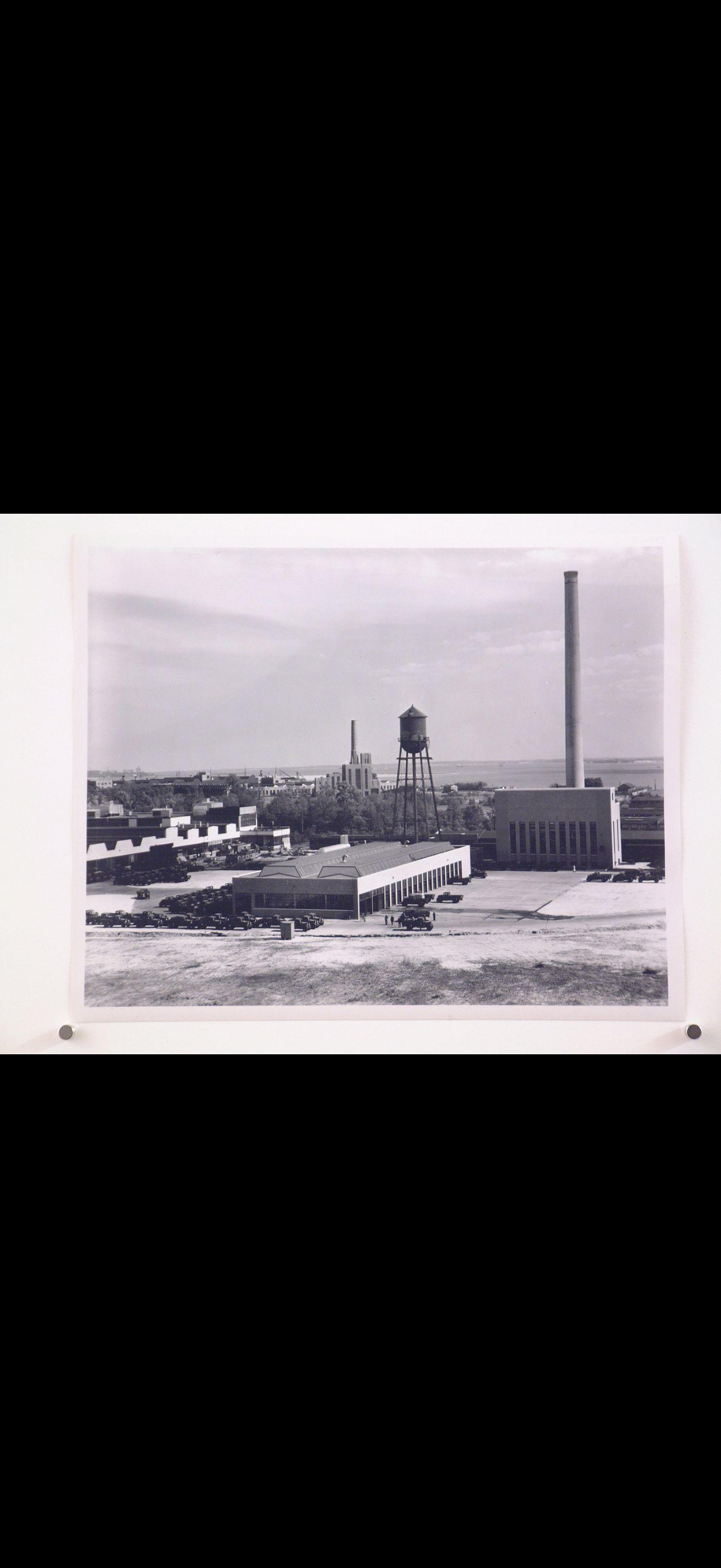
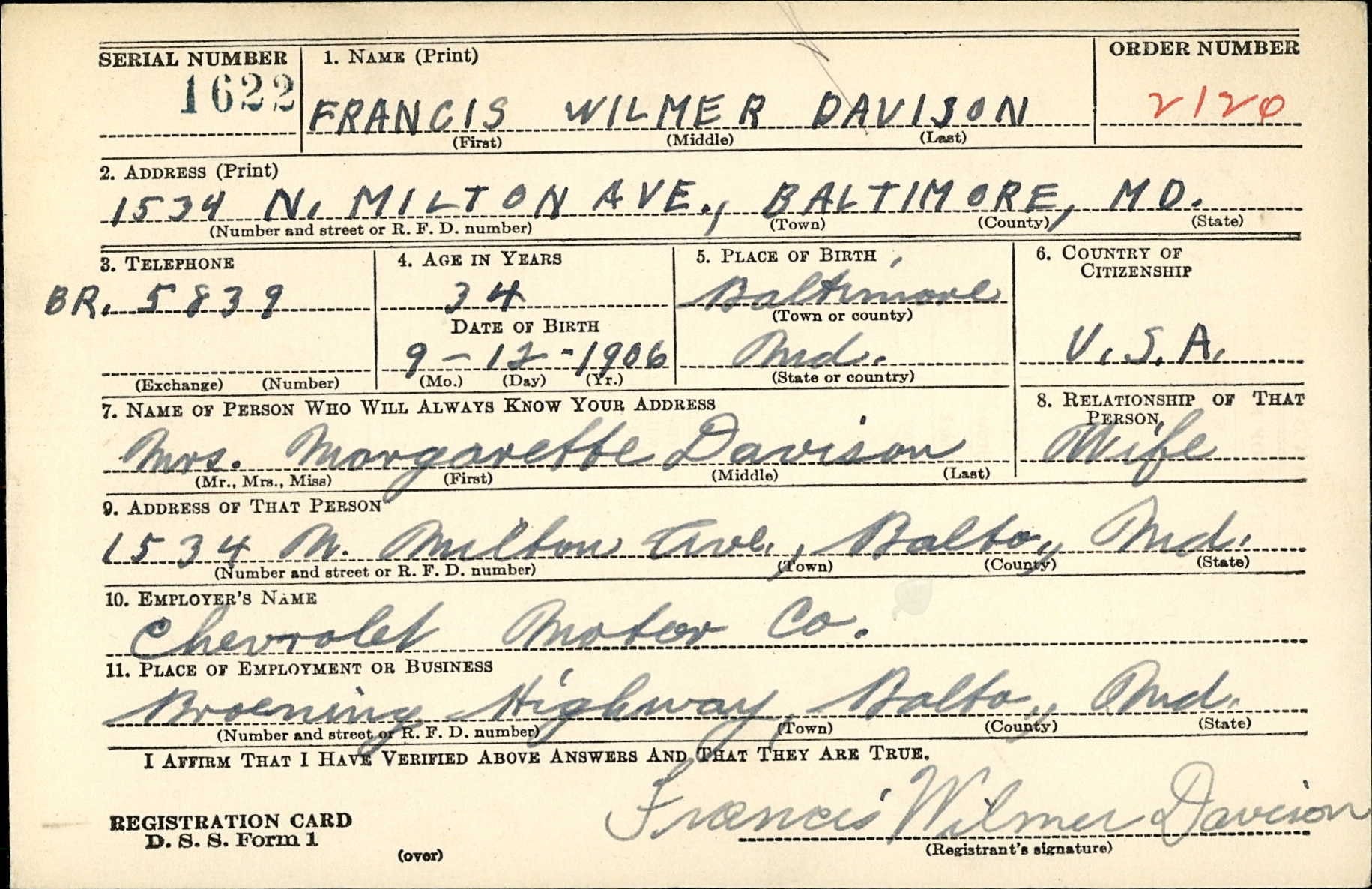
By 1935, Francis was employed by Chevrolet Motor Company, a division of General Motors, at the company's Baltimore facility on Broening Highway. Service records document his employment there from 1935 to 1942, where he worked as a motor mechanic and later as a utility inspector. He continued advancing throughout his career, serving in positions that included inspector, inspection foreman, and eventually quality control engineer.
His experience working with engines, machinery, inspection processes, and industrial operations made him exceptionally well suited for service as a Motor Machinist's Mate in the United States Navy. Like many Americans of his generation, Francis built a life through hard work, practical skill, and dedication to his craft. Following his wartime service, he returned to General Motors and continued a successful career that culminated in his retirement from the Chevrolet Division in 1967.
A Partnership Built on Service
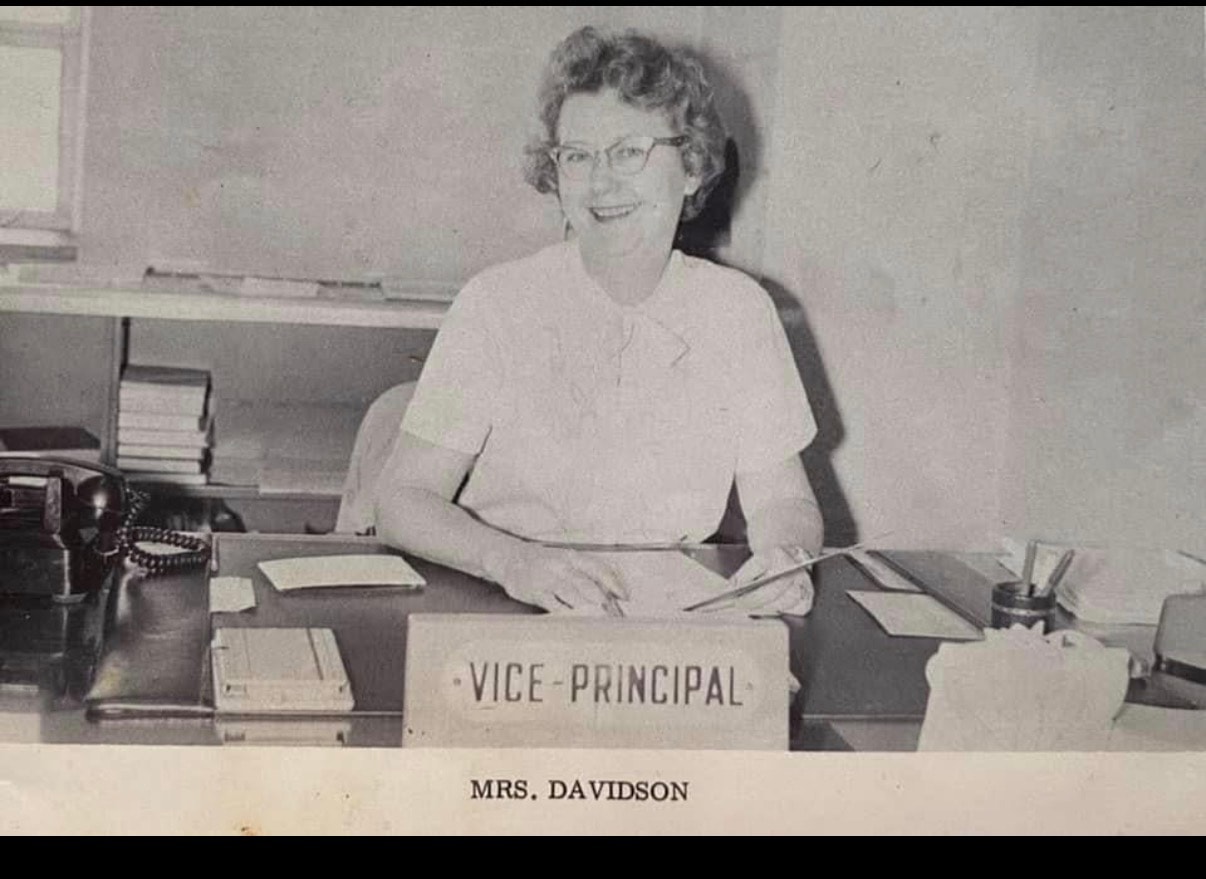
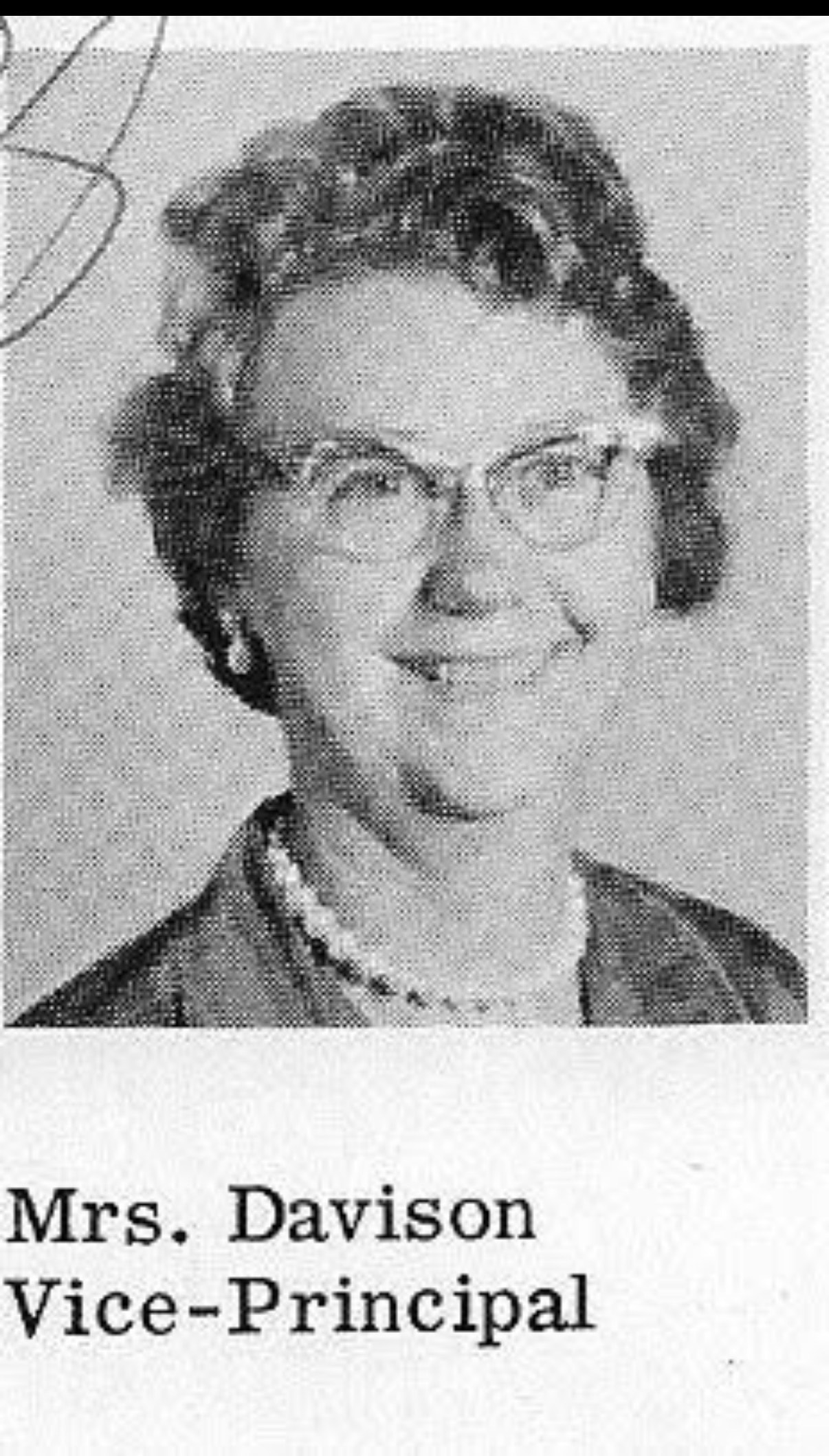
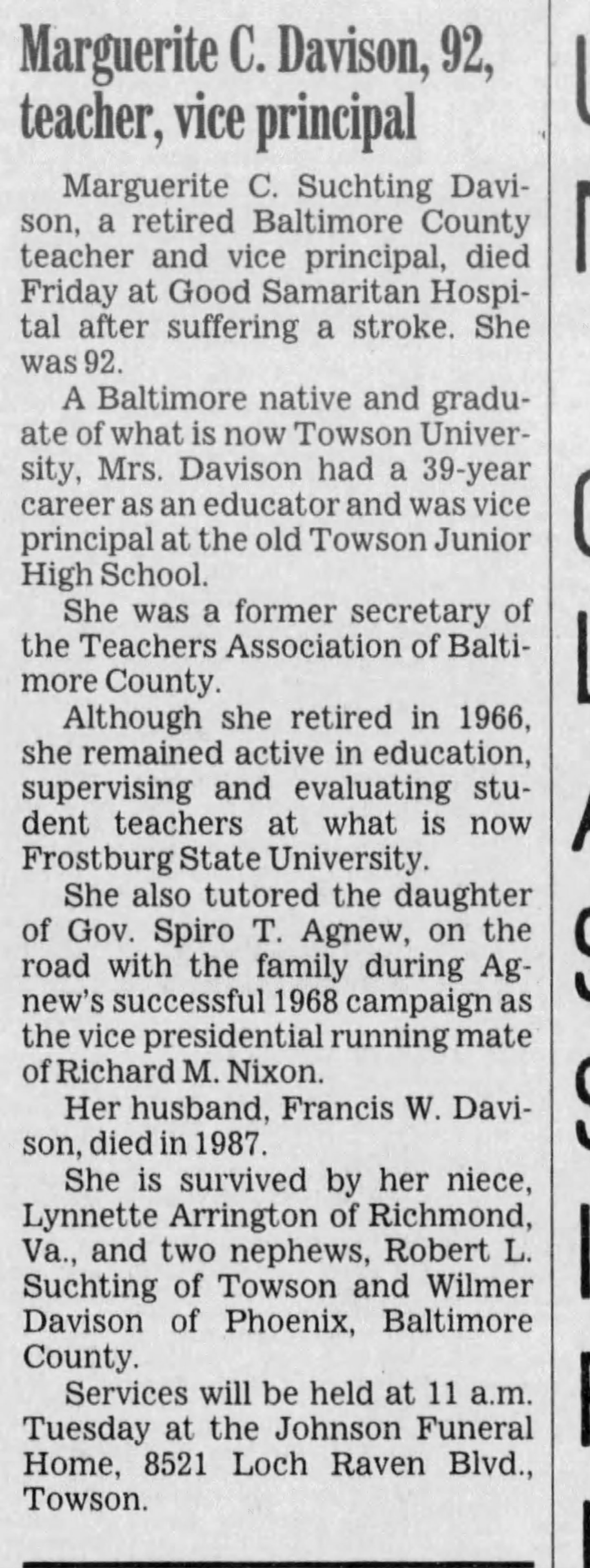
Francis married Marguerite Christina Suchting Davison, an accomplished educator whose influence extended far beyond her own classroom. A graduate of Towson State Teachers College, Marguerite devoted her professional life to education within Baltimore County Public Schools. She taught at Towson Junior High School and later served as a vice principal, earning a reputation as an exceptional teacher and mentor.
Her impact continued long after her retirement. During research conducted through the Towson University Archives, educator Anthony Marchione recalled that Marguerite served as his supervising teacher early in his career. In an oral history interview, he stated: "Marguerite Davison was the supervising teacher. I modeled my teaching to the way she did it." Few compliments better capture the legacy of an educator than being remembered decades later by someone who sought to emulate her example.
Together, Francis and Marguerite dedicated their lives to service — one through military duty and engineering, the other through education and mentorship.
Answering the Call
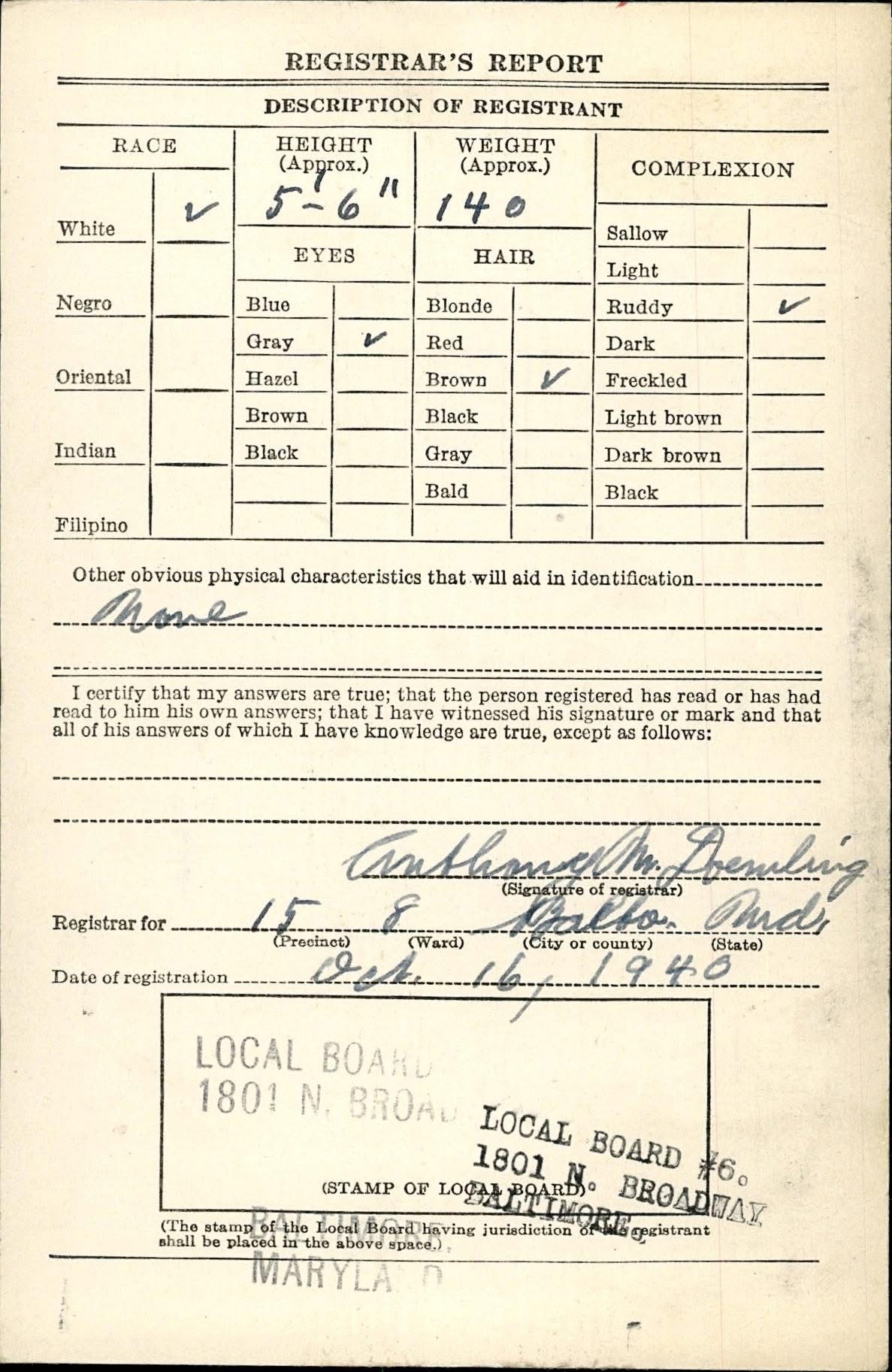
As the United States mobilized for World War II, Francis enlisted in the United States Naval Reserve (V-6 USNR) on November 6, 1942, at Baltimore, Maryland. At the time of his enlistment, he was thirty-six years old and had already spent seven years working for Chevrolet Motor Company, bringing extensive mechanical experience into naval service.
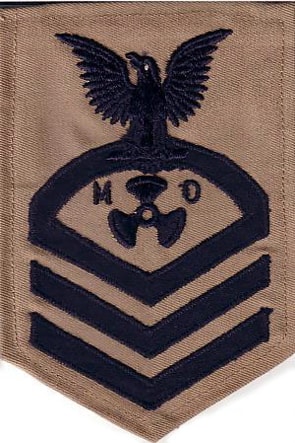
Although classified as a member of the Naval Reserve, Francis served on full-time active duty during the war. The V-6 program was used to bring civilians with useful skills into wartime naval service for the duration of the national emergency. Because of his technical background, Francis completed specialized diesel-engine training at the Naval Training Station, Naval Operating Base Norfolk, Virginia. This training prepared him for service as a Motor Machinist's Mate — a rating responsible for operating, maintaining, and repairing diesel engines and related mechanical systems aboard naval vessels.
Motor Machinist's Mates worked in some of the most demanding environments in the fleet. Their efforts helped ensure that ships remained operational during combat operations and long deployments far from home.
USS LST-457 and World War II
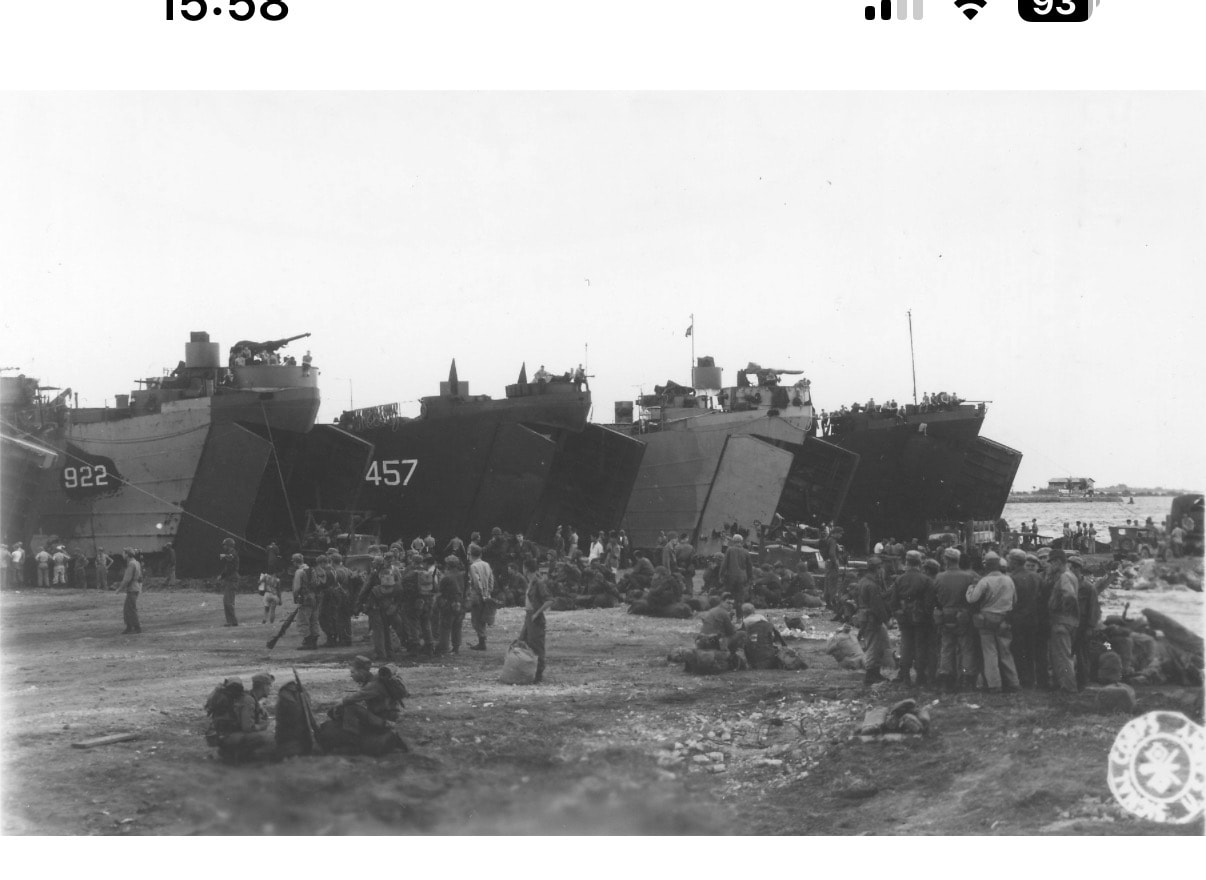
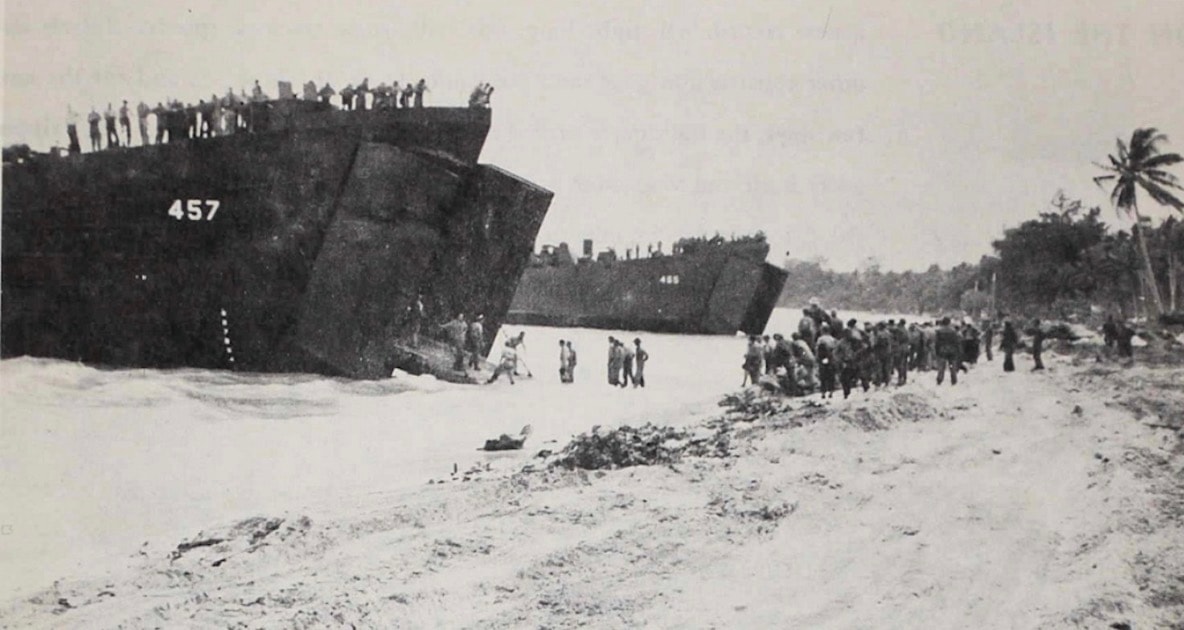
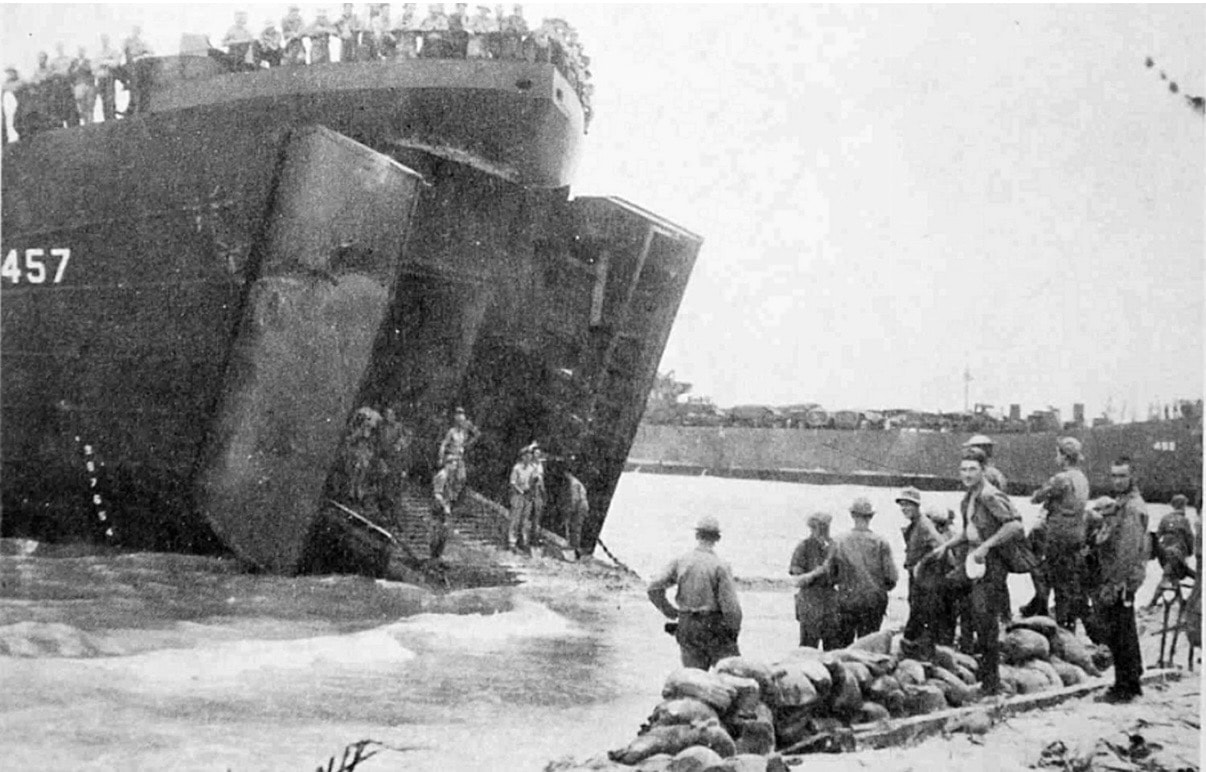
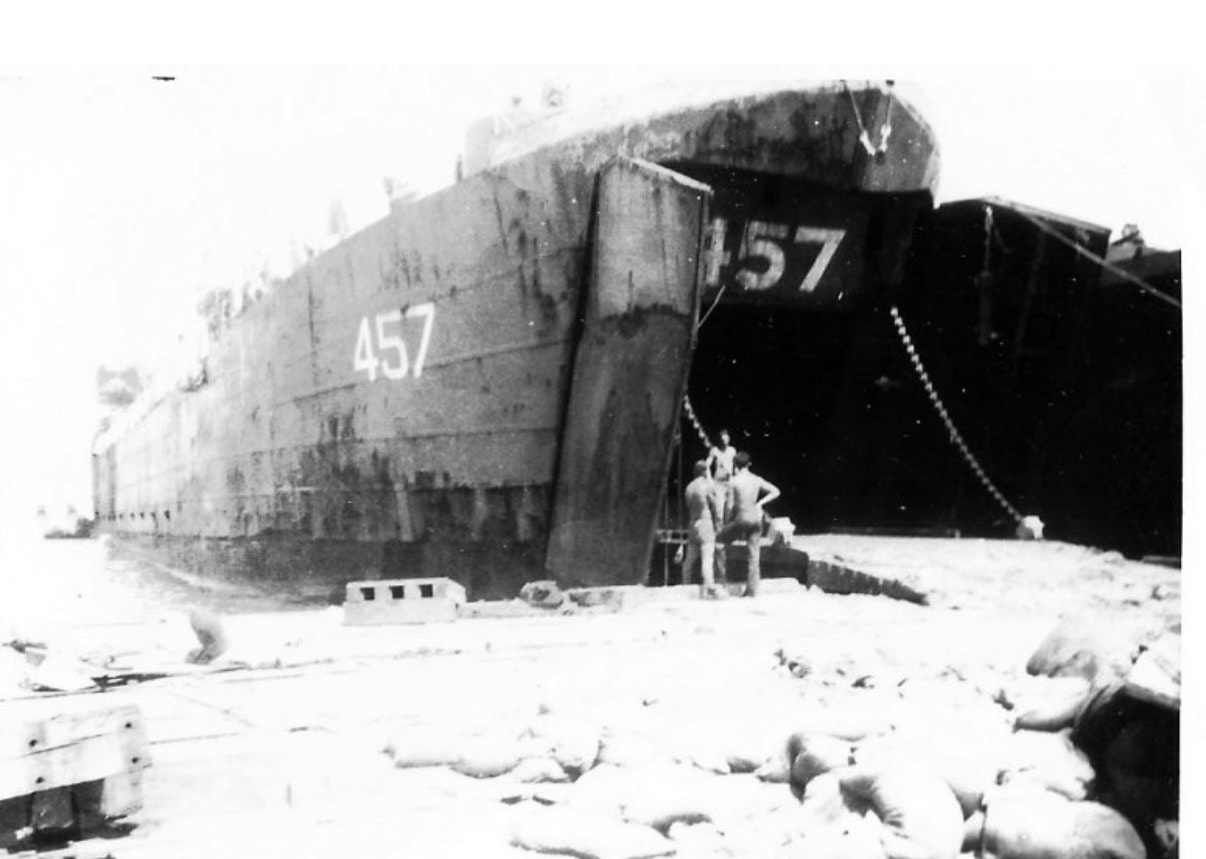
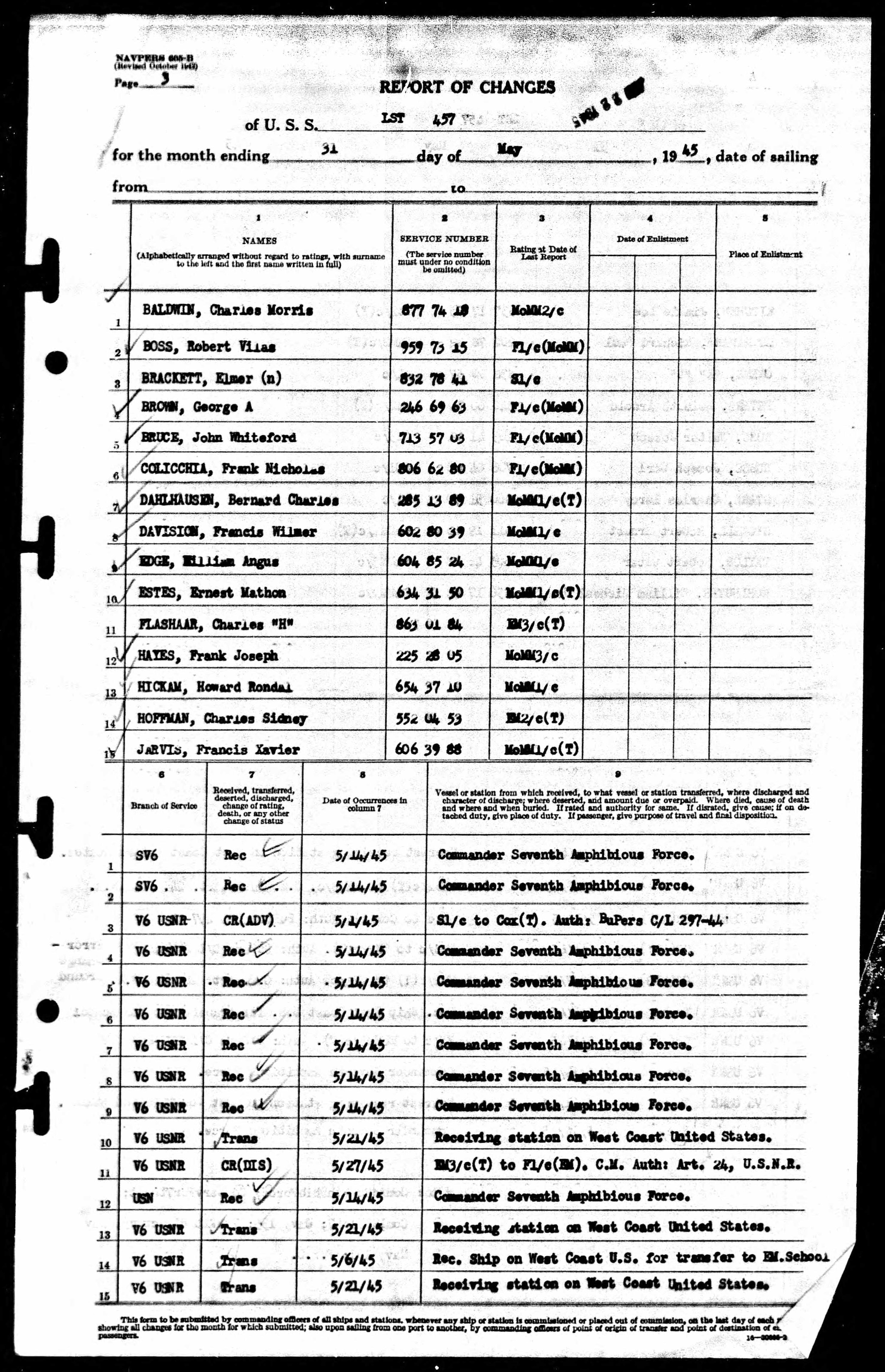
During his naval career, Francis advanced through the ratings of Motor Machinist's Mate First Class (MoMM1c) and later Chief Motor Machinist's Mate (CMoMM). Service records confirm his service aboard USS LST-457 during World War II.
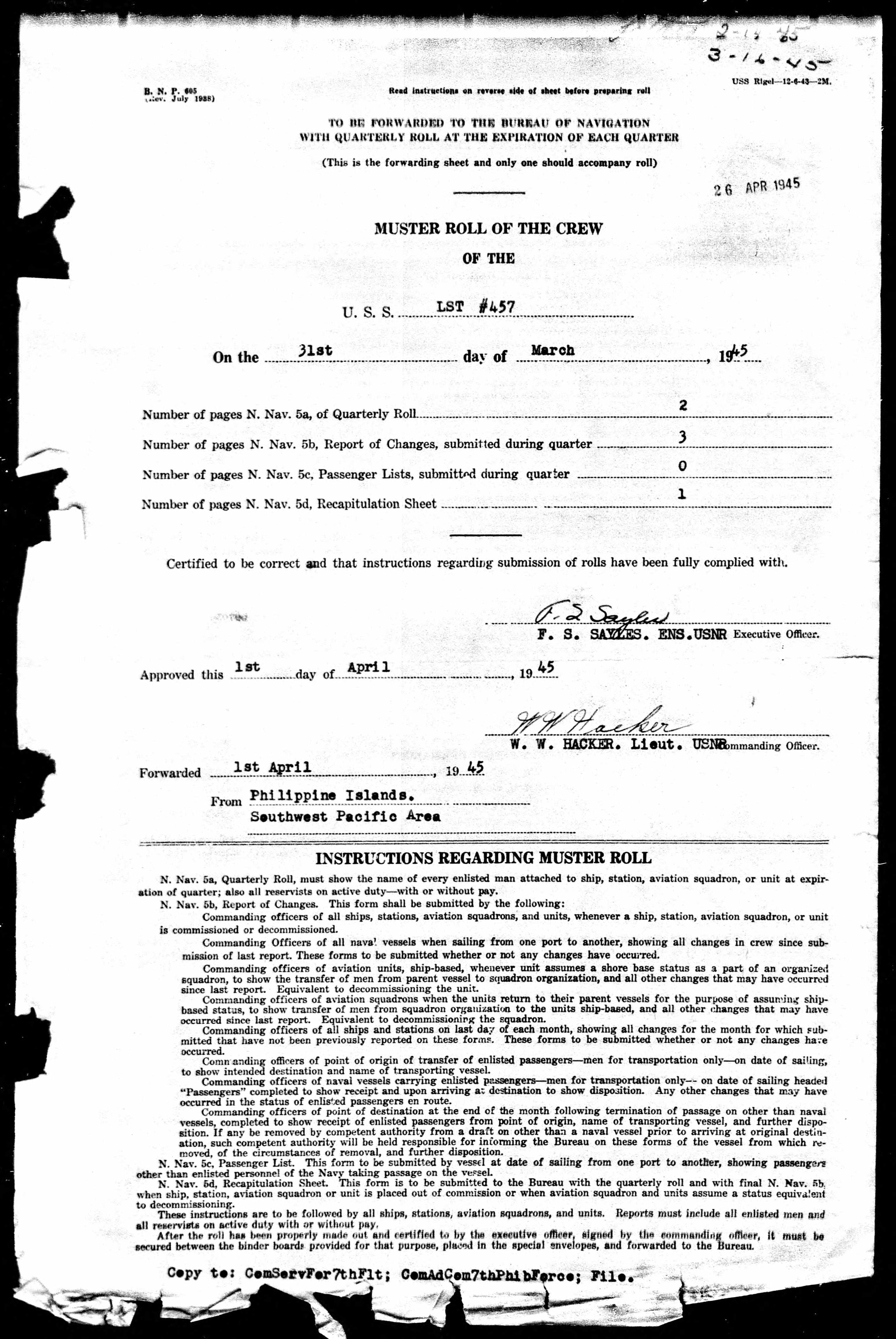
Landing Ship Tanks — commonly known as LSTs — were among the most important vessels of World War II. Designed to transport troops, tanks, vehicles, fuel, and supplies directly onto hostile beaches, they played a critical role in Allied amphibious operations throughout the Pacific. Official Navy muster rolls place Francis aboard USS LST-457 while the ship operated in the Southwest Pacific Area during the final months of the war.
USS LST-457 participated in operations connected to Cape Gloucester and New Britain, the Admiralty Islands, Hollandia, Toem-Wakde-Sarmi, Biak Island, Noemfoor Island, Morotai, Leyte, the Philippine Islands, the Visayan Islands, and Balikpapan. For her wartime service, USS LST-457 earned seven battle stars. As a Motor Machinist's Mate, Francis worked below decks maintaining the diesel engines and mechanical systems that kept the ship operational during combat operations. Following Japan's surrender, LST-457 performed occupation duty in the Far East before returning to the United States.
Life After the War
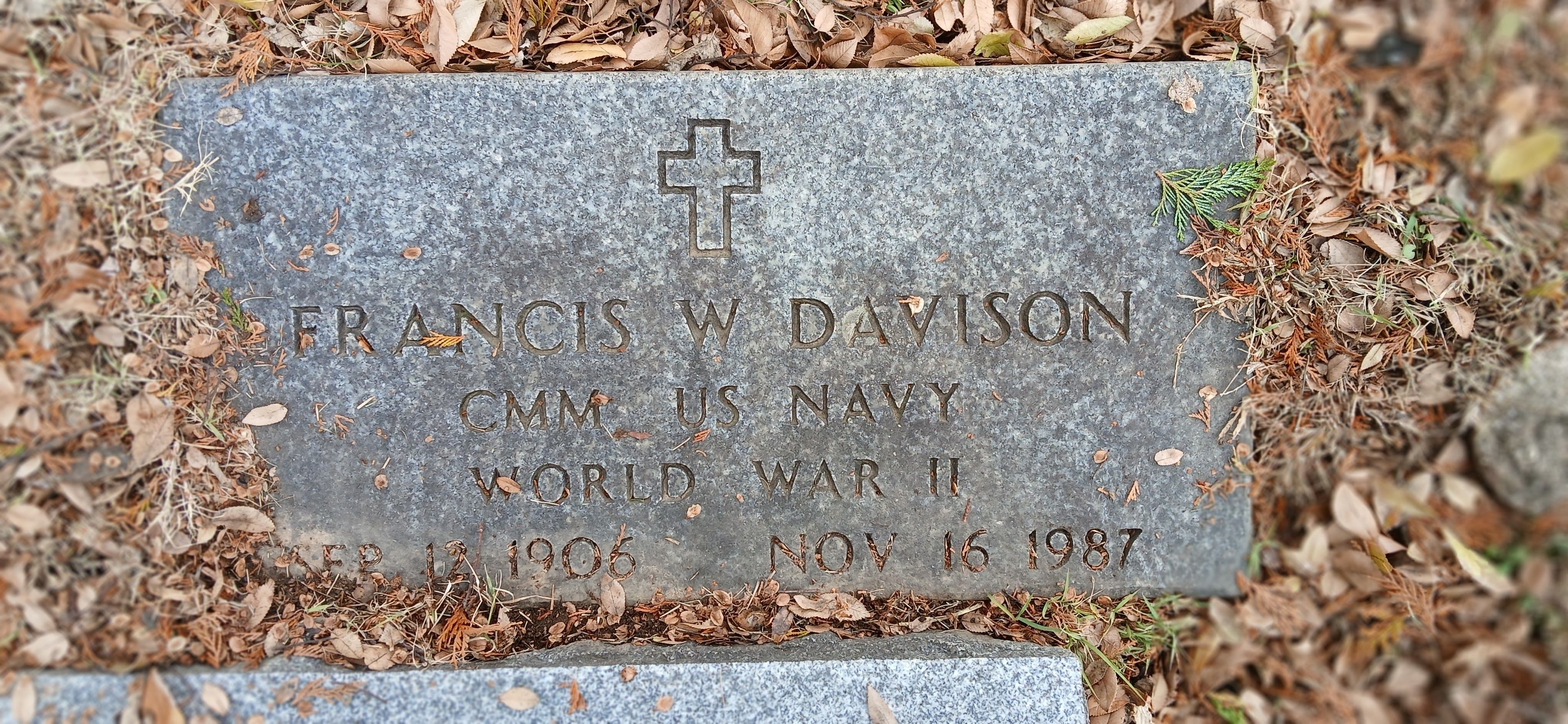
Francis was honorably separated from naval service on November 14, 1945, at the United States Navy Personnel Separation Center in Bainbridge, Maryland. His service record identified him as a Chief Motor Machinist's Mate (AA)(T), V-6 USNR — the rank later recorded on his military grave marker.
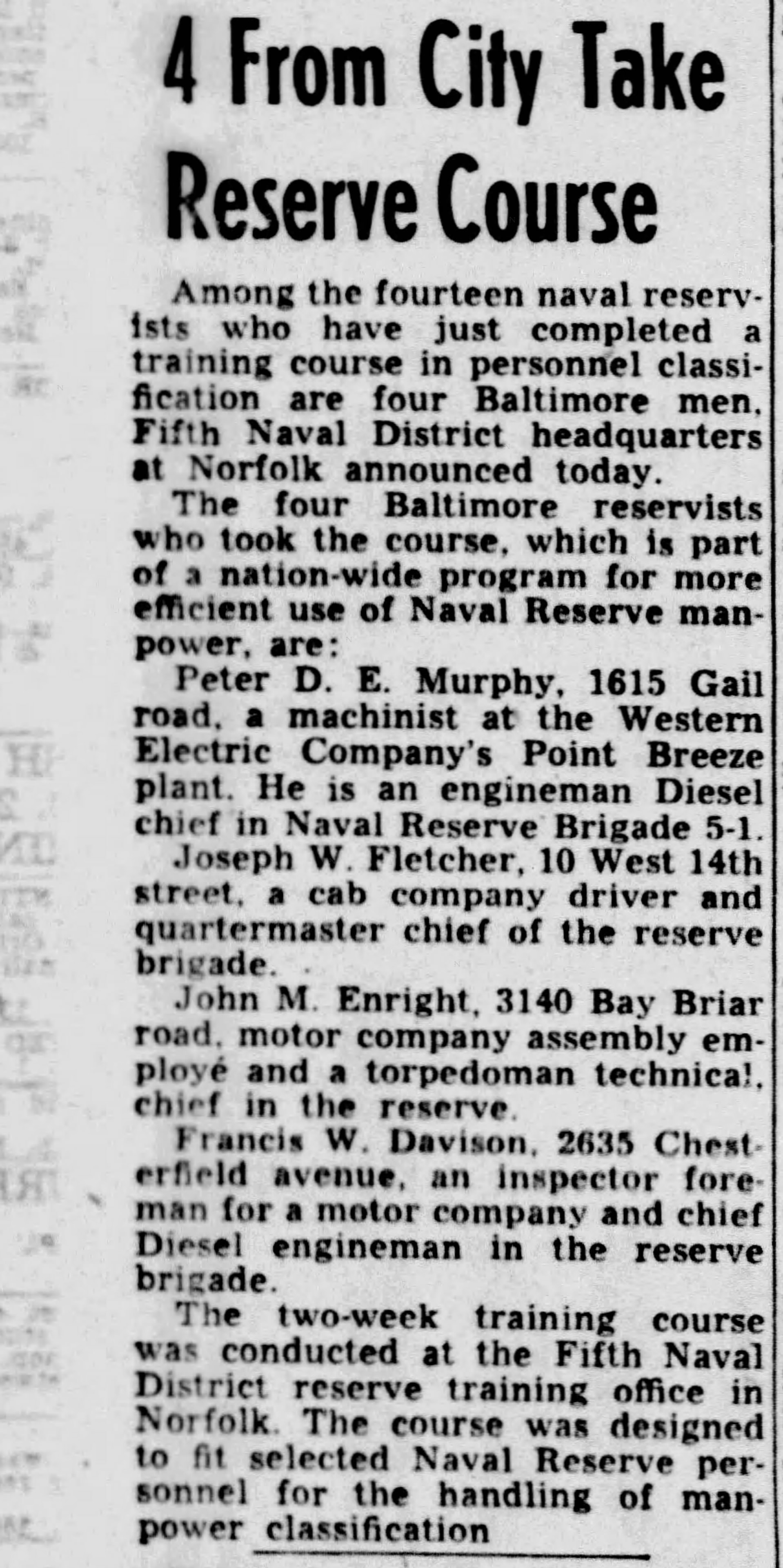
Returning home to Baltimore, Francis resumed his civilian career with General Motors, advancing through a variety of technical and supervisory positions before retiring in 1967 as a quality control engineer. A Baltimore Evening Sun newspaper article later documented his participation in a Naval Reserve engineering course, reflecting his continued interest in mechanical and engineering subjects throughout his life.
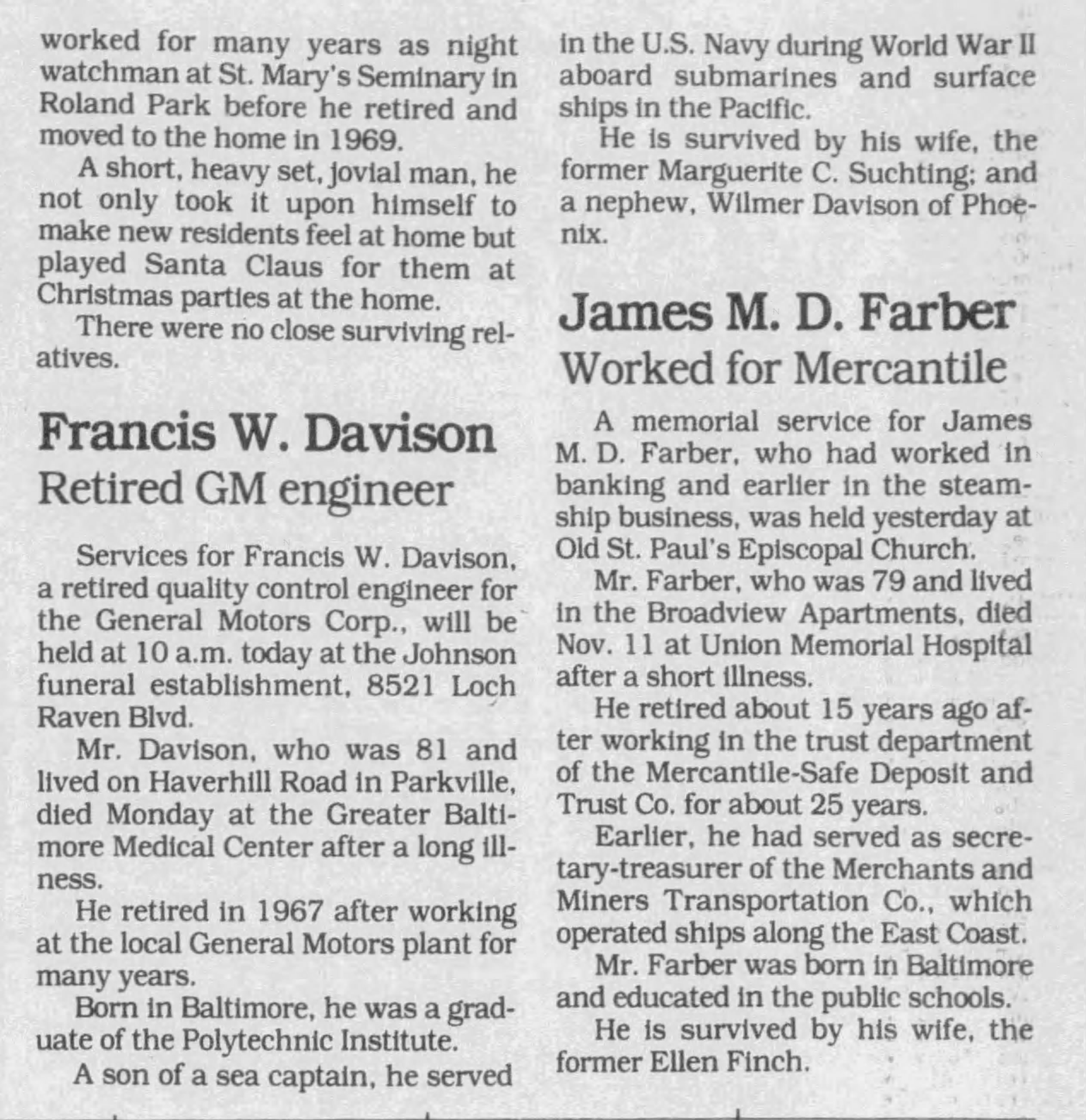
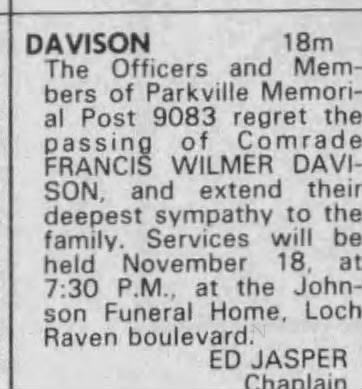
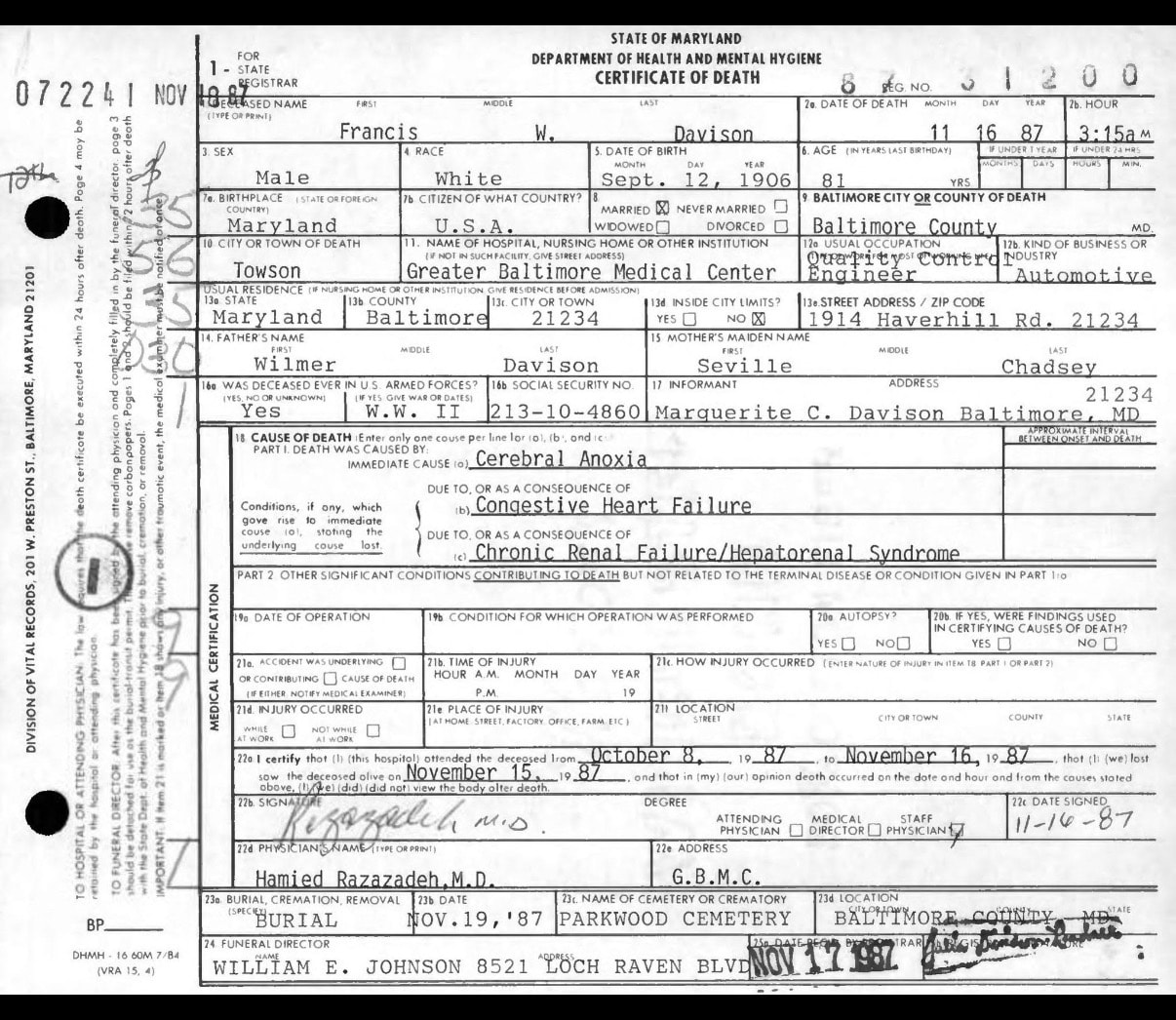
Francis Wilmer Davison passed away on November 16, 1987, at the age of 81. Like many World War II veterans, he returned home without fanfare, built a career, supported his community, and carried forward the values forged during wartime service. Today, his story survives through the records he left behind, the artifacts that endured, and the family members who continue to preserve his memory.
Military Service
Navy Records & Documents
Primary source military documents recovered through the National Archives, Fold3, and family records. Sensitive personal identifiers have been redacted out of respect for privacy.
Draft Registration & Enlistment
USS LST-457 — Muster Rolls & Ship Photographs
Naval Reserve — Post-War Service
Family
Francis, Marguerite & the Davison Family
Francis and Marguerite built a quiet life of service in Baltimore — he through engineering and naval duty, she through decades of teaching and mentorship. Their story is preserved through family records, obituaries, and photographs that survived them both.
Marguerite Christina Suchting Davison
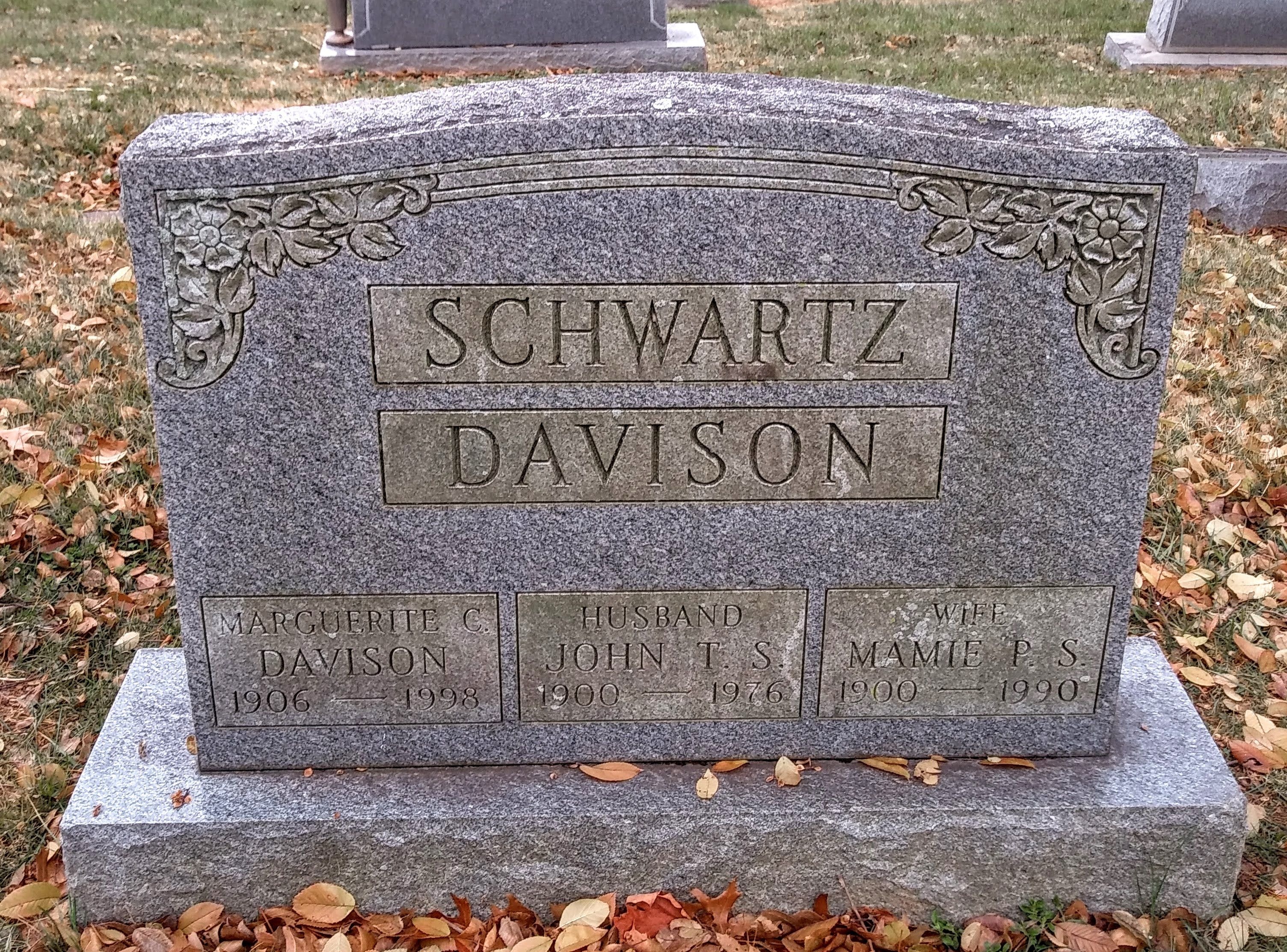
Francis Wilmer Davison — Obituary & Death Record
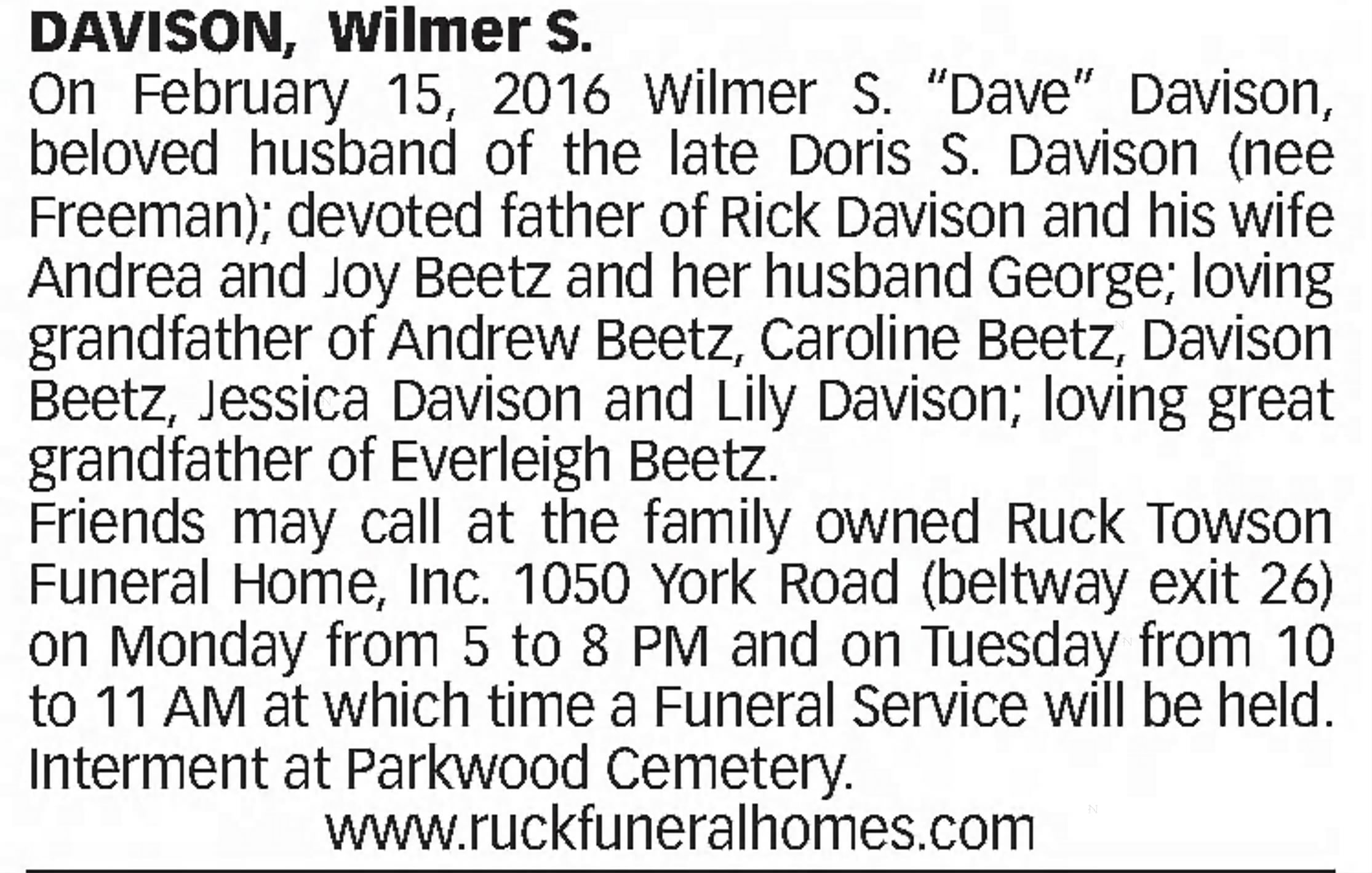
Extended Family
The Artifacts
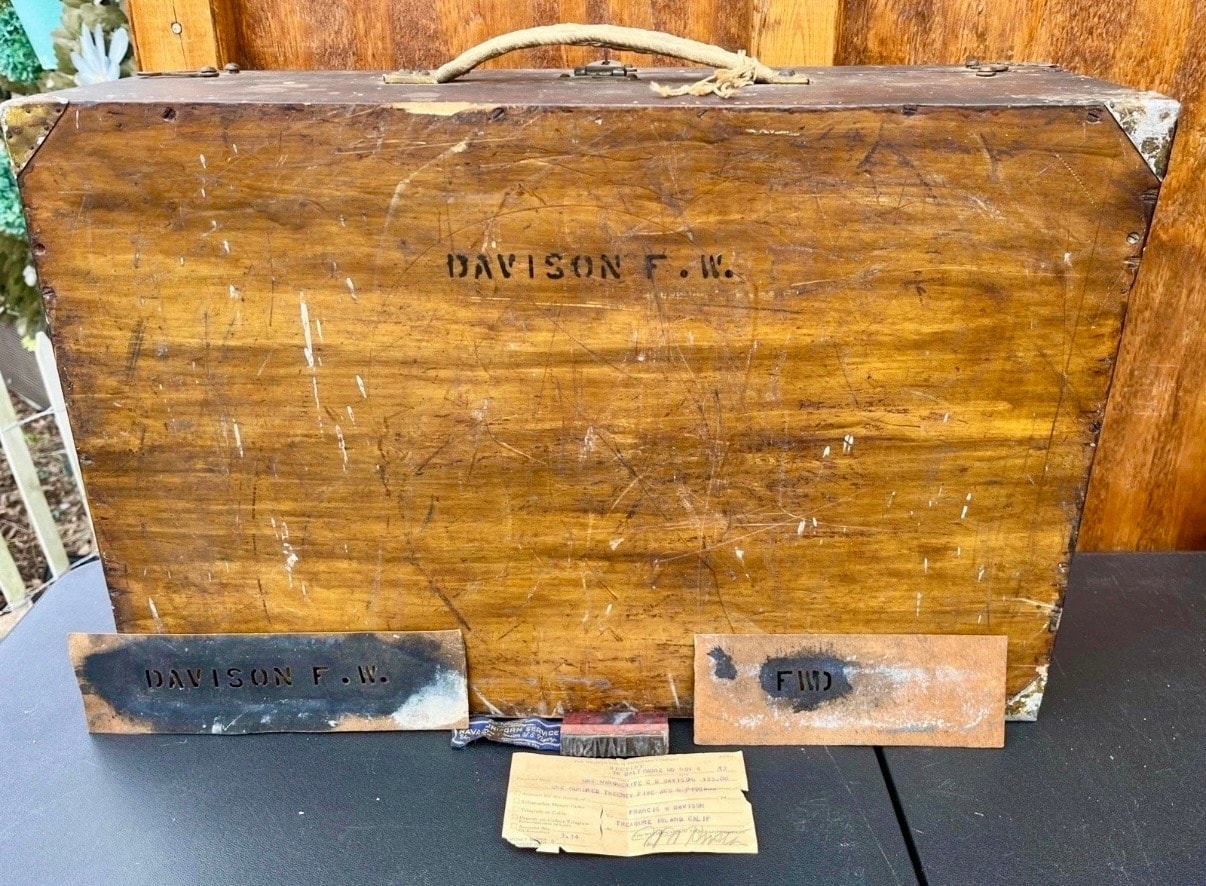
Among the surviving artifacts connected to Francis's service is a World War II Navy foot locker bearing his name. Also preserved is a wartime Western Union receipt documenting money his wife, Marguerite, sent him while he was stationed at Treasure Island, California. Together, these objects provide a personal glimpse into the separation endured by military families during wartime — and the support they continued to provide one another across great distances.
The Foot Locker
A World War II Navy foot locker bearing the stenciled name F.W. DAVISON USN — the object that started everything. Simple objects such as these provide rare and personal connections to the men who carried them.
The Stencil Kit
The very kit used to label the foot locker itself, still intact after decades. A sailor's foot locker often contained uniforms, photographs, letters, and treasured reminders of home.
Western Union Receipt, 1945
A wartime Western Union receipt documenting money his wife, Marguerite, sent him while he was stationed at Treasure Island, California — a major Navy processing station in San Francisco Bay.
How This Story Was Recovered
This biography was reconstructed through a combination of military records, government documents, historical archives, educational records, genealogical research, newspaper collections, family history resources, and preserved artifacts.
Military Records
U.S. Navy Muster Rolls and Reports of Changes (1938–1949) · USS LST-457 Muster Rolls · Fold3 Military Records Collection · National Archives and Records Administration (NARA) · Naval History and Heritage Command · BIRLS Veteran Records
Government Records
1910–1950 United States Federal Census Records · World War II Draft Registration Records
Educational Archives
Baltimore Polytechnic Institute historical records · Towson University Archives · Oral History Interview with Anthony Marchione referencing educator Marguerite Davison
Genealogical Research
Ancestry.com · FamilySearch · Find A Grave · Nova Scotia family records · Cemetery and burial records · Fold3 · National Archives
Newspapers & Historical Sources
Newspapers.com · Baltimore Evening Sun archives · Obituaries and community notices
Artifacts & Personal Materials
Francis Wilmer Davison WWII Navy Foot Locker · Wartime Western Union Receipt · Facebook and Google Photos · Grave marker photographs · Family history documentation
Census Records
Federal census records spanning four decades, documenting Francis and his family in Baltimore. Click any record to enlarge.
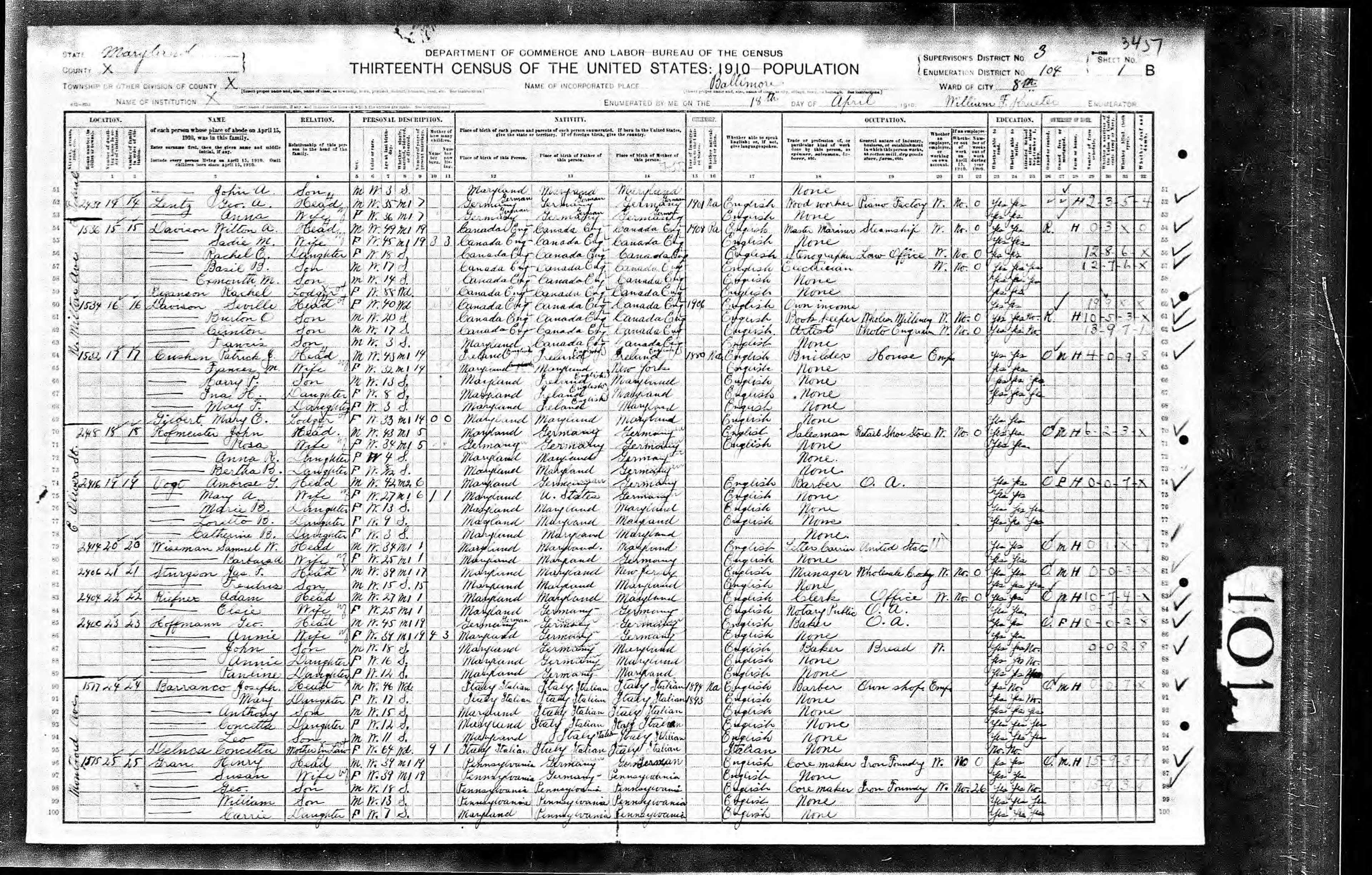
1910
United States Federal Census, 1910
Francis, age 3, listed with parents Wilmer Charles and Olivia Davison in Baltimore, Maryland.
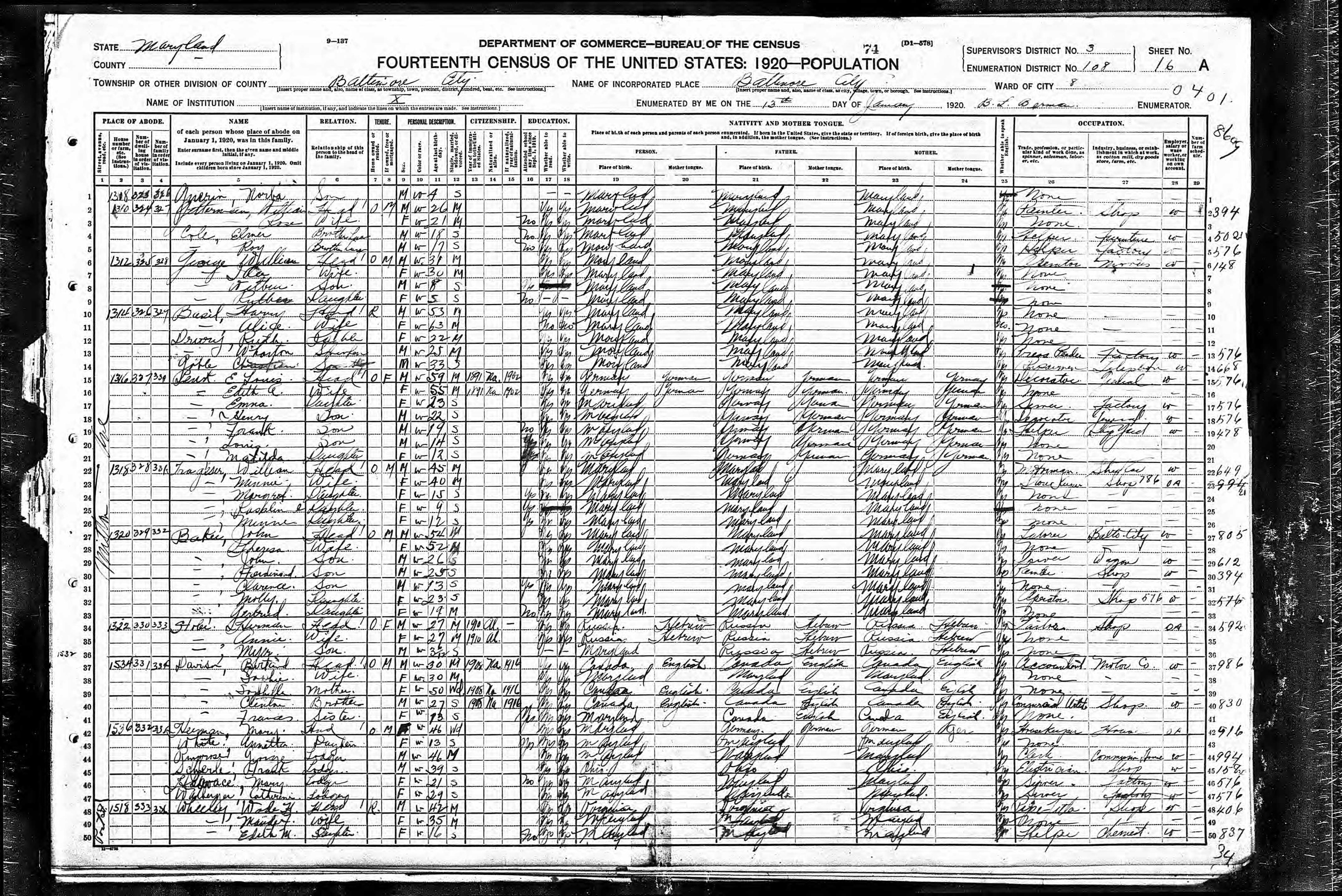
1920
United States Federal Census, 1920
Francis, age 13, listed with his mother Olivia and brothers Burton and Clinton in Baltimore.
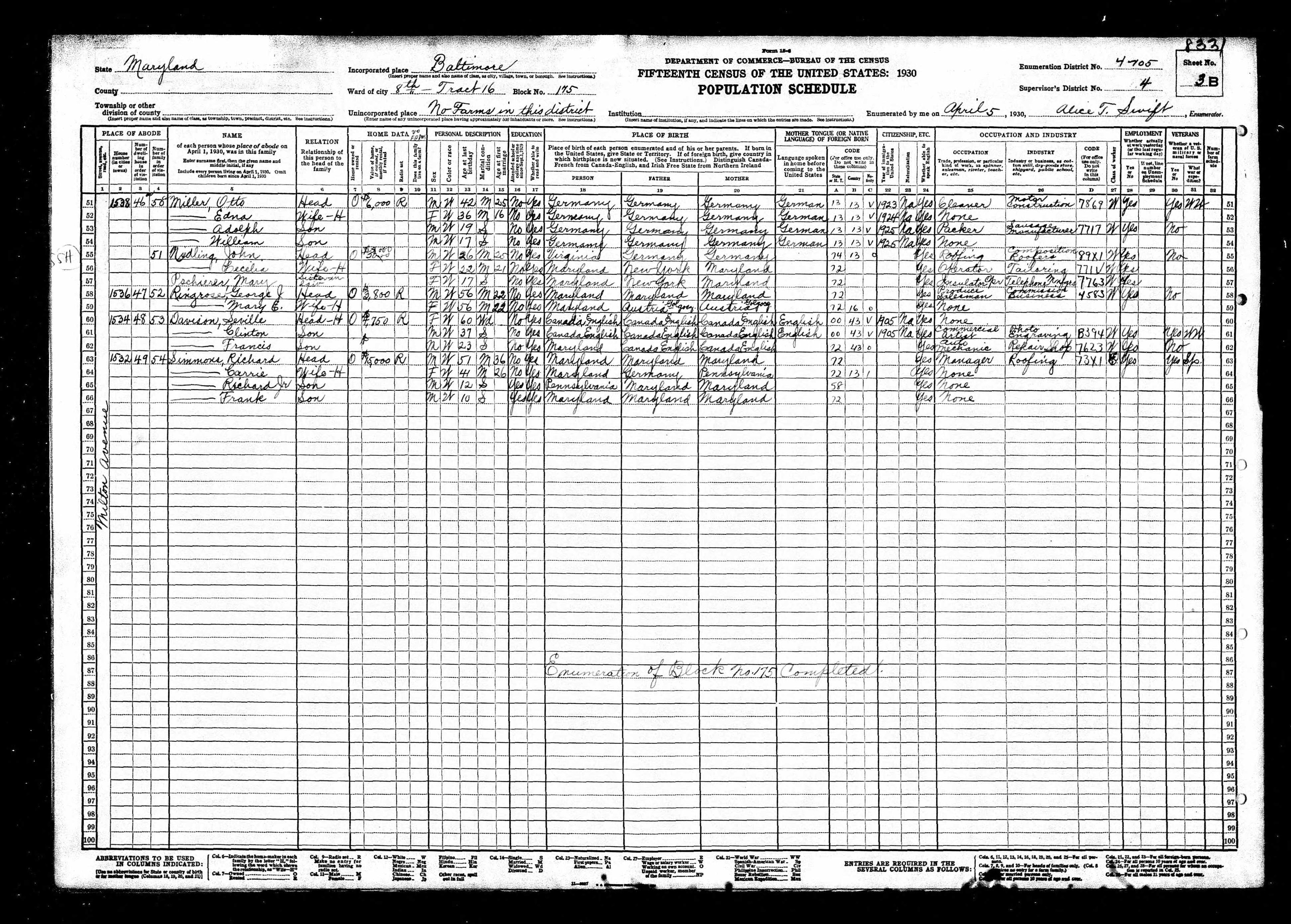
1930
United States Federal Census, 1930
Francis, age 23, listed in Baltimore. Documents his early adult years before his career at Chevrolet.
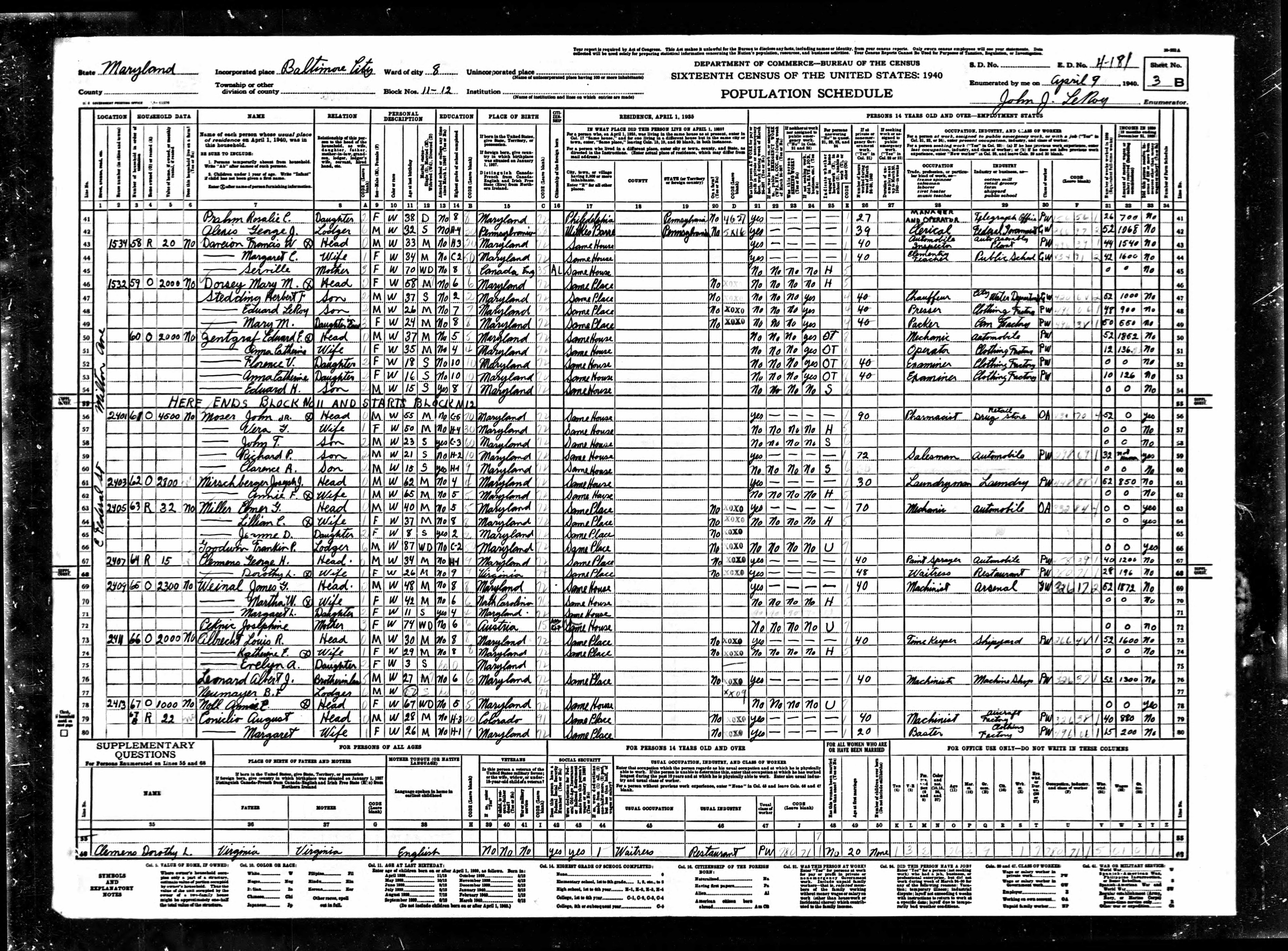
1940
United States Federal Census, 1940
Francis, age 33, listed with wife Marguerite in Baltimore. Occupation recorded as motor mechanic at Chevrolet.
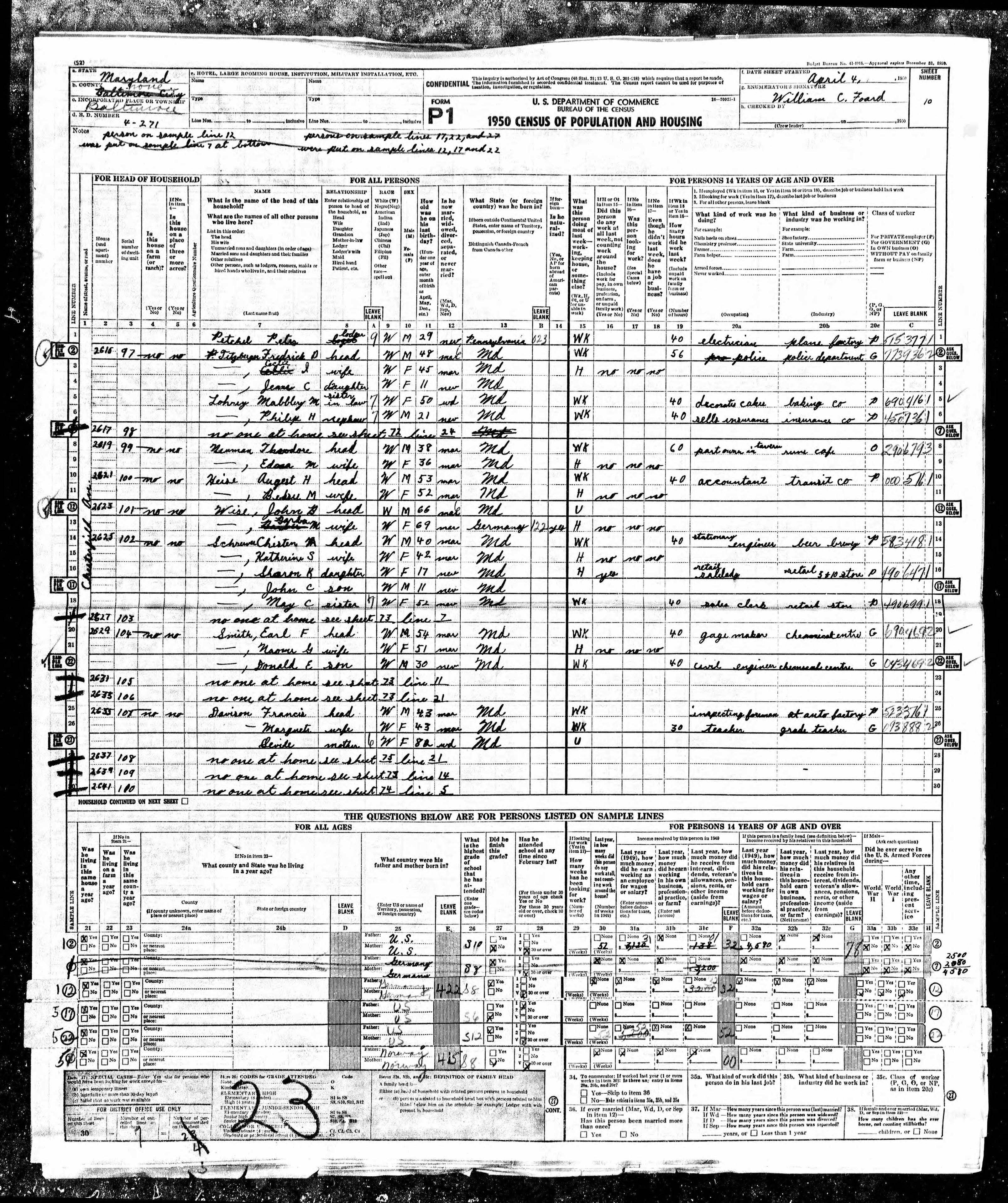
1950
United States Federal Census, 1950
Francis, age 43, listed with wife Marguerite in Baltimore. Occupation recorded as inspecting foreman at an auto factory — confirming his continued career at Chevrolet after the war.
He Deserves to Be Remembered
Through military records, family history, archival research, educational records, preserved artifacts, and the memories of those who knew him and his family, Francis Wilmer "Moe" Davison once again takes his place among the veterans whose service, sacrifice, and dedication left a lasting mark on both their families and their communities.
Every Veteran Has a Story. Every Story Deserves to Be Remembered.
Share His Story