
Project · #002
George Edward Vielhauer Jr.
Boatswain's Mate Second Class, United States Navy
September 23, 1925 – August 14, 1967
Every Veteran Has a Story. Every Story Deserves to Be Remembered.
Veteran Profile
- Name
- George Edward Vielhauer Jr.
- Born
- September 23, 1925 · Bridgeport, PA
- Died
- August 14, 1967 · Age 41
- Branch
- United States Navy
- Conflict
- World War II · Korean War Era
- Highest Rating
- Boatswain's Mate Second Class (BM2)
- Ships
- USS Arkansas (BB-33) · USS PCS-1379 · USS Fort Mandan (LSD-21) · USS Vulcan (AR-5)
- Civilian Career
- Laborer; Hairdresser, Pennhurst State School
- Artifact
- The Bluejackets' Manual, 1944 edition
The Artifact
The Bluejackets' Manual
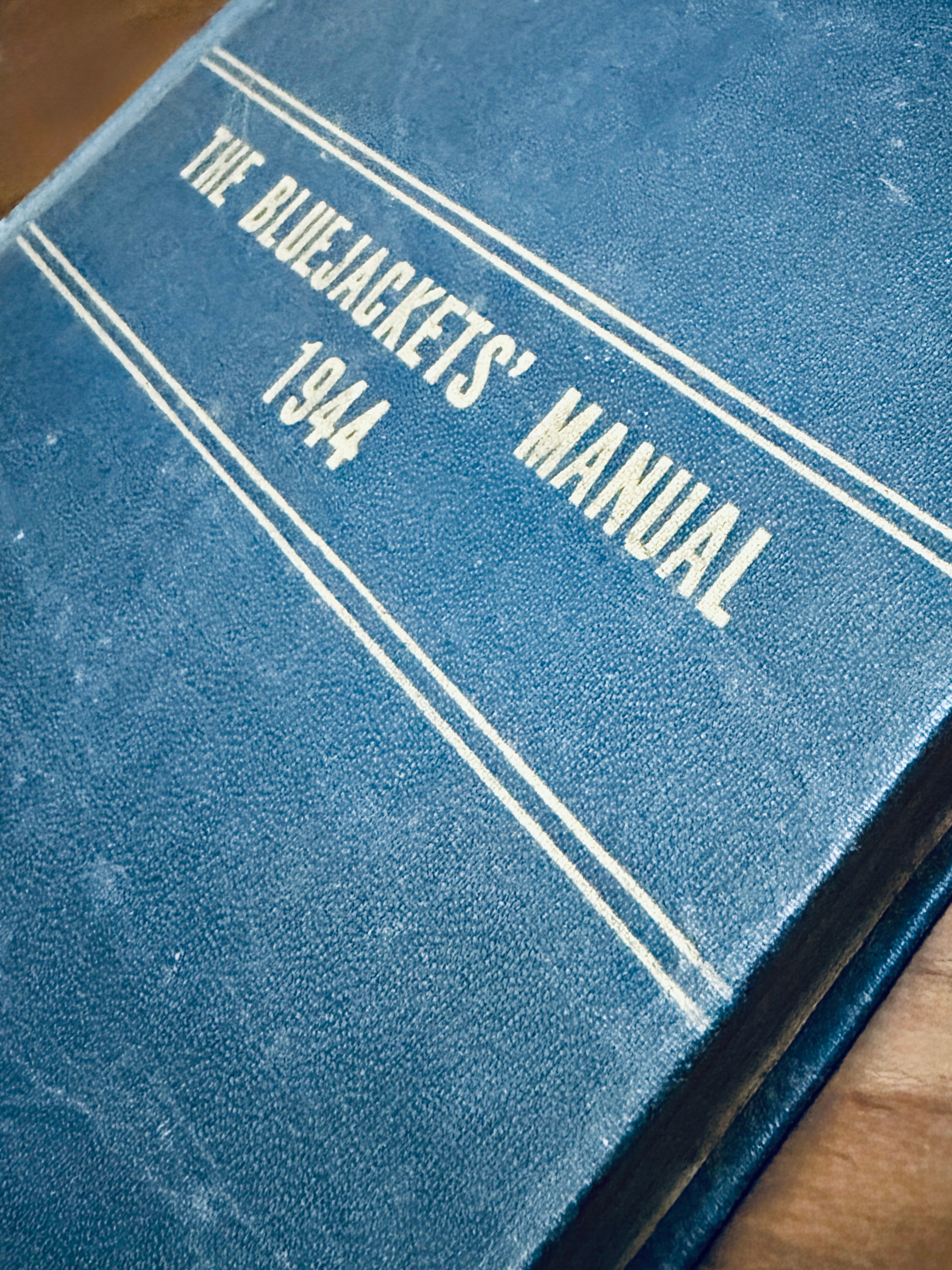
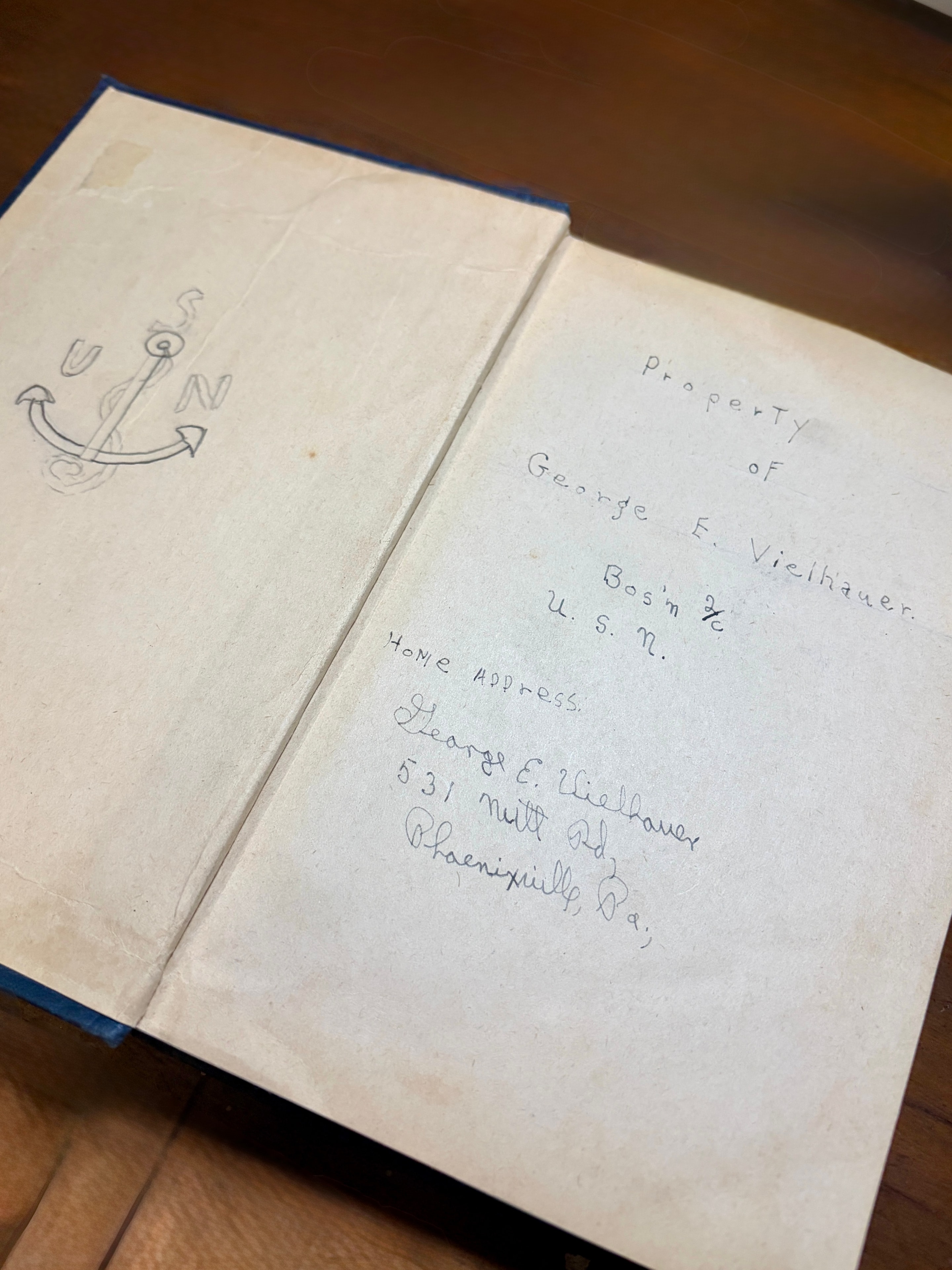
A copy of The Bluejackets' Manual — the standard-issue training guide for every U.S. Navy enlisted man — turned up with a name written inside the front cover: George Edward Vielhauer, along with his home address in Baltimore. A hand-drawn anchor marked the page. The book was his.
Early Life
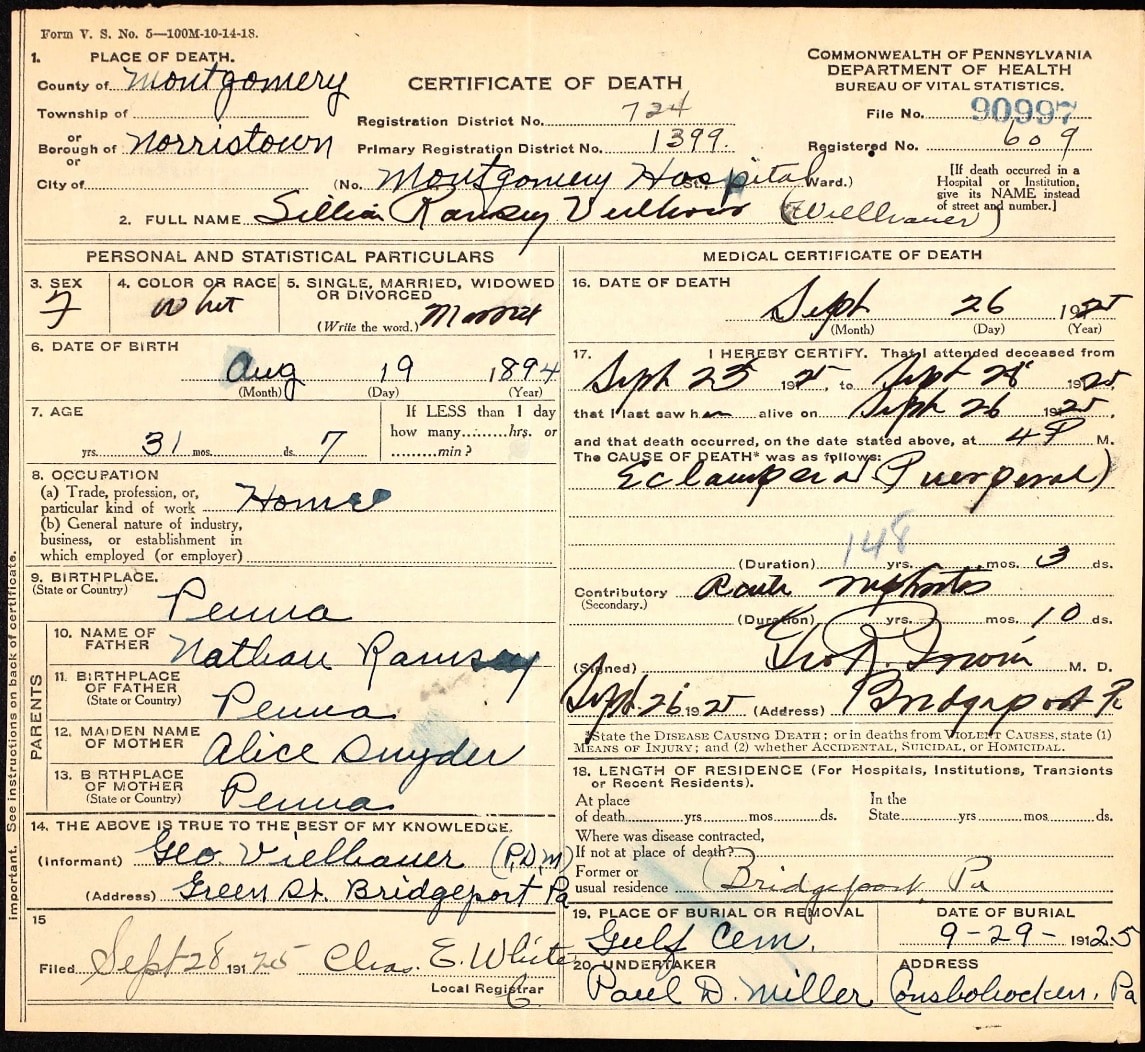
George Edward Vielhauer was born on September 23, 1925, in Bridgeport, Pennsylvania, to George Edward Vielhauer, Sr. and Lillian Pankey Wood Vielhauer. His life began with tragedy when his mother died just three days after his birth from complications of childbirth. In 1927, his father married Ruth Shoemaker, who became the maternal figure throughout George's childhood.
George was raised alongside his younger brother, Charles Louis Vielhauer (June 29, 1928 – June 29, 2011), who later graduated from Phoenixville High School in 1946, served as a Staff Sergeant in the U.S. Army during the Korean War, and spent much of his civilian career working in the Phoenixville area. The brothers continued a tradition of military service within the Vielhauer family.
Raised in Phoenixville during the Great Depression, George grew up in a hardworking family whose resilience would shape the course of his life.
Answering the Call
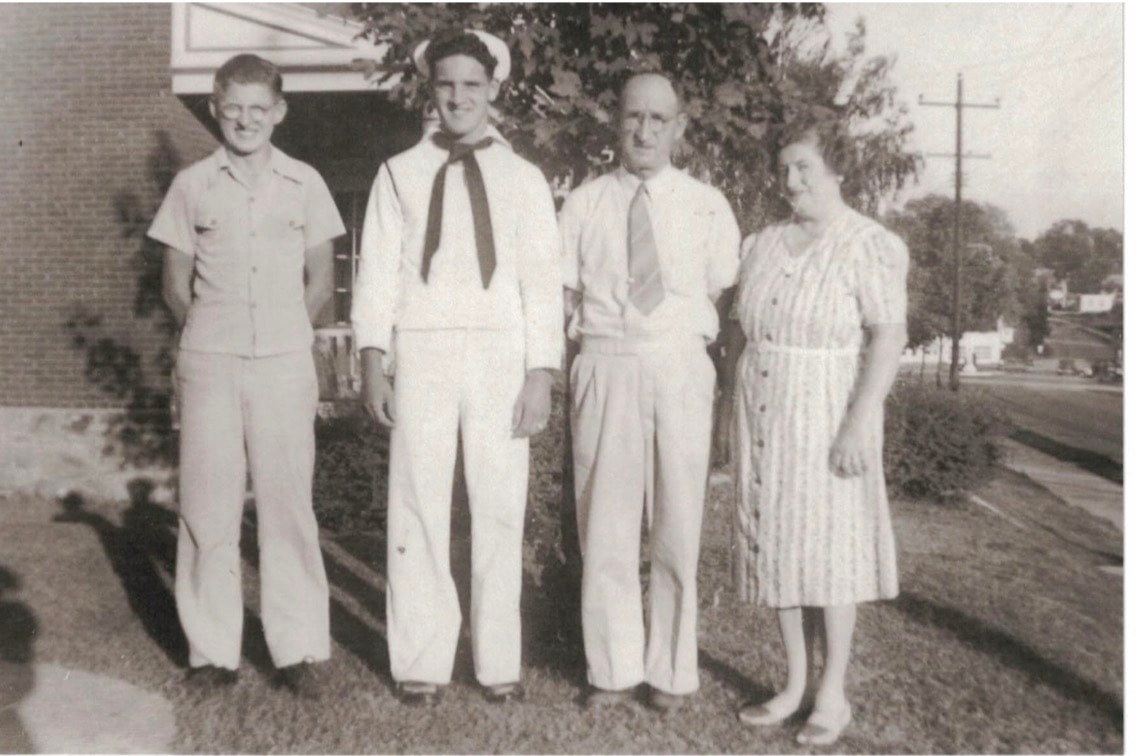
At just seventeen years old, George enlisted in the United States Navy on February 15, 1943, as the nation was deeply engaged in World War II. Navy records identify Philadelphia, Pennsylvania, as his place of enlistment.
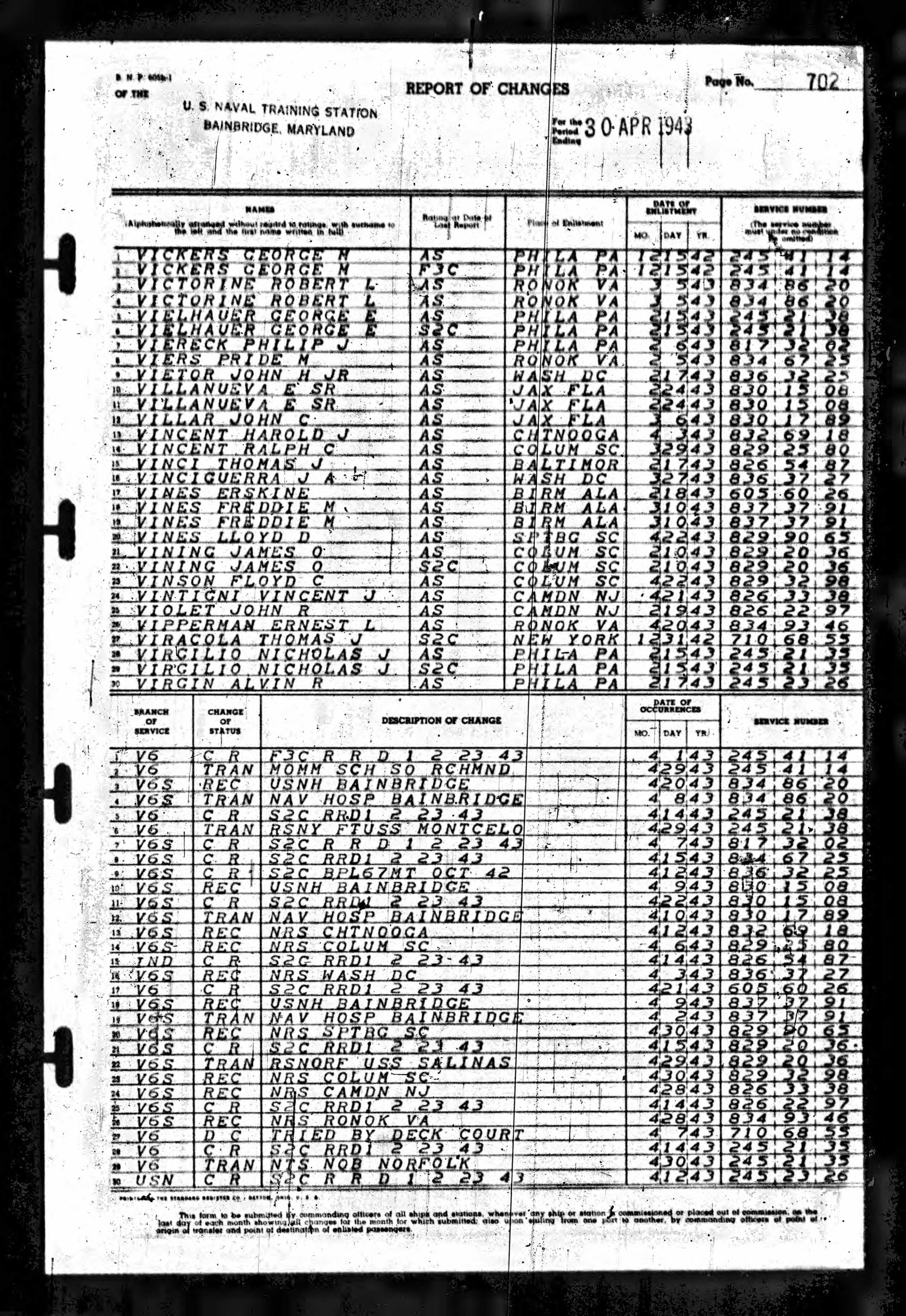
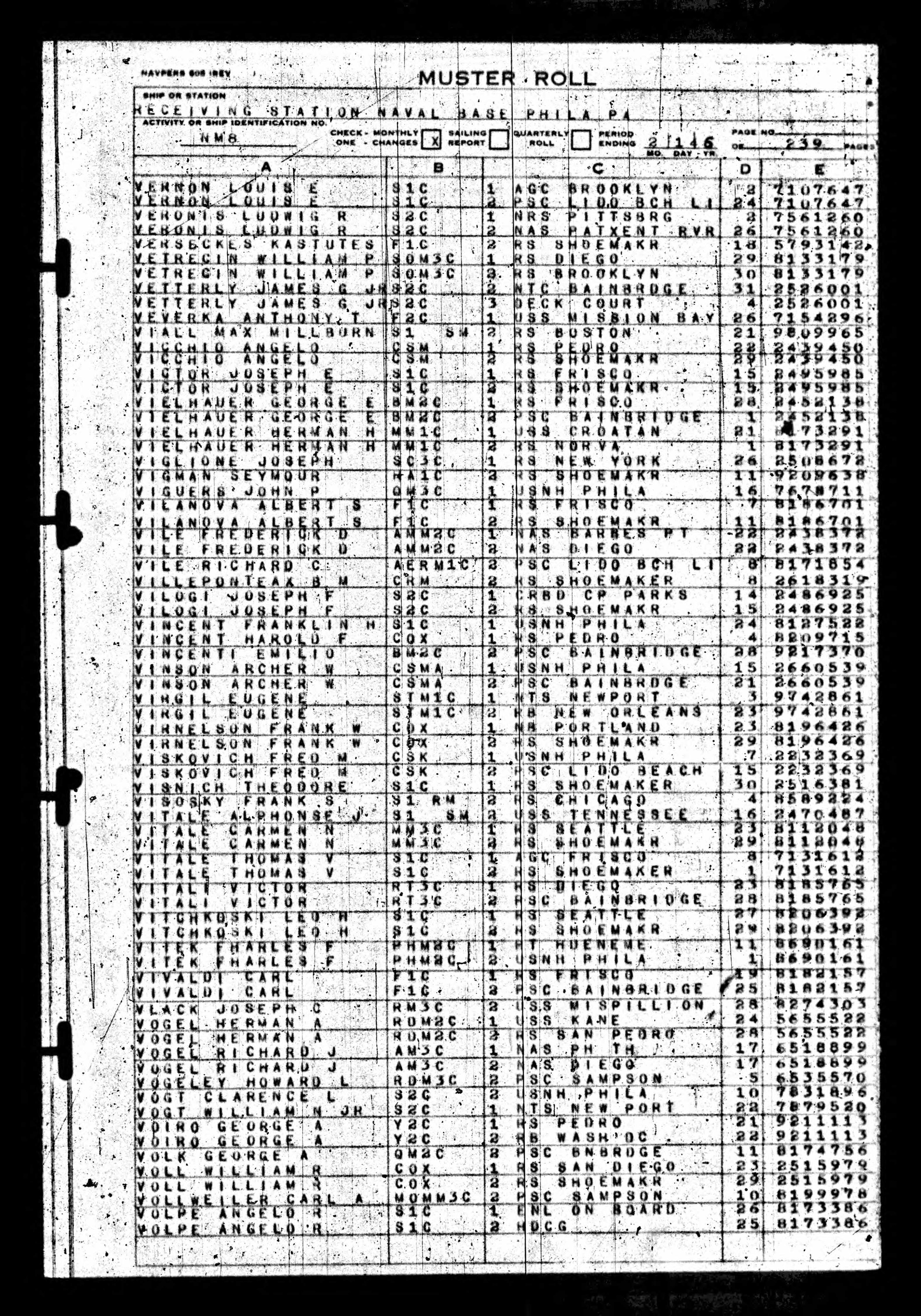
The following day, February 16, George was received at the U.S. Naval Training Station at Bainbridge, Maryland, from the Naval Receiving Station in Philadelphia. He entered training as an Apprentice Seaman (AS) in the V-6 Naval Reserve program and soon advanced to Seaman Second Class (S2c).
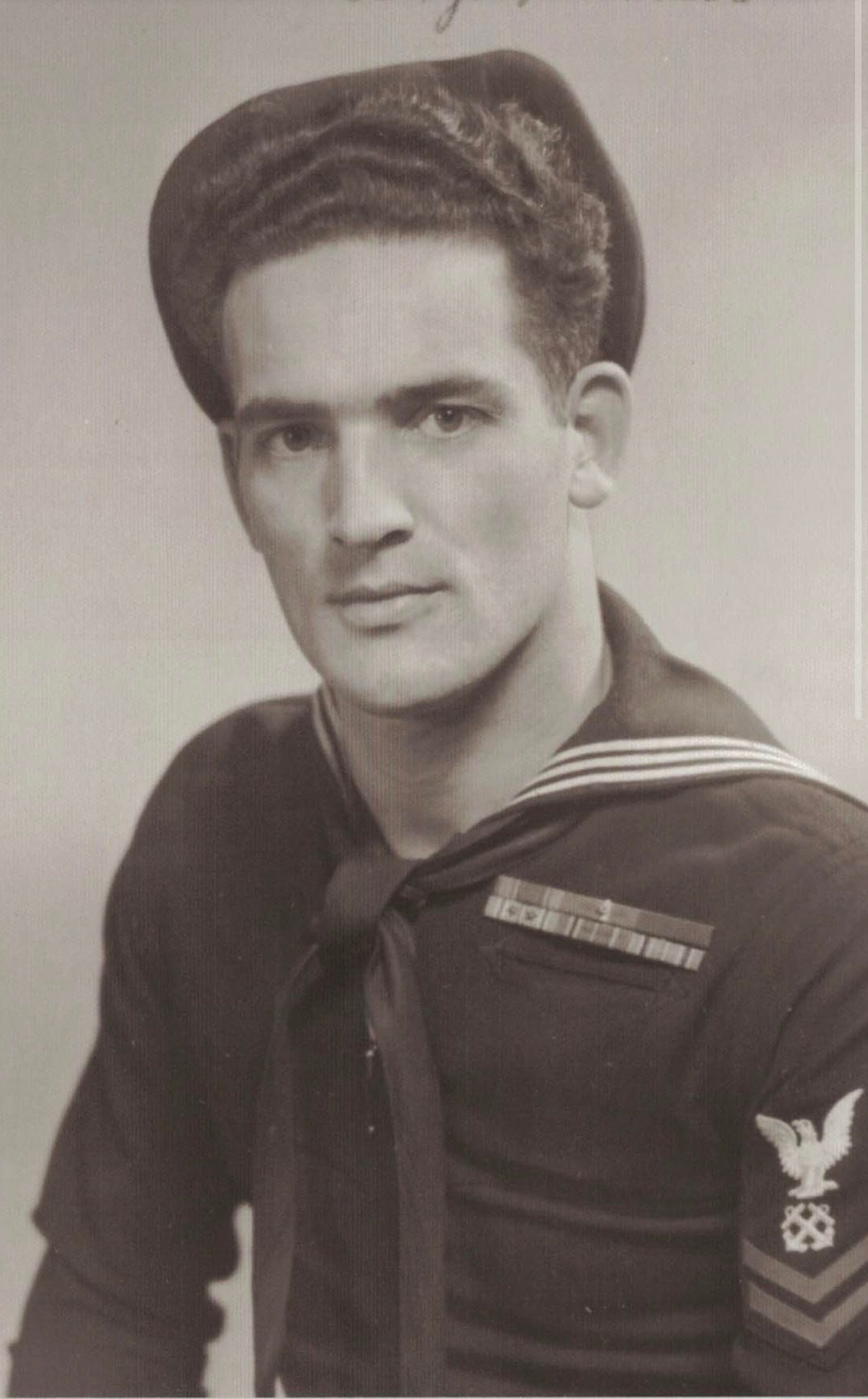
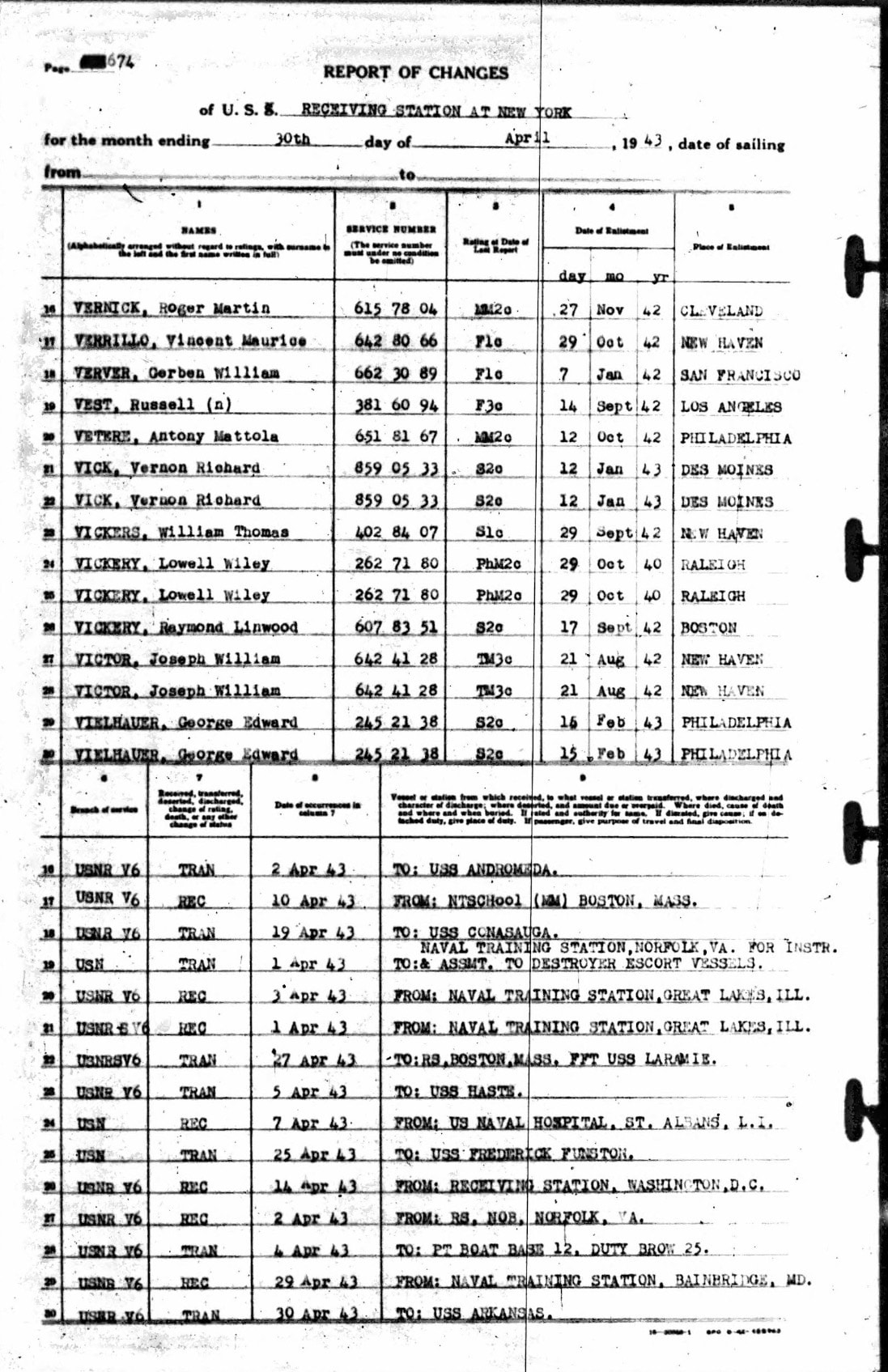
After completing his initial training at Bainbridge, George was transferred to the Receiving Station in New York, where he was received on April 29, 1943. The following day, April 30, he reported aboard his first major wartime assignment, the battleship USS Arkansas (BB-33).
His journey from a seventeen-year-old Apprentice Seaman at Bainbridge to a sailor aboard a battleship had taken little more than two months.
Aboard USS Arkansas (BB-33)
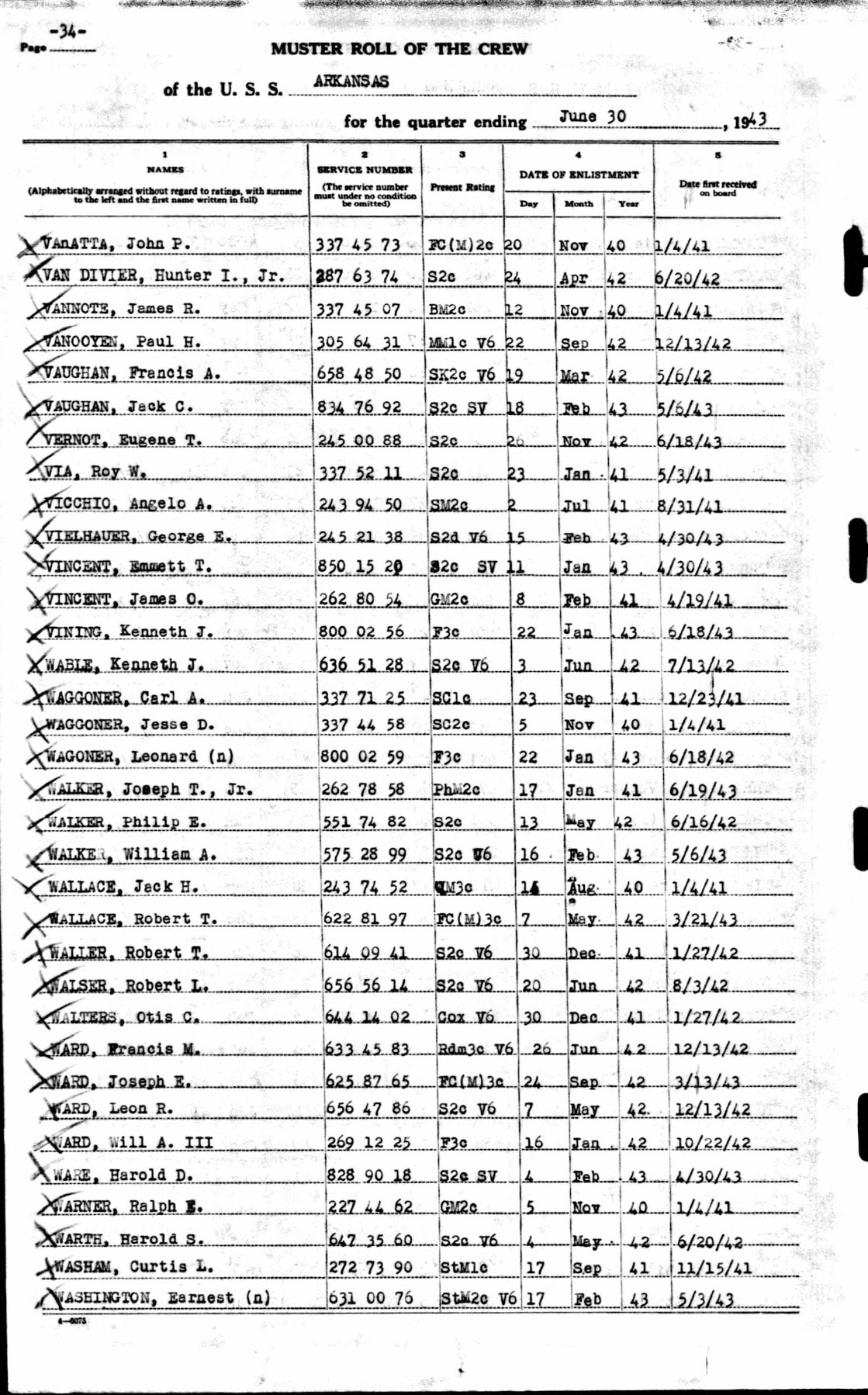
George was officially received aboard USS Arkansas (BB-33) on April 30, 1943, serving as a Seaman Second Class.
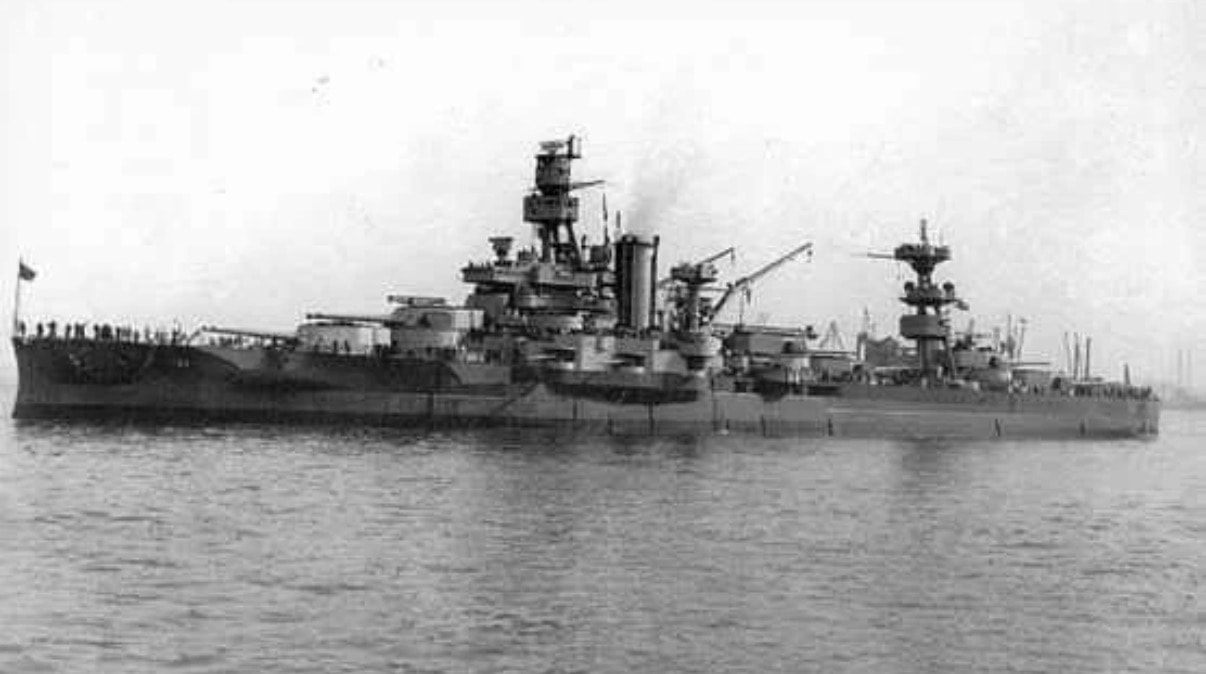
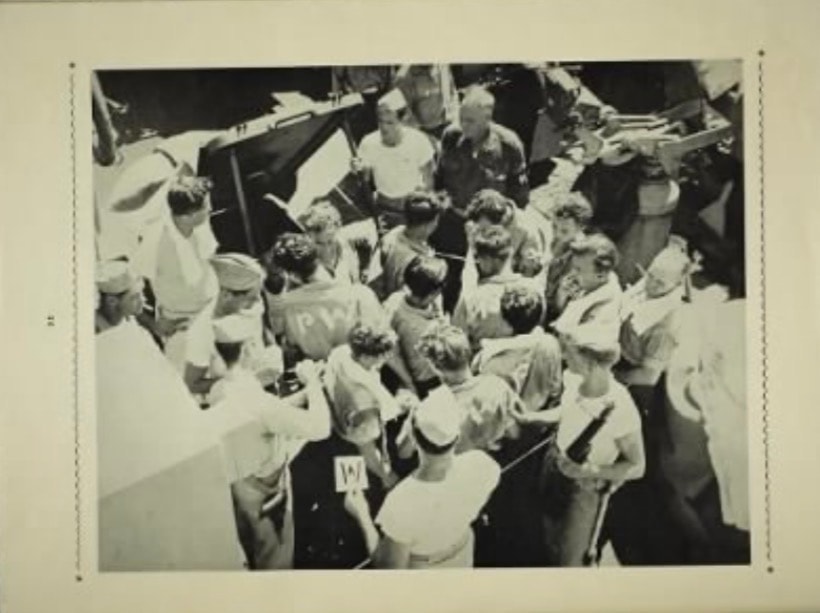
Commissioned in 1912, Arkansas was already a veteran battleship when George stepped aboard. She had served during World War I and remained an active part of the fleet during World War II. During George's time aboard in 1943, the battleship was operating primarily in the Atlantic, where she performed training and other duties supporting the expanding naval war.
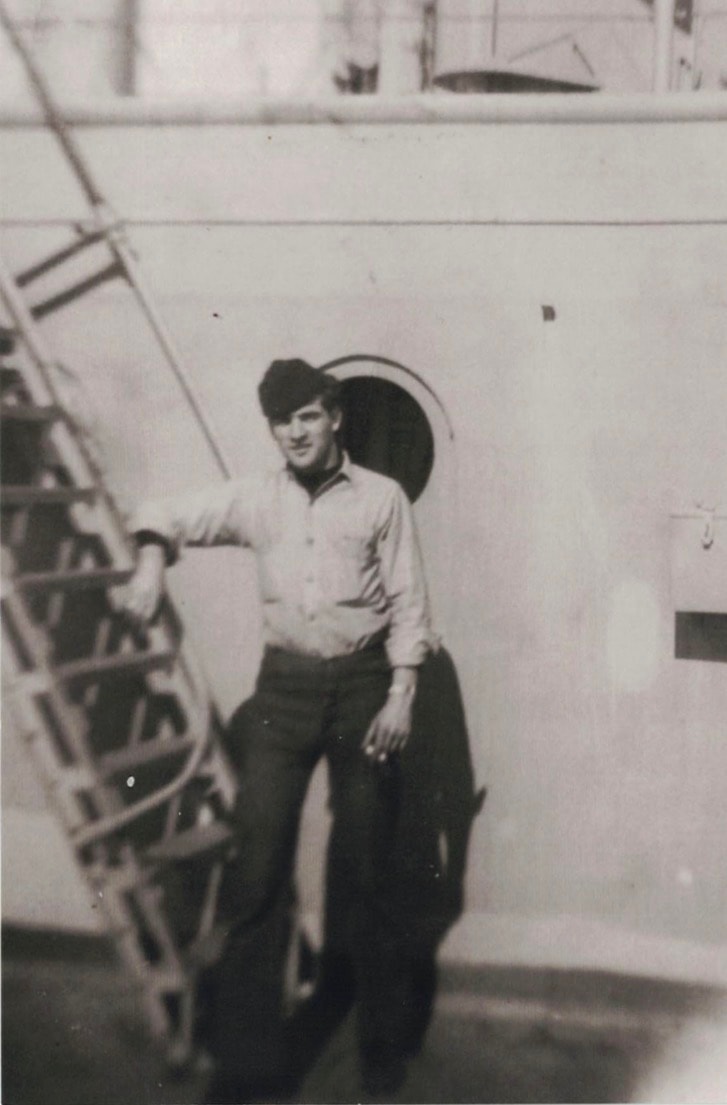
For George, Arkansas provided his introduction to life at sea aboard one of the Navy's large capital ships. As a junior deck sailor, he continued developing the practical seamanship skills that would eventually carry him into the Boatswain's Mate rating.
A June 30 muster confirms that George remained aboard Arkansas that summer. On September 27, 1943, after nearly five months aboard the battleship, he was transferred to the Submarine Chaser Training Center in Miami, Florida.
His next assignment would place him aboard a vessel dramatically smaller than the battleship he had just left — and eventually carry him into the Pacific war.
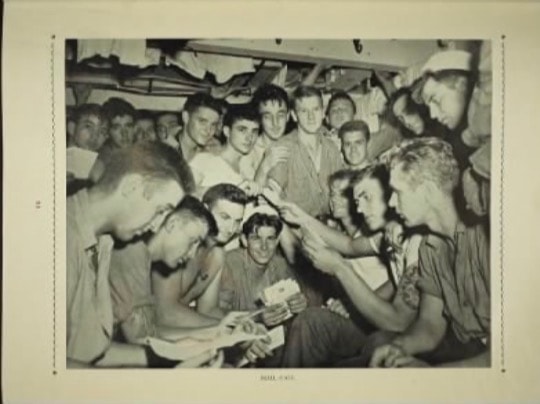
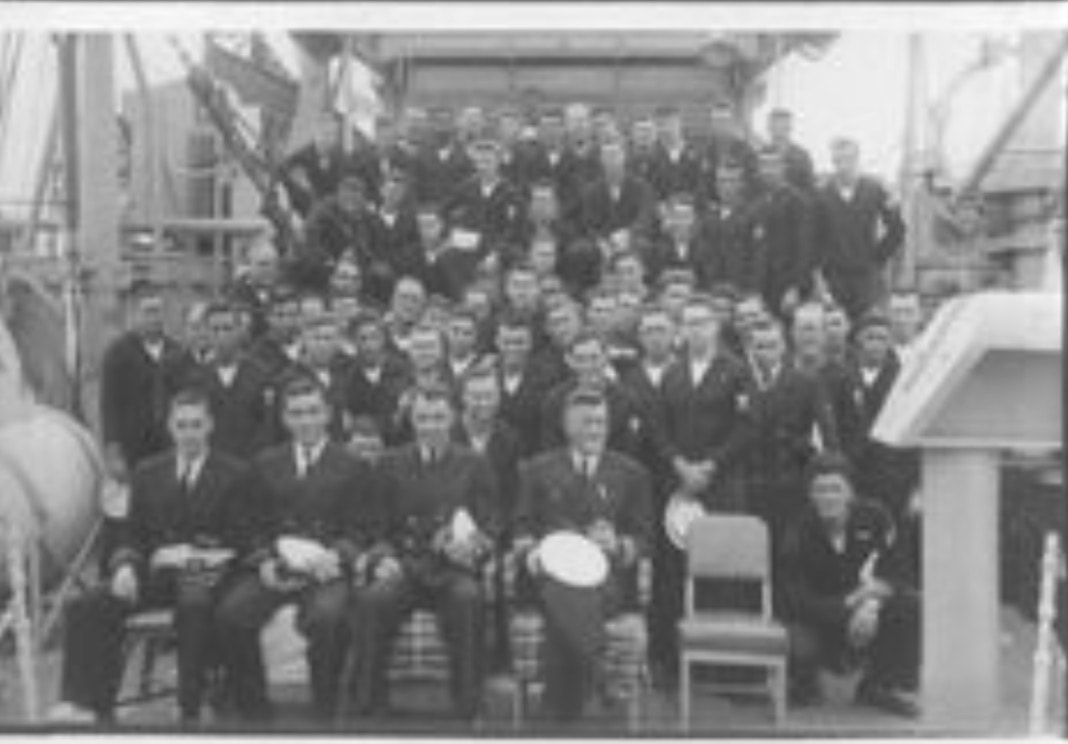
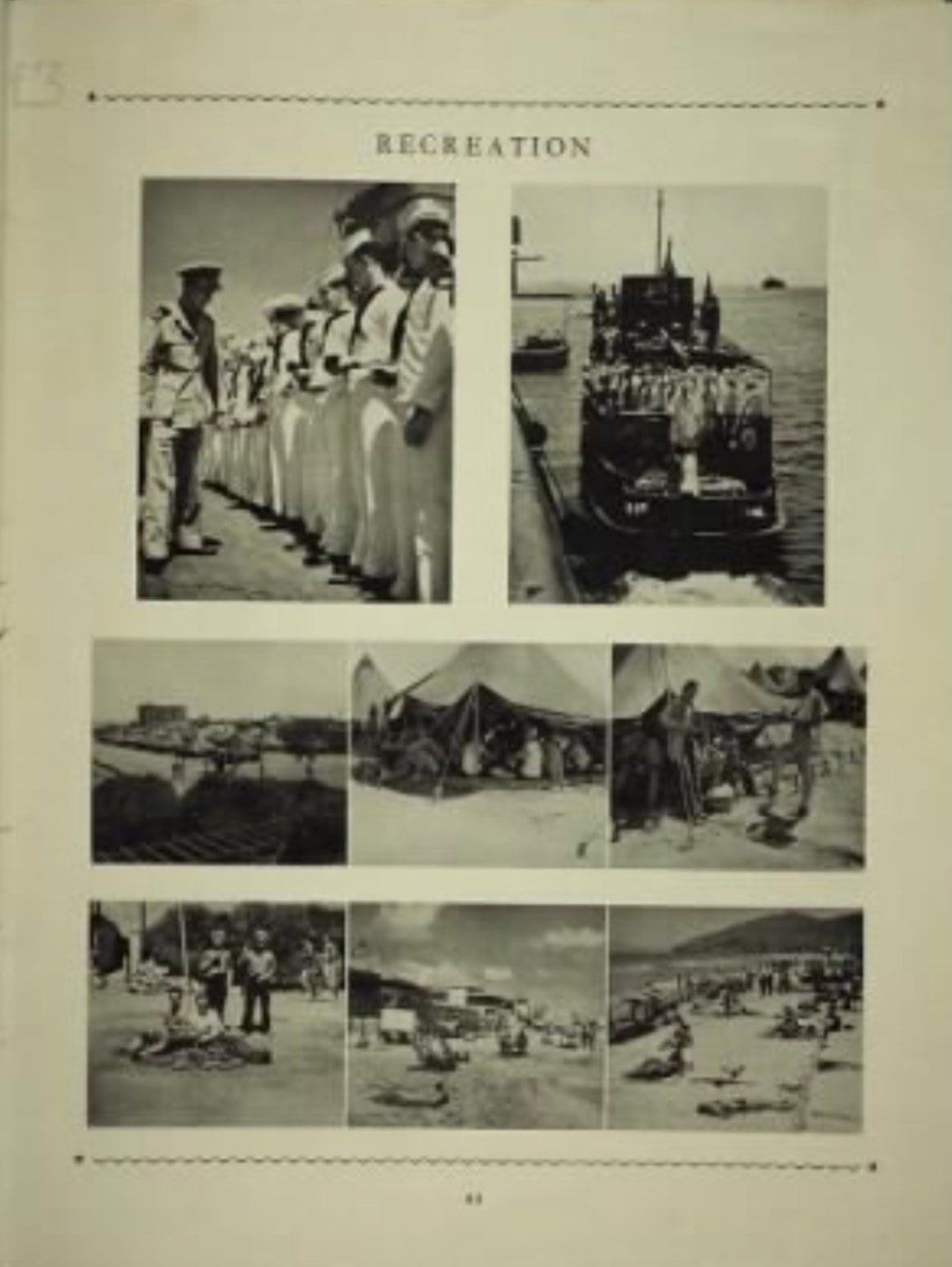
USS Arkansas · Cruise Book Photos
From Submarine Chaser Training to PCS-1379
Following his transfer from Arkansas, George underwent training associated with the Navy's submarine-chaser program in Miami, Florida.
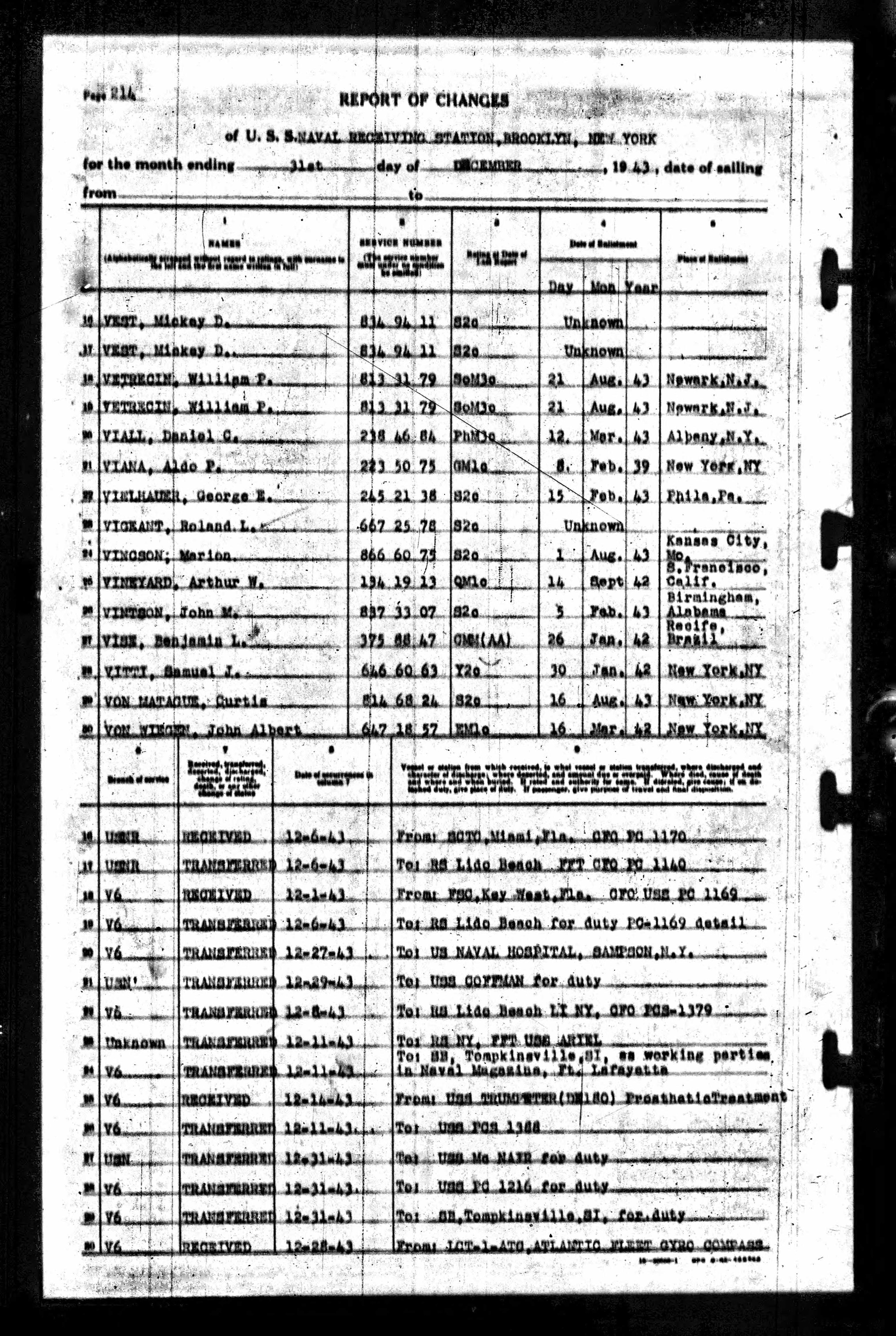
On October 25, 1943, he was transferred from the Miami training center toward the Naval Receiving Station in Brooklyn, New York. A December personnel record subsequently documents his transfer from Brooklyn to Lido Beach, Long Island, in care of PCS-1379.
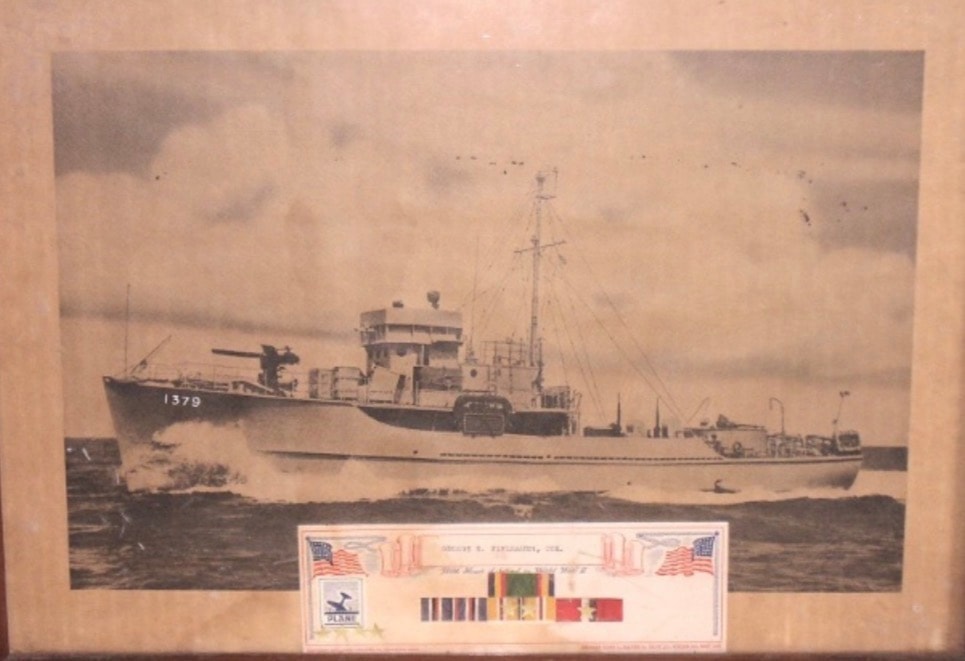
On March 5, 1944, George was formally received aboard USS PCS-1379, beginning what would become one of the longest and most significant shipboard assignments of his wartime career.
PCS-1379 was a Patrol Craft Sweeper, one of the Navy's relatively small vessels intended for patrol, escort, antisubmarine, and minesweeping-related duties. Life aboard such a vessel differed greatly from service aboard a battleship. Smaller crews relied heavily upon practical seamanship, watchstanding, line handling, maintenance, small-boat operations, and the ability of sailors to perform a wide range of duties.
For a sailor developing into a Boatswain's Mate, it was an environment in which seamanship mattered every day.
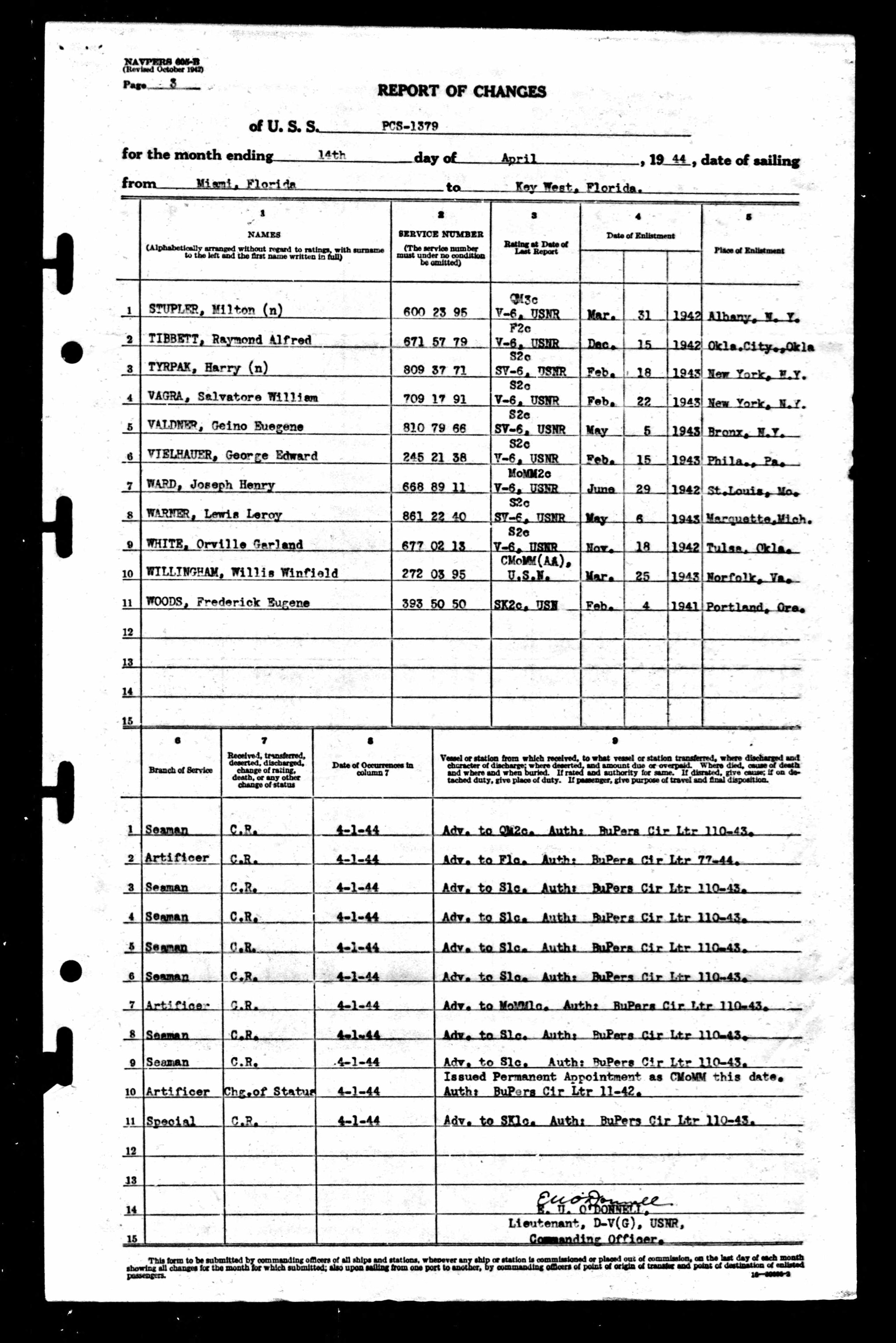
On April 1, 1944, George advanced to Seaman First Class (S1c). Later that month, a muster documented PCS-1379 sailing from Miami to Key West, Florida. Subsequent records confirm George remained aboard throughout 1944.
The small patrol craft would eventually carry him far beyond American waters.
Into the Pacific
By 1945, George and PCS-1379 were operating thousands of miles from home in the western Pacific.
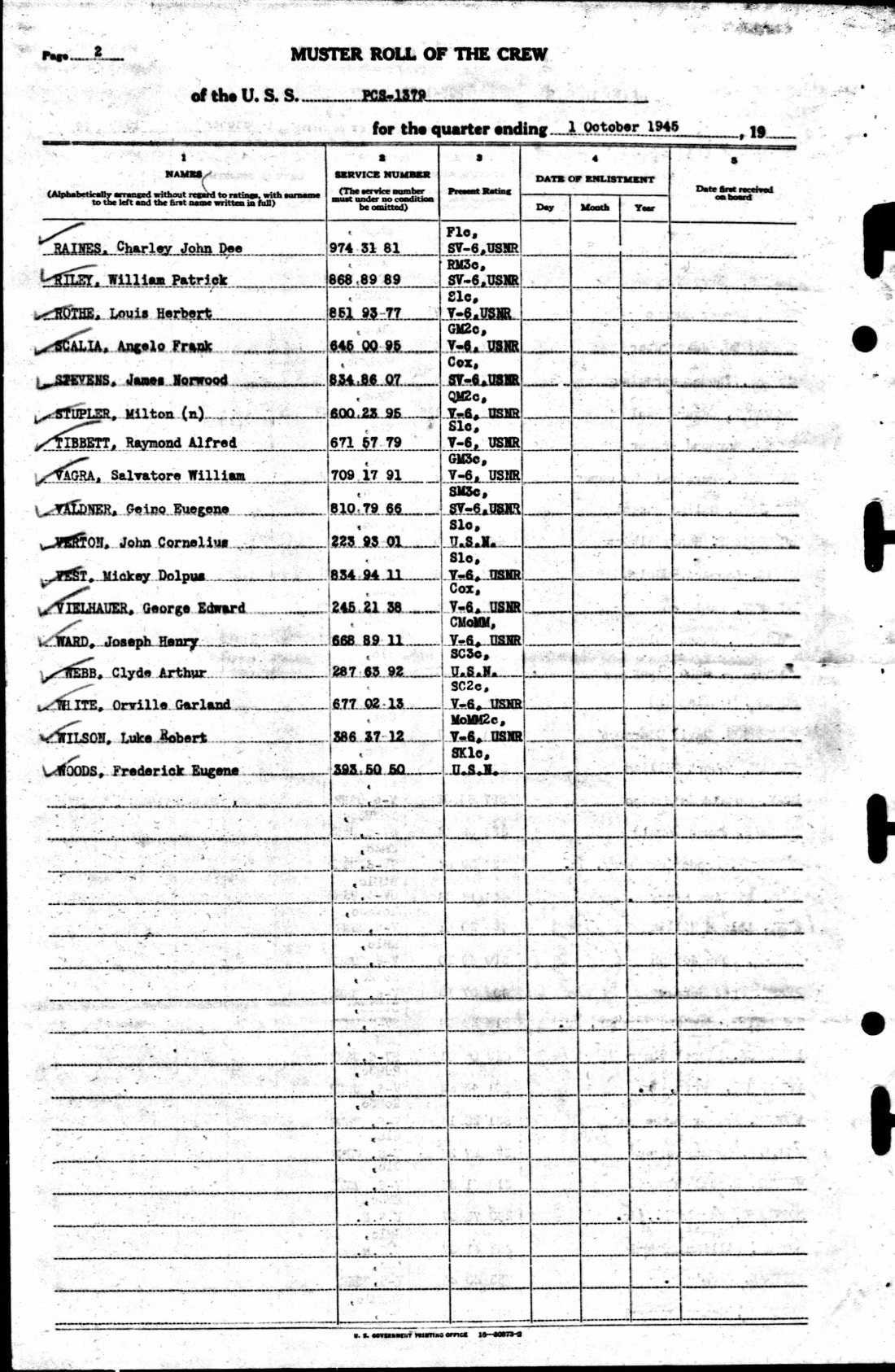
Surviving Navy muster rolls document PCS-1379 sailing from Okinawa in the Ryukyu Islands to Ulithi in the Western Caroline Islands during the closing months of World War II. The records provide direct evidence that George's wartime service extended into the Pacific theater.
On April 1, 1945, while still aboard PCS-1379, George advanced from Seaman First Class to Coxswain, another step in his progression through the Navy's deck ratings.
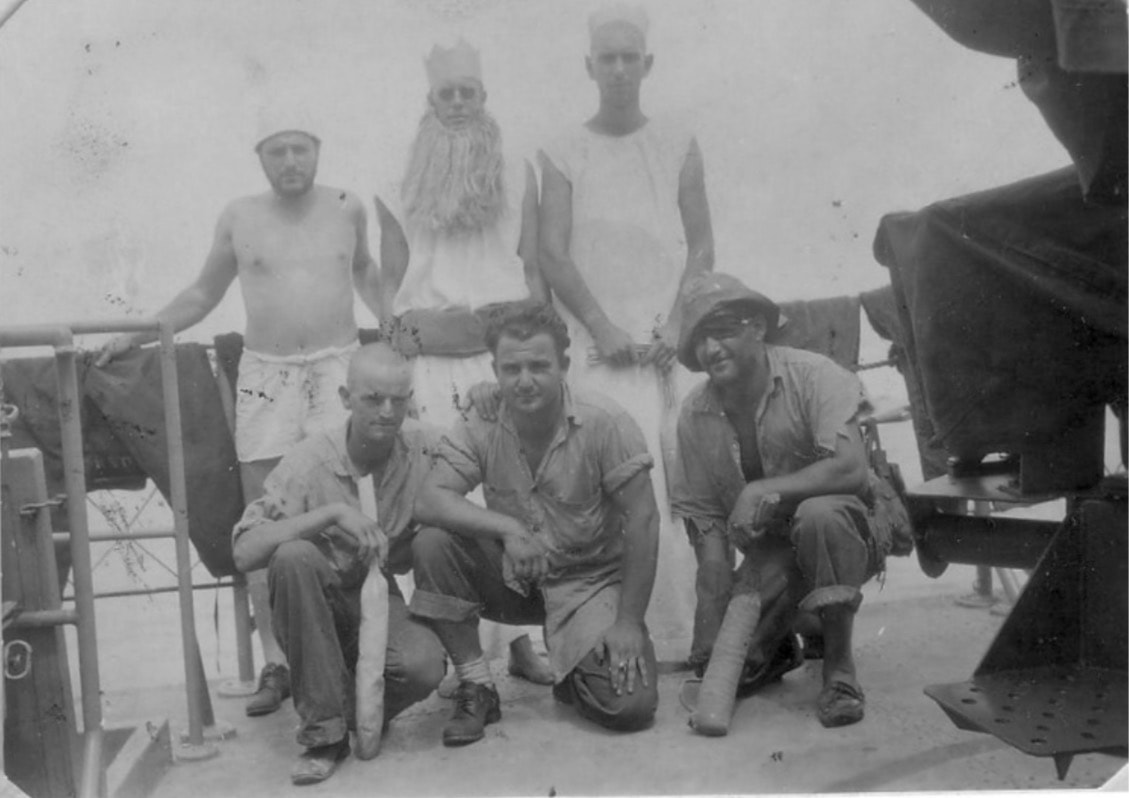
George remained aboard PCS-1379 through the final months of World War II and was still attached to the vessel after Japan's surrender in 1945.
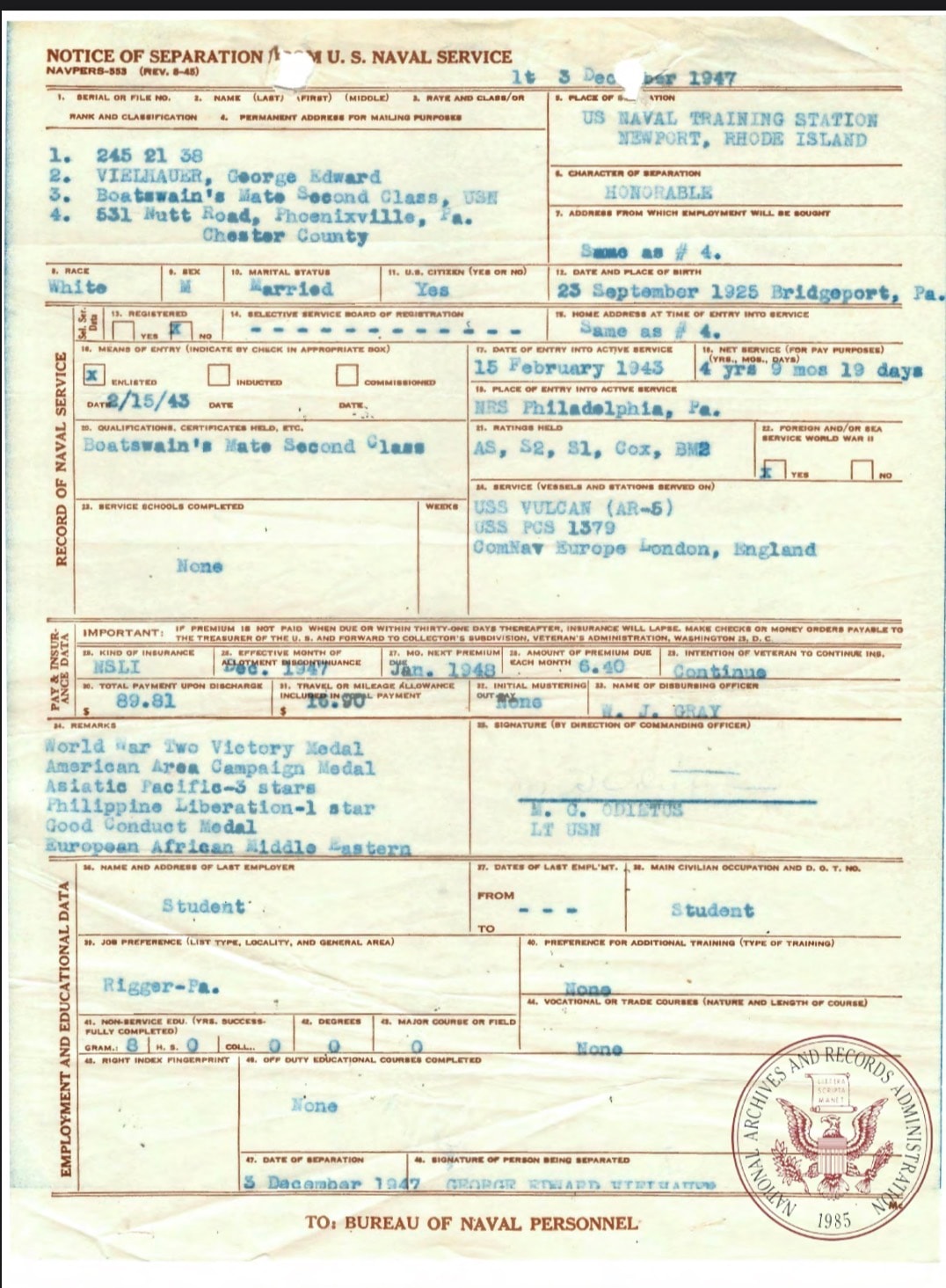
His official service record reflects the breadth of his wartime service. George received the World War II Victory Medal, Good Conduct Medal, American Area Campaign Medal, European-African-Middle Eastern Campaign Medal, Asiatic-Pacific Campaign Medal with three campaign stars, and the Philippine Liberation Medal with one star. The three campaign stars on his Asiatic-Pacific Campaign Medal and the star accompanying his Philippine Liberation Medal demonstrate participation in qualifying campaigns, although the surviving muster rolls should be considered alongside his complete service record before assigning each star to a specific operation.
By early 1946, George had advanced again, reaching Boatswain's Mate Second Class (BM2).
Decorations & Awards
- World War II Victory Medal
- Good Conduct Medal
- American Area Campaign Medal
- European-African-Middle Eastern Campaign Medal
- Asiatic-Pacific Campaign Medal with three campaign stars
- Philippine Liberation Medal with one campaign star
Becoming a Boatswain's Mate
George steadily advanced through the Navy's enlisted ranks, rising from Apprentice Seaman to Seaman Second Class, then Seaman First Class, Coxswain, and ultimately Boatswain's Mate Second Class.
Boatswain's Mate is one of the Navy's oldest ratings, rooted in the traditions of seamanship itself. Boatswain's Mates were responsible for many aspects of a ship's deck operations, including line handling, anchoring, small boats, rigging, deck equipment, watches, preservation of the ship, and the supervision of other deck sailors.
George entered the Navy as a seventeen-year-old Apprentice Seaman. Within approximately three years, he had risen to Boatswain's Mate Second Class, a petty officer entrusted with considerably greater responsibility.
Postwar Service and Naval Forces Europe
The surrender of Japan did not immediately bring George's Navy career to an end.
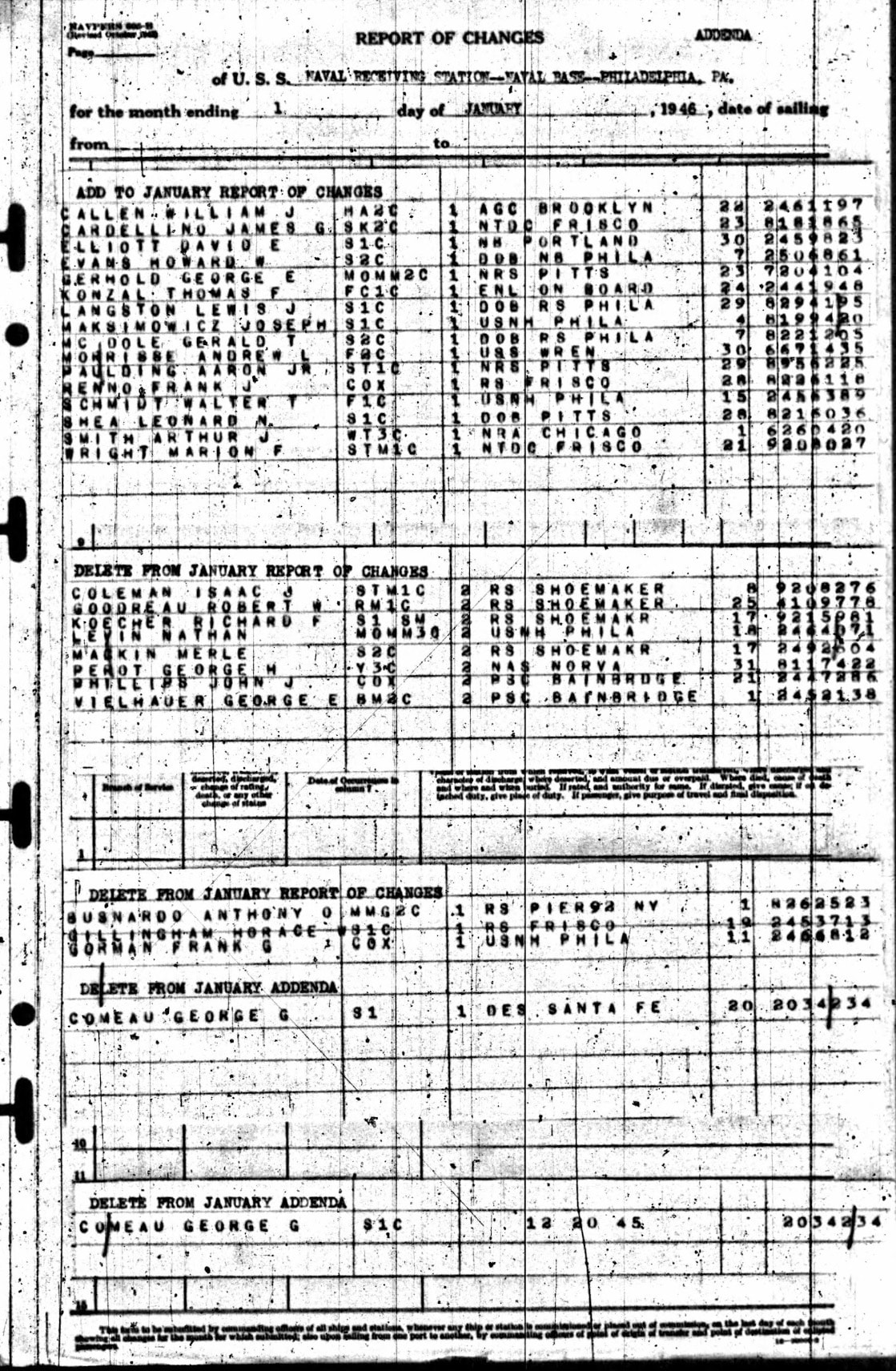
Following his Pacific service, Navy records connect him with receiving and personnel facilities in San Francisco, Philadelphia, and Bainbridge, Maryland during early 1946. By this point, George was serving as a BM2.
Records later carry an enlistment date of April 17, 1946, indicating a new period of enlistment as George continued serving in the postwar Navy.
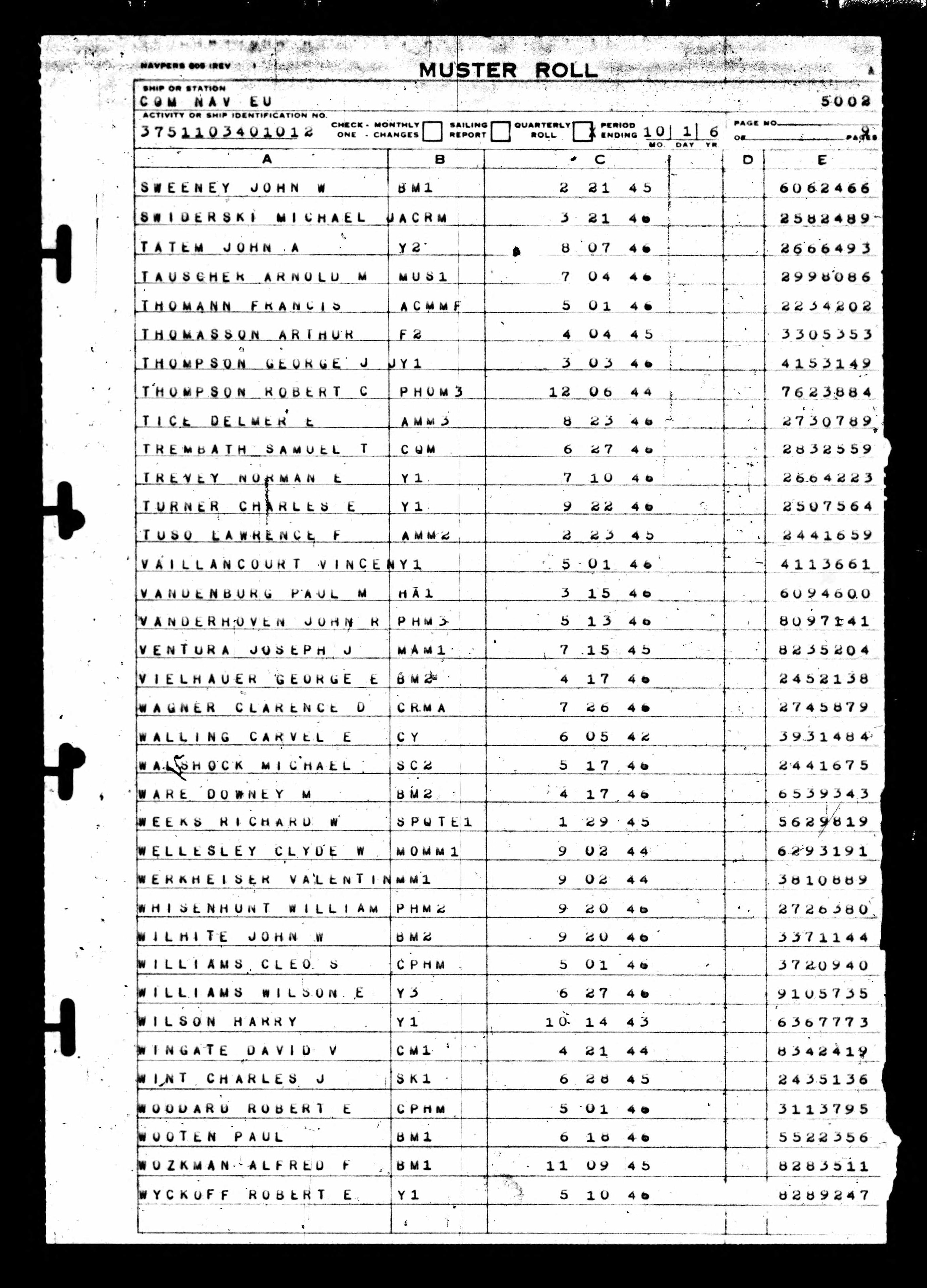
Later that year, he appears as a BM2 on a muster associated with Commander, Naval Forces Europe. American naval forces remained in Europe following World War II as the Navy transitioned from wartime operations to its new postwar responsibilities.
For George, the assignment added another chapter to a career that had already carried him from the Atlantic coast to the western Pacific.
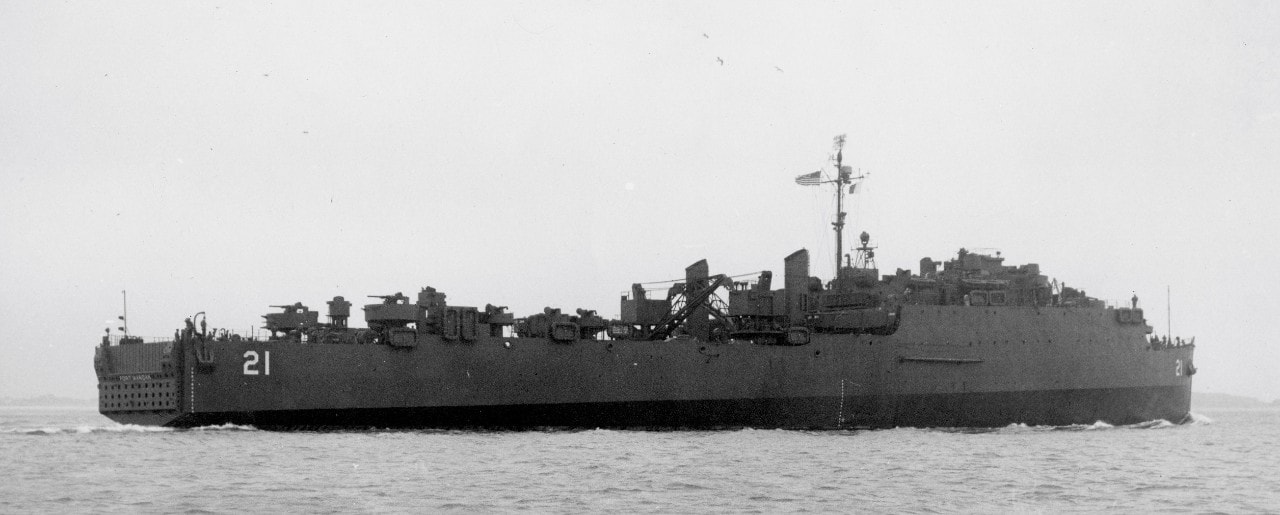
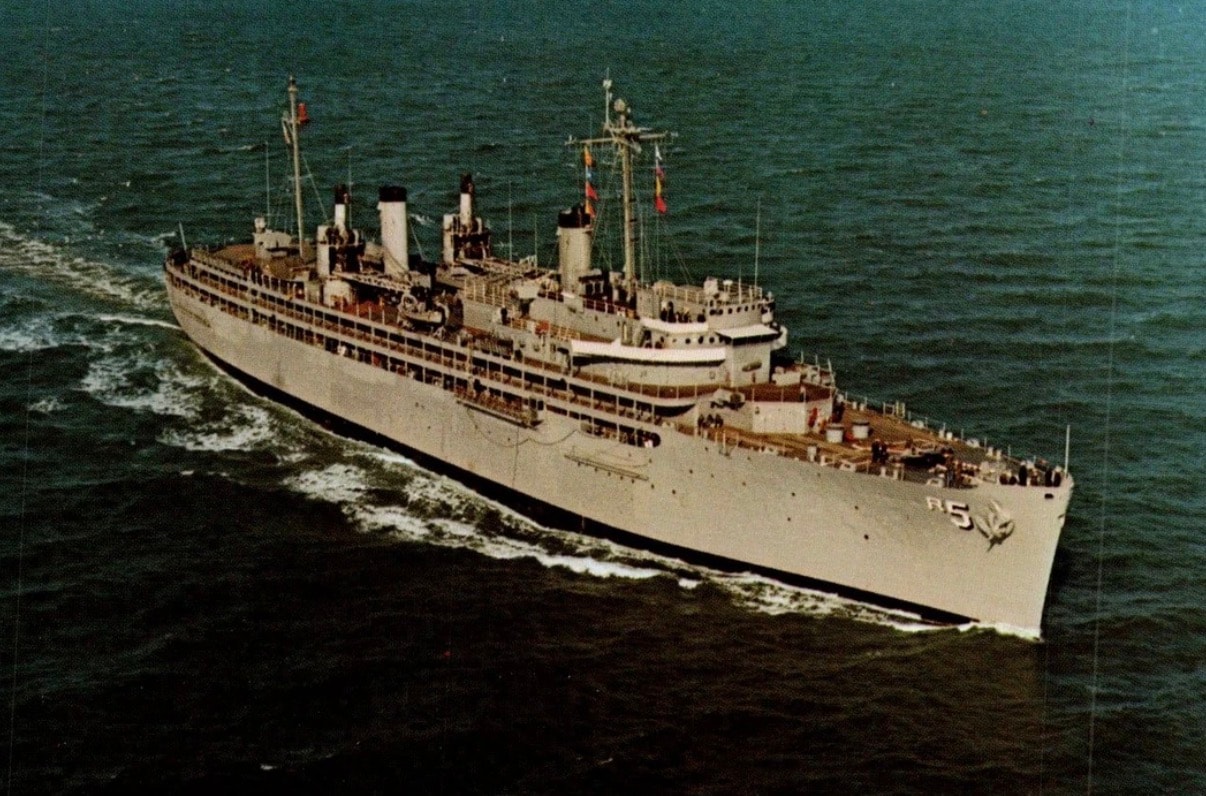
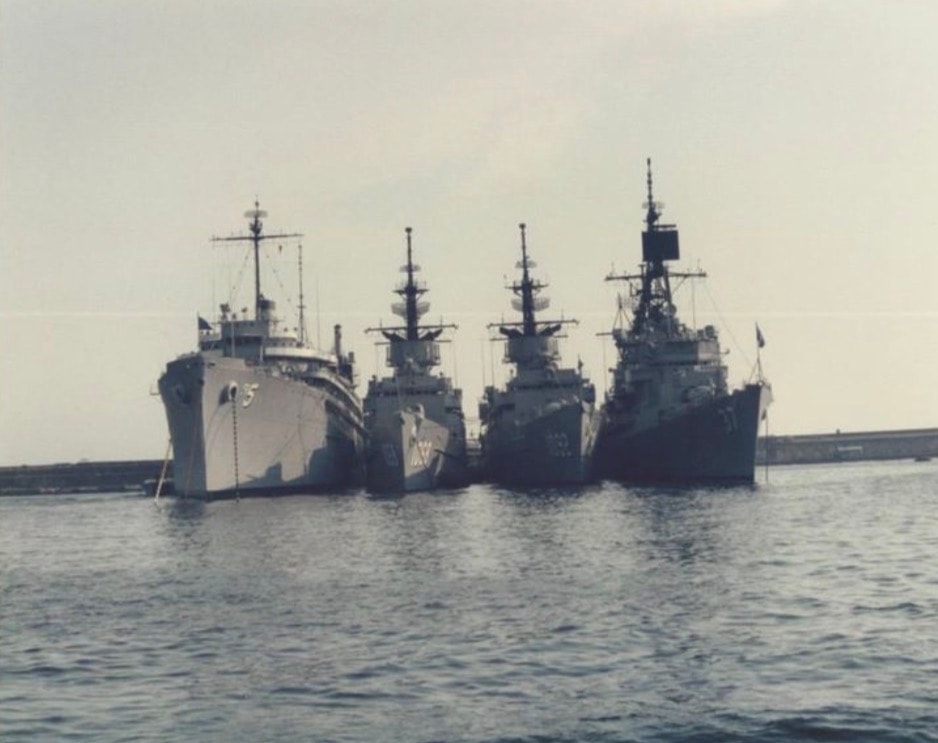
USS Fort Mandan (LSD-21) and USS Vulcan (AR-5)
By early 1947, George's records connect him with USS Vulcan (AR-5) and briefly with USS Fort Mandan (LSD-21).
A USS Vulcan personnel diary dated February 2, 1947, records BM2 George Vielhauer being returned or ordered to USS Fort Mandan (LSD-21) for duty. Fort Mandan was a dock landing ship, designed around a large well deck that allowed the ship to transport, launch, and recover landing craft in support of amphibious operations.
The surviving records discovered thus far do not establish how long George served in connection with Fort Mandan, so this assignment remains a point for further research.
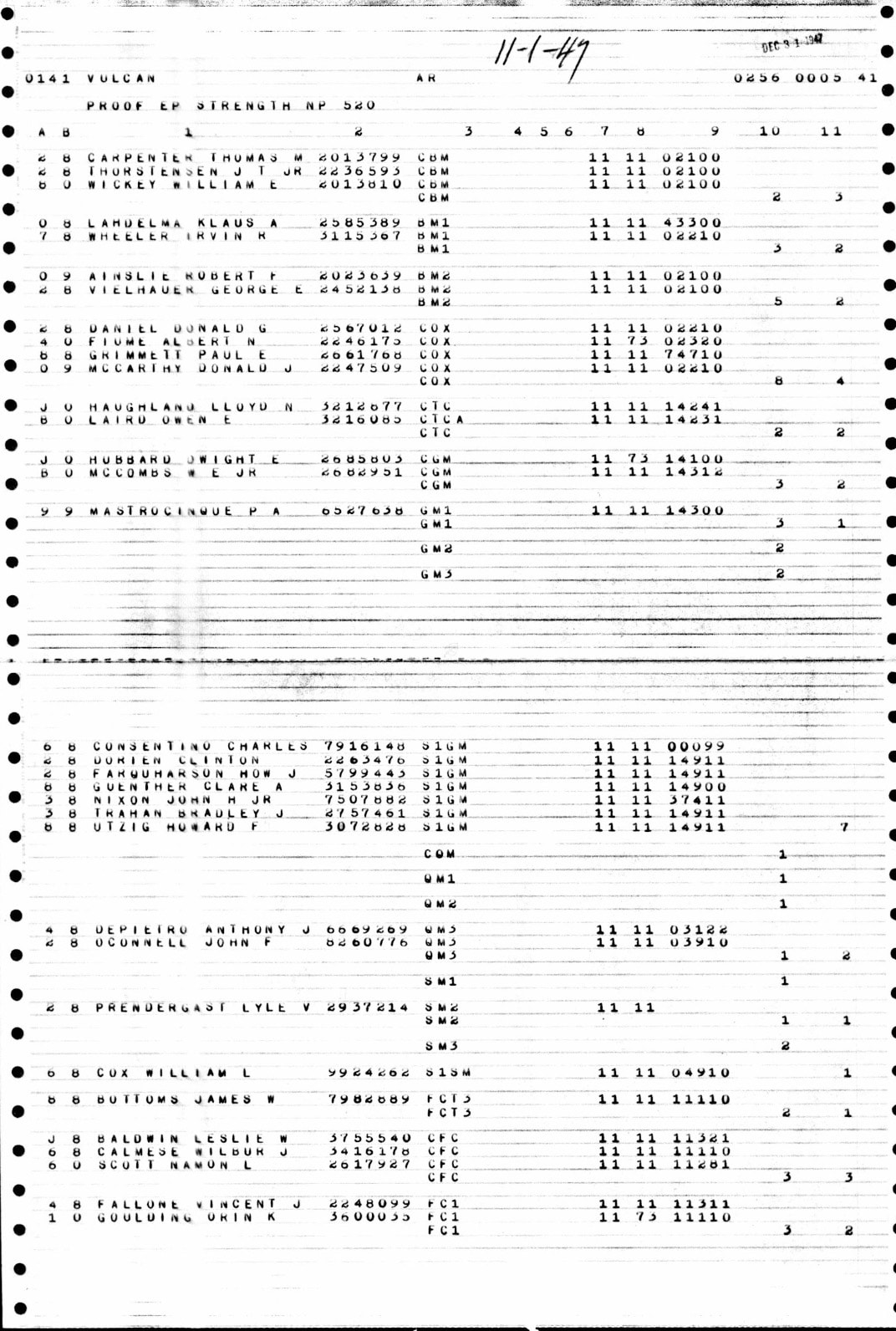
George's 1947 records otherwise repeatedly place him aboard USS Vulcan (AR-5). Commissioned in 1941, Vulcan was a repair ship — essentially a floating industrial and maintenance facility capable of supporting and repairing other vessels of the fleet. Repair ships carried workshops, equipment, supplies, and skilled personnel necessary to keep other Navy ships operational.
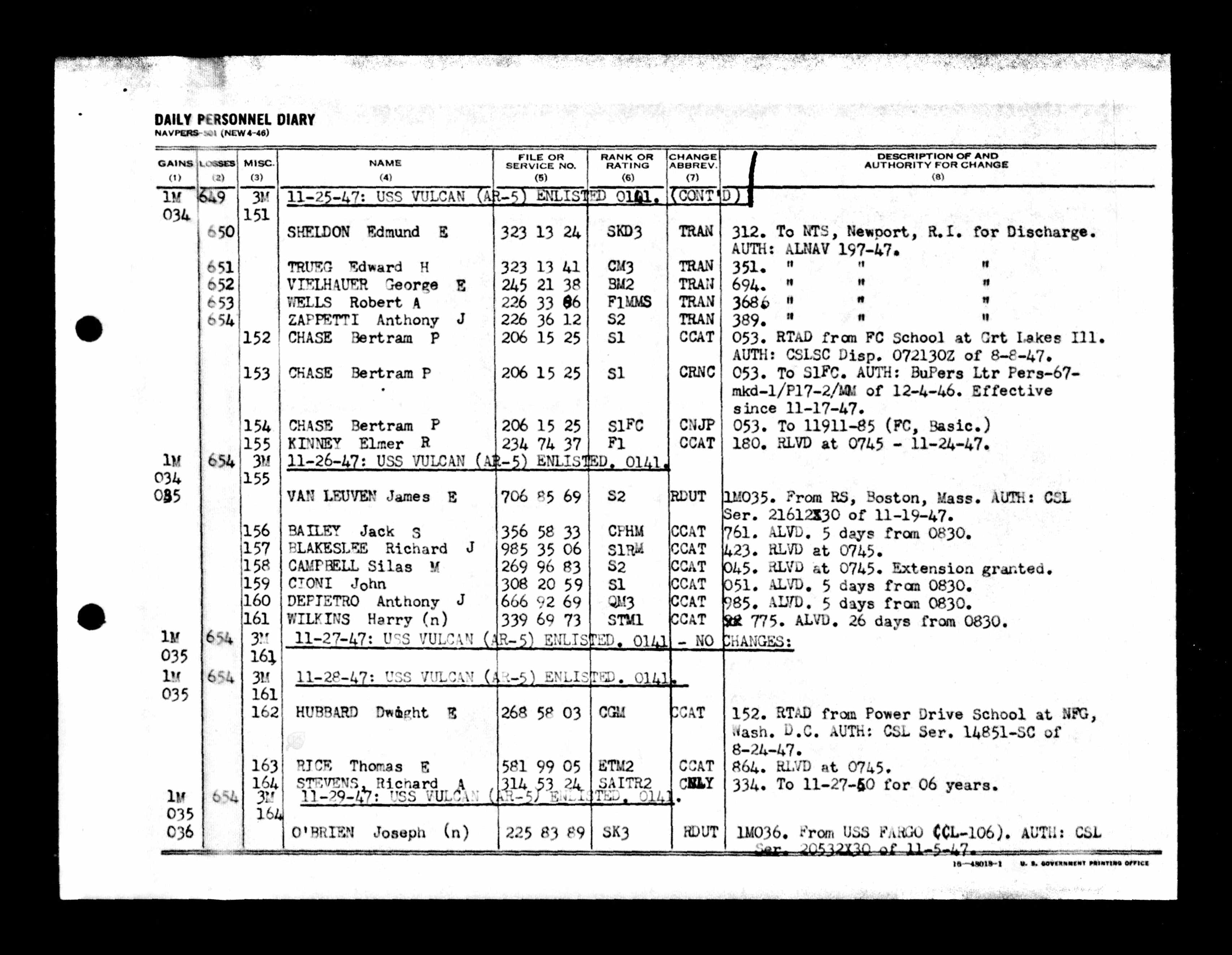
George's surviving Vulcan personnel diaries provide unusually detailed glimpses into his everyday service. He departed on authorized leave on February 24, 1947, remained attached to the ship on its March 1 Proof-of-Strength muster, and returned aboard on March 7. Additional Proof-of-Strength records document him aboard Vulcan in May, July, September, and November 1947. He took another period of authorized leave beginning June 9, returning June 20, and another beginning October 20, returning aboard October 29.
These seemingly ordinary personnel entries help fill the spaces between the major events of George's career, documenting the everyday rhythm of naval service after the war.
On November 25, 1947, George was transferred from Vulcan to Newport, Rhode Island, for discharge. On December 3, 1947, George received an honorable discharge from the United States Navy, closing nearly five years of wartime and postwar active service.
But his time in uniform was not over.
USS Fort Mandan (LSD-21)
USS Vulcan AR-5
Recalled During the Korean War
Following his discharge, George remained connected to the United States Naval Reserve.
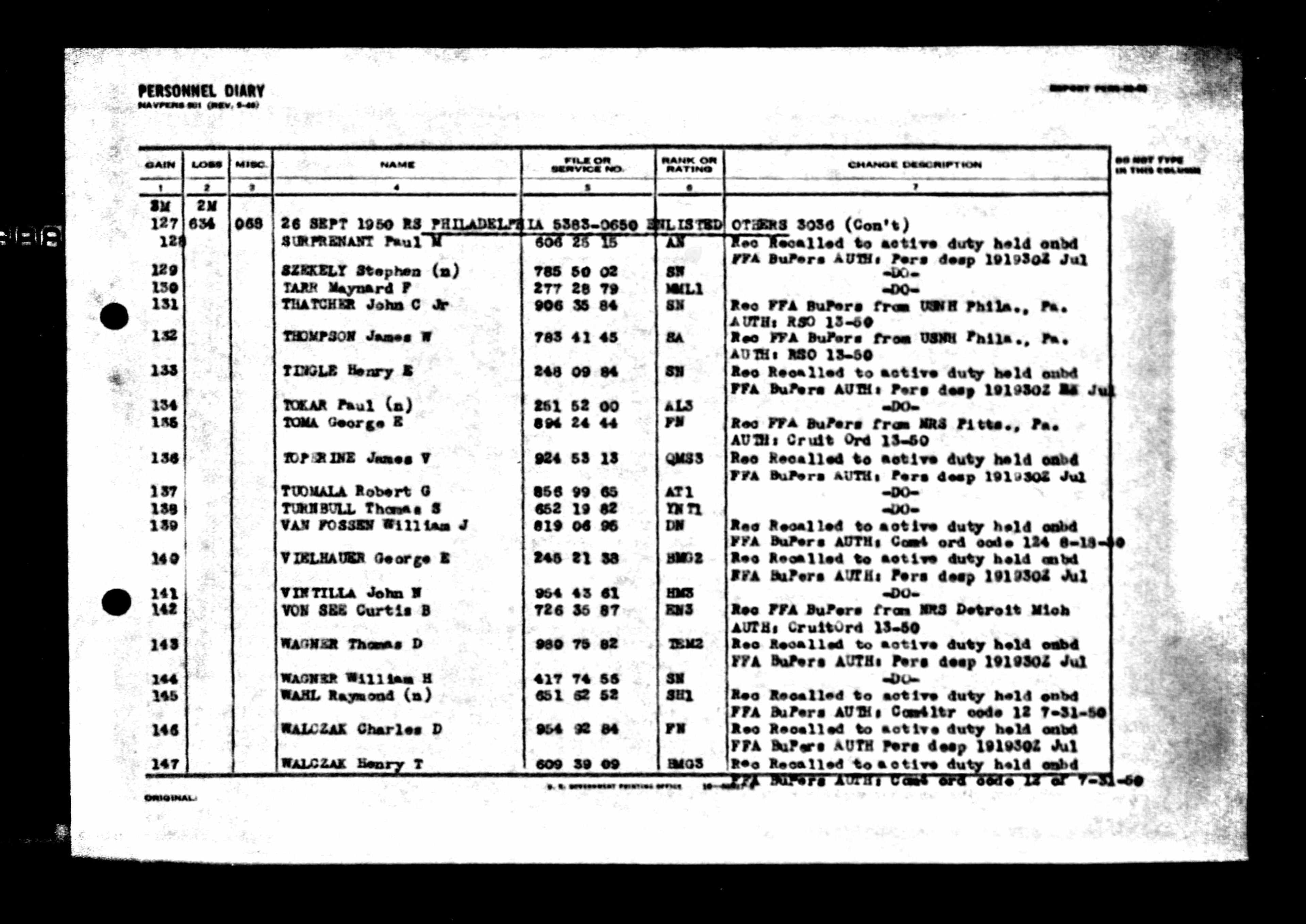
When war broke out on the Korean Peninsula in June 1950, the Navy once again required experienced sailors. On September 26, 1950, George was recalled to active duty as a Boatswain's Mate Second Class at the Naval Receiving Station in Philadelphia.
On October 6, 1950, he was received for duty at the Philadelphia Naval Shipyard. Personnel records from February and May 1951 continue to document George at the Philadelphia Naval Shipyard. During this period, his rating appears in Navy records as BMG2, while he remained a second-class petty officer in the Boatswain's Mate field and a member of the United States Naval Reserve.
Unlike his World War II service, the records discovered thus far do not indicate that George deployed to Korea. Instead, the available documentation places him on active duty at the Philadelphia Naval Shipyard during the Korean War era.
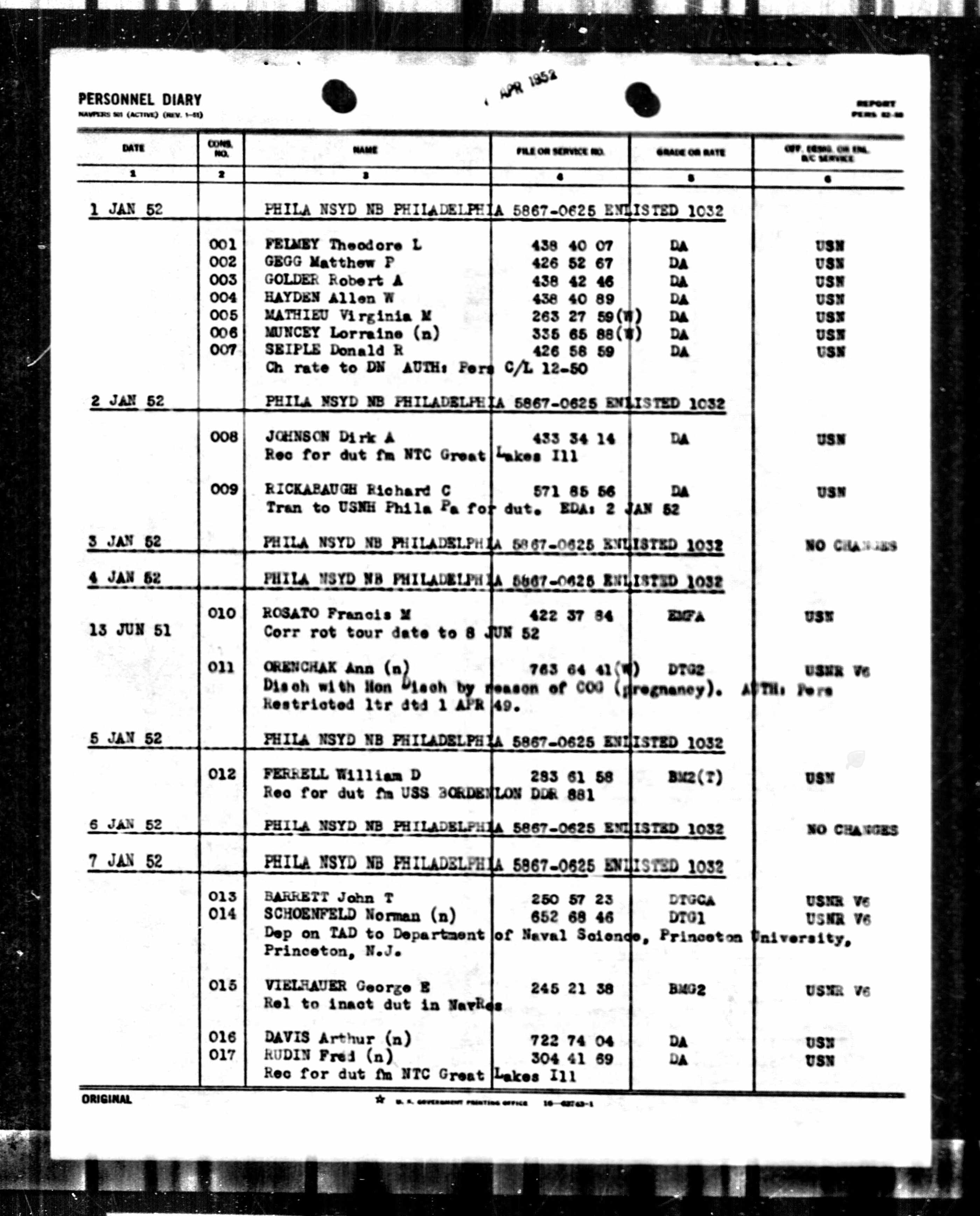
A September 1951 personnel action changed his anticipated separation month to January 1952. Finally, on January 7, 1952, a Philadelphia Naval Shipyard personnel diary recorded: "Released to inactive duty in Naval Reserve." After approximately fifteen months of recalled active service, George returned once more to inactive reserve status.
Returning Home
George's release from active duty on January 7, 1952, closed another chapter in a Navy story that had begun nearly nine years earlier when a seventeen-year-old from Pennsylvania reported for training at Bainbridge.
His naval career had taken him aboard the battleship USS Arkansas (BB-33), the patrol craft USS PCS-1379, the dock landing ship USS Fort Mandan (LSD-21), and the repair ship USS Vulcan (AR-5). His records also connect him with Commander, Naval Forces Europe and, following his recall during the Korean War, the Philadelphia Naval Shipyard.
Along the way, George advanced from Apprentice Seaman to Boatswain's Mate Second Class, crossed from the Atlantic to the western Pacific, served during the final campaigns of World War II, remained in uniform during the postwar transition, and answered the Navy's call once again during the Korean War era.
The surviving muster rolls give his service a level of detail that a simple discharge record cannot. They document not only where George served, but also his advancements, transfers, periods of leave, returns to his ships, and the gradual progression of a seventeen-year-old Apprentice Seaman into an experienced second-class petty officer.
His Navy career was not a single wartime chapter. It was a journey that stretched across World War II, the postwar Navy, the Naval Reserve, and the Korean War era.
Family and Civilian Life
While still serving on active duty, George and his first wife, Joan Violet Wren, welcomed their daughter, Susan Iris Vielhauer, on July 19, 1947, in Rhode Island. Following George's return to civilian life, the family eventually settled in Pennsylvania. In the years that followed, George and Joan's marriage ended.
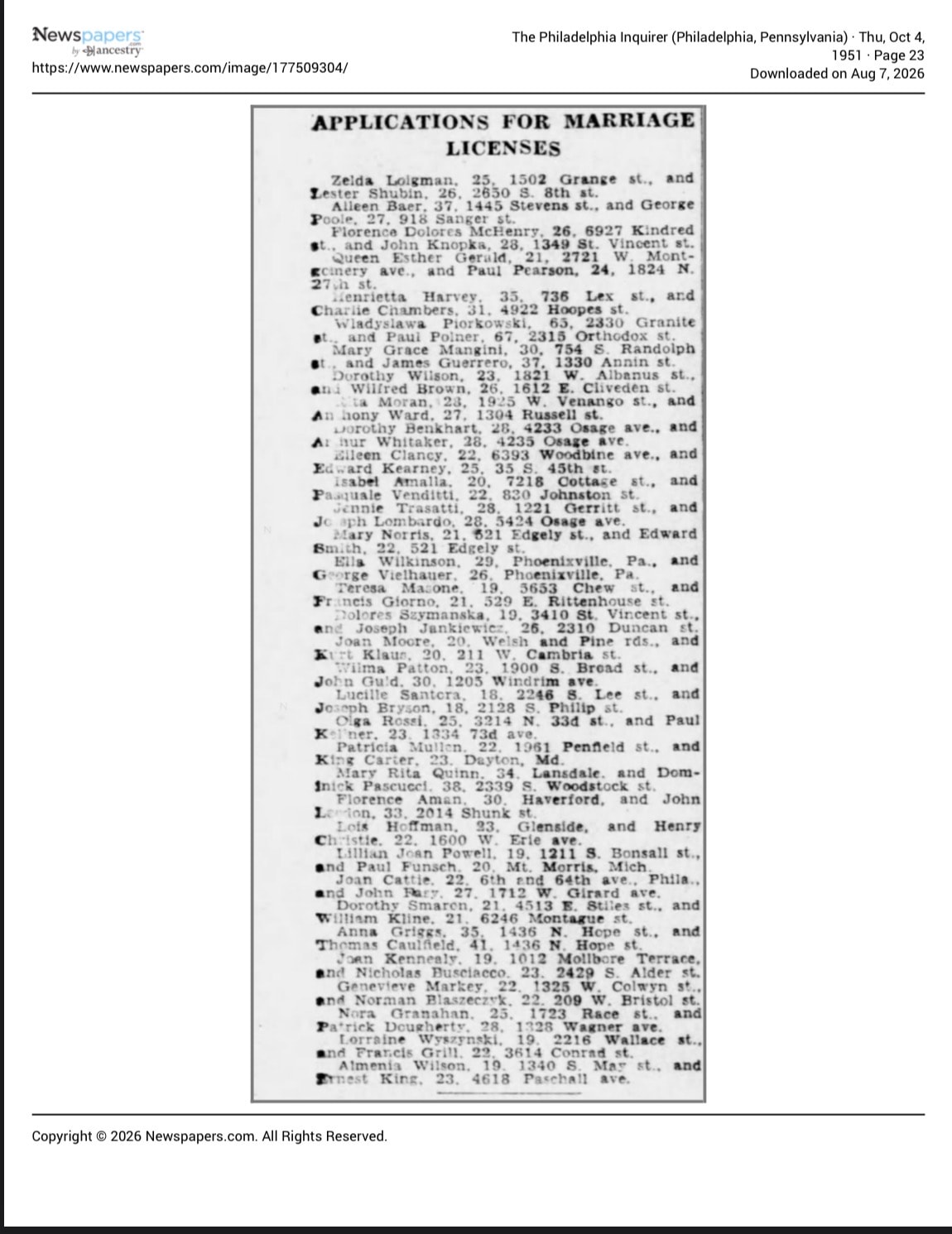
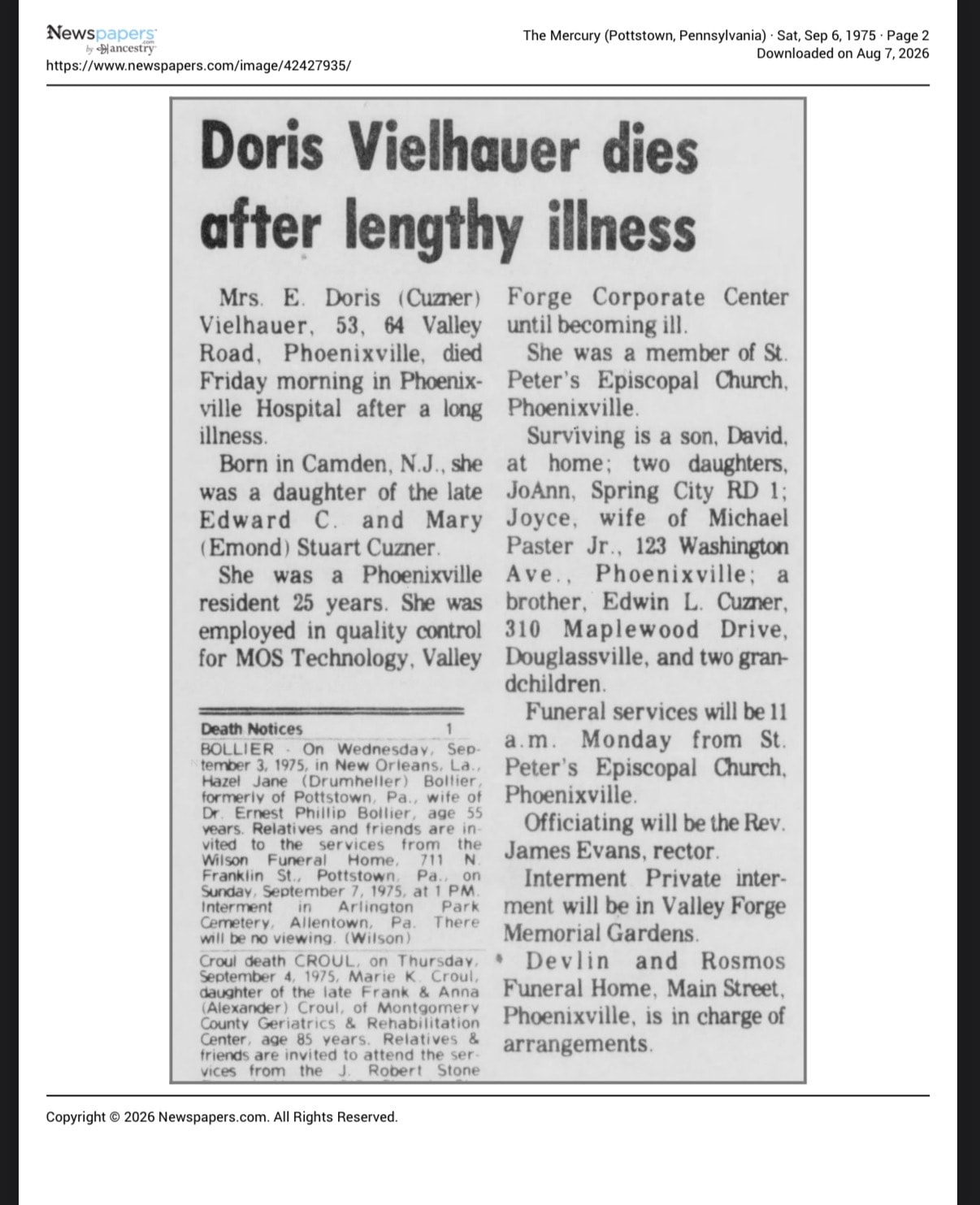
In October 1951, George married Ella Dorris Cuzner (January 2, 1922 – September 5, 1975), who also appears in records under the surnames Wilkinson, Stuart, and Vielhauer. A family photograph of "Susan and Joyce" suggests that Ella's daughter, Joyce C. Wilkinson (Paster), became part of George's life during this period.
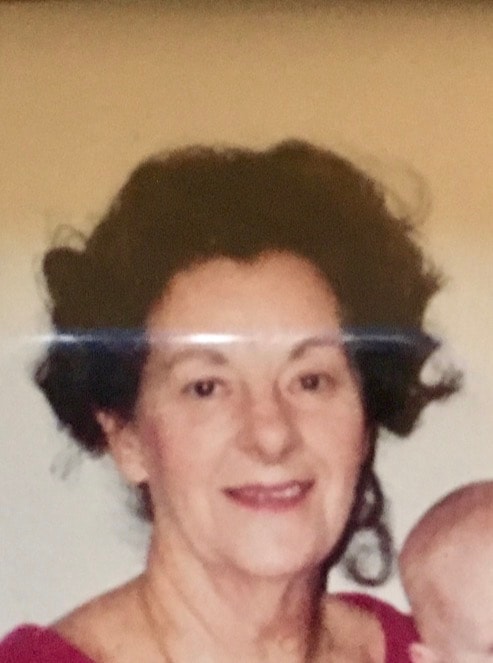
George and Ella had two children together: Joann A. Vielhauer, born December 28, 1952, and David Charles Vielhauer, born September 15, 1955. Ella's 1975 obituary later identified David, JoAnn, and Joyce among her surviving children, providing additional documentation of the family.
George and Ella's years together also appear to have included periods of financial difficulty. In 1958, property belonging to George and Ella was seized in execution and advertised for sale by the Montgomery County sheriff. The notice identified them as husband and wife, providing evidence that their marriage continued at least into that year. Their marriage later ended, although additional research is ongoing to establish the circumstances and date of their separation or divorce.
George later married Mollyo Hallman (May 3, 1924 – July 1990), with whom he spent the remainder of his life. Before her marriage to George, Mollyo had married Corporal Howard Colwell in July 1944. Mollyo and Howard had a daughter, Dorothey Louise Suzanne Colwell (1952–1958), who tragically died of leukemia at just six years old.
George and Mollyo made their home in Montgomery County, Pennsylvania, where George worked in several civilian occupations, including as a laborer and later as a hairdresser at Pennhurst State School.
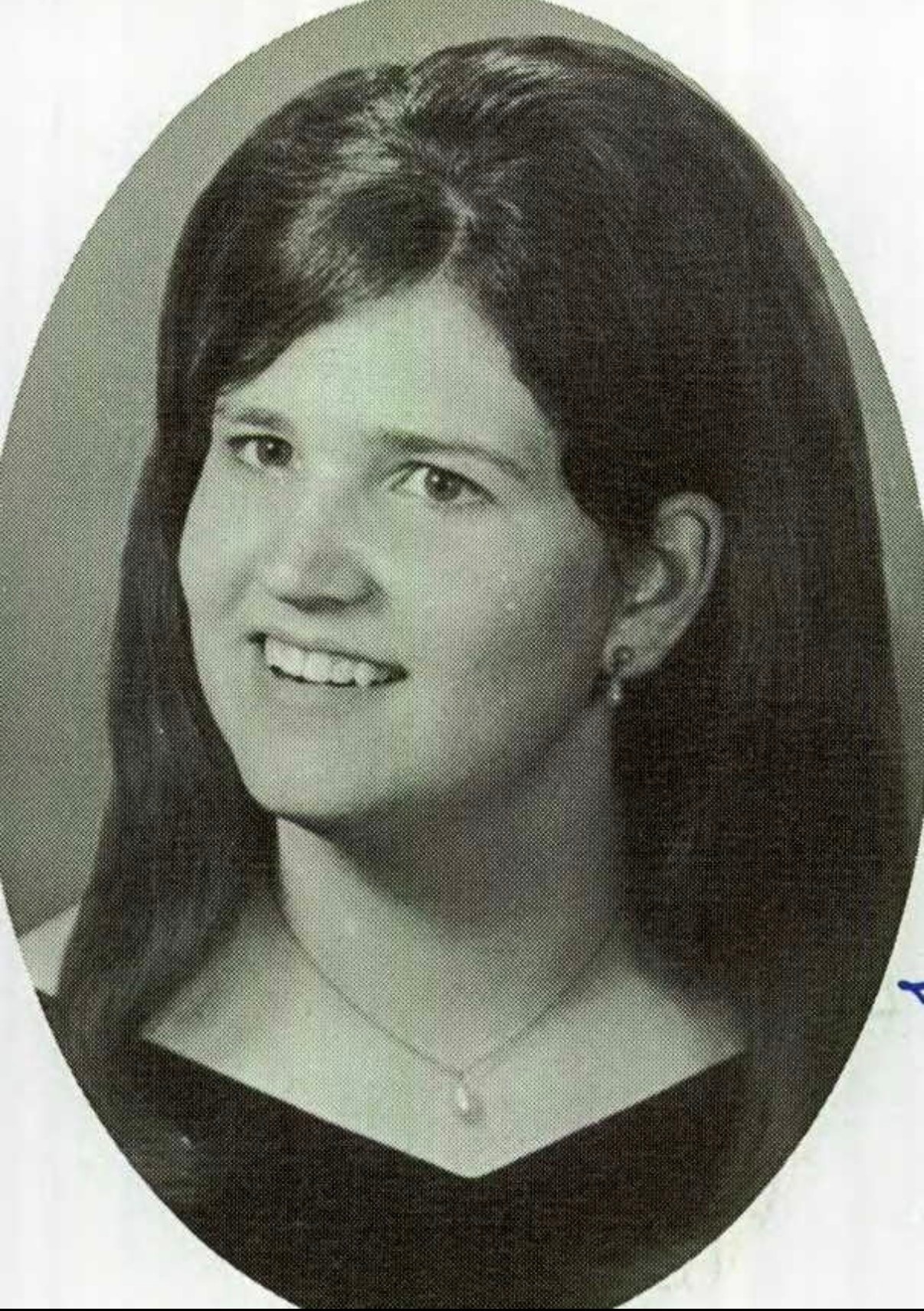
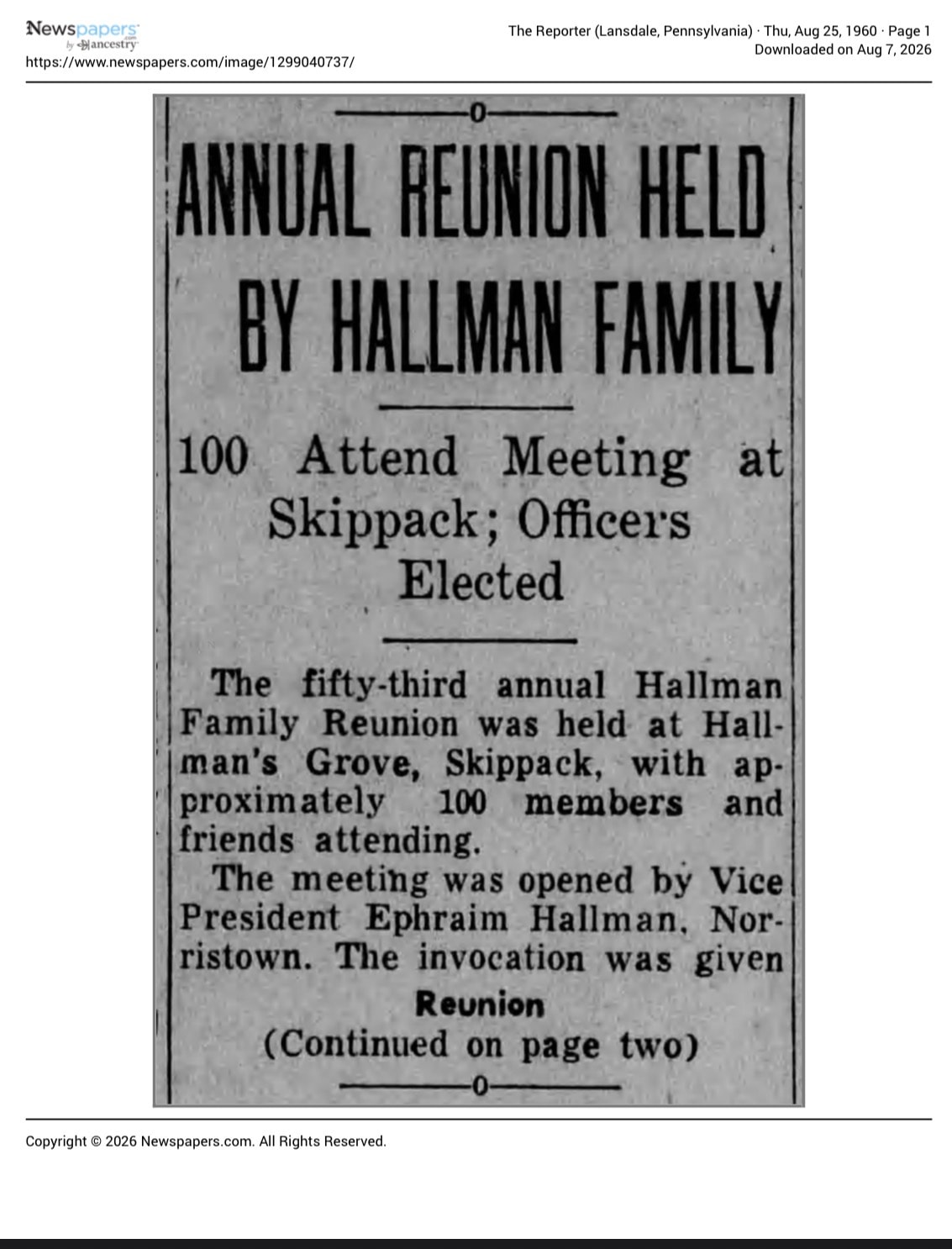
George and Mollyo welcomed a daughter, Sharon Vielhauer, in 1960. A Hallman family reunion publication from that year identified twelve-week-old Sharon as the reunion's youngest family member, providing contemporary evidence of her place within the family.
His Wives
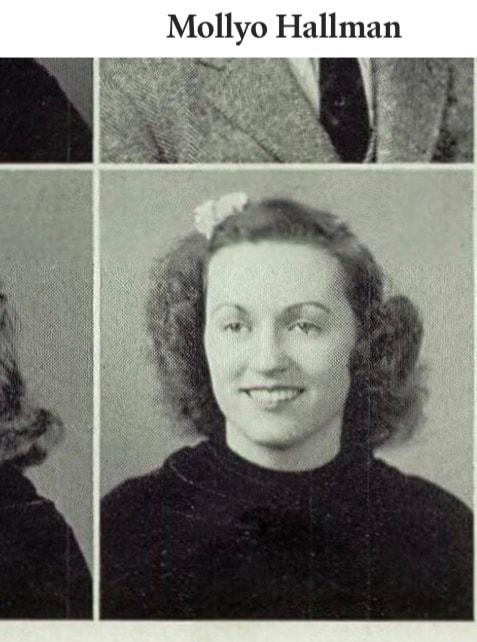
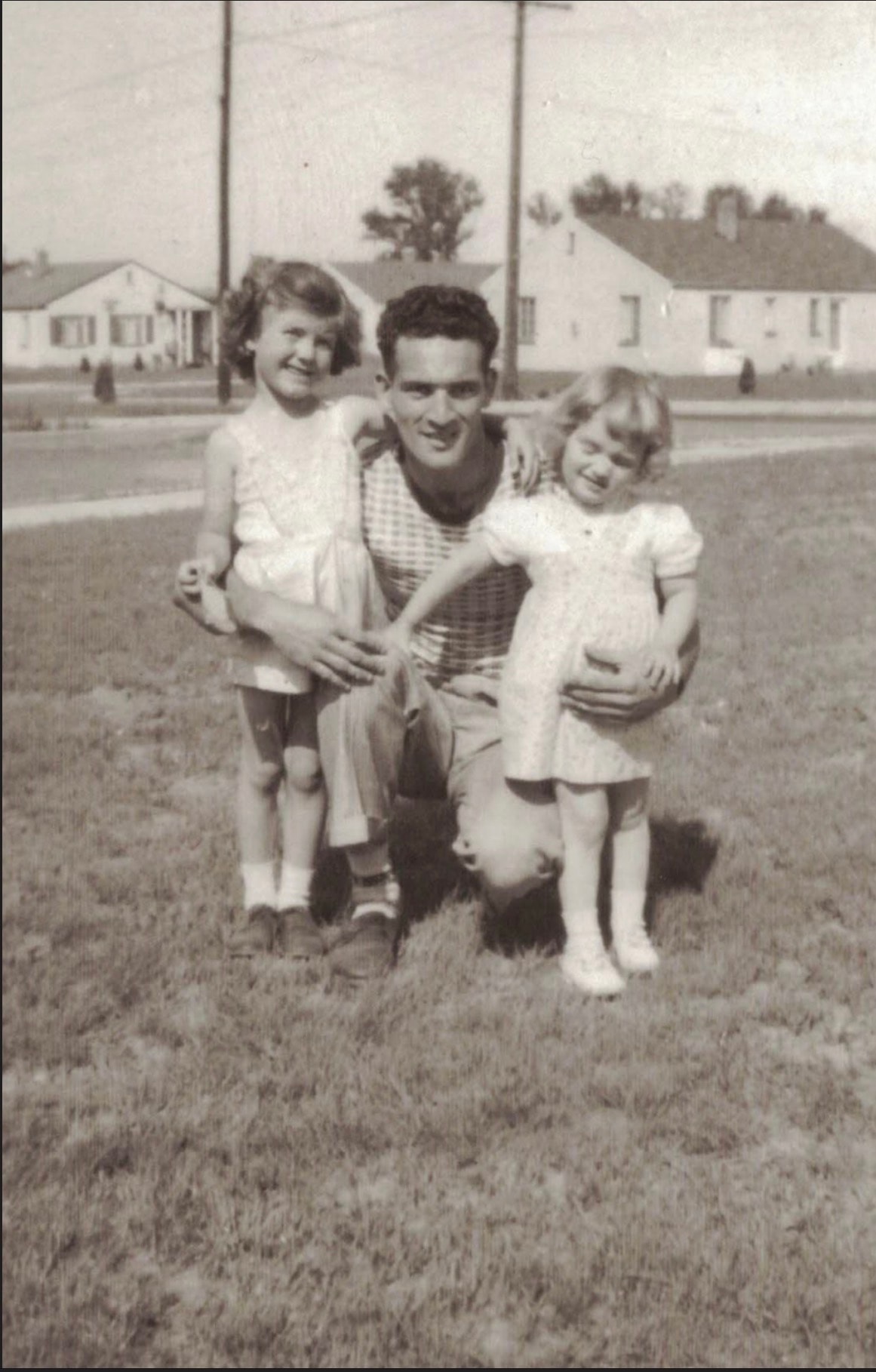
His Daughters
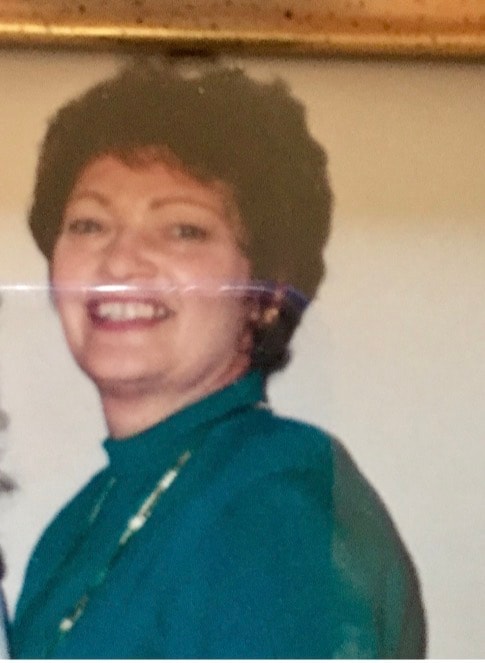
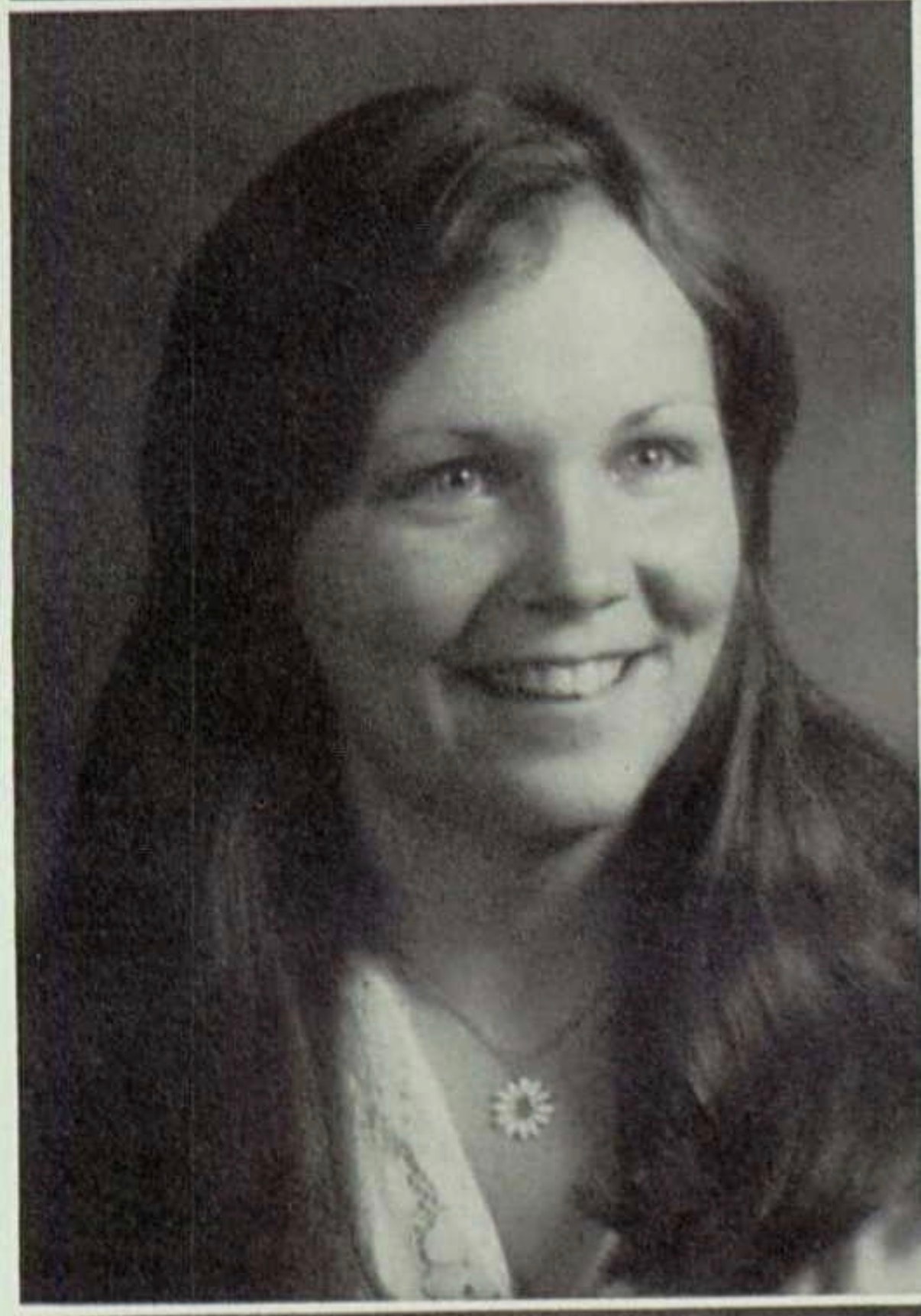
The Reporter · Lansdale, Pennsylvania · August 25, 1960
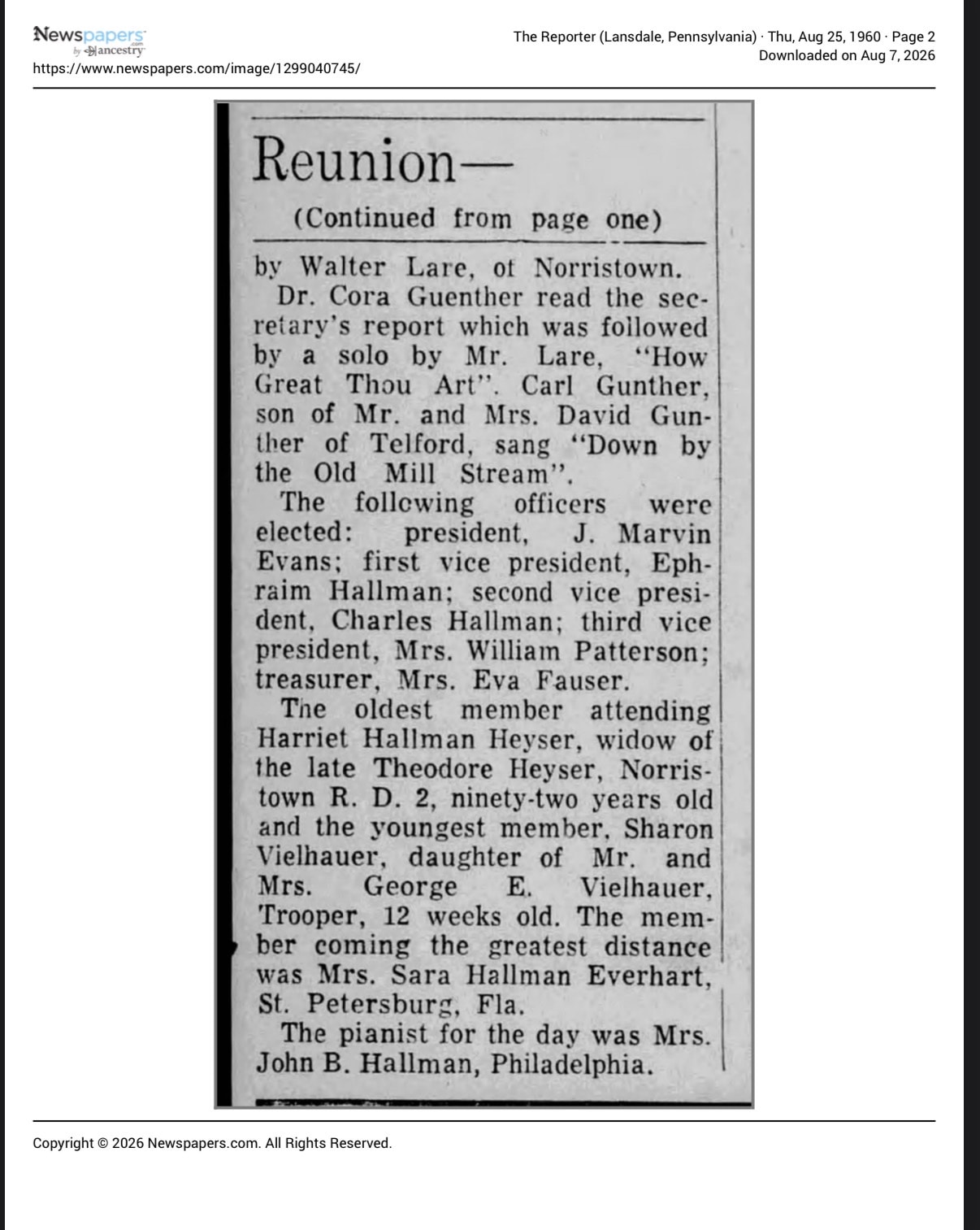
Research Documentation
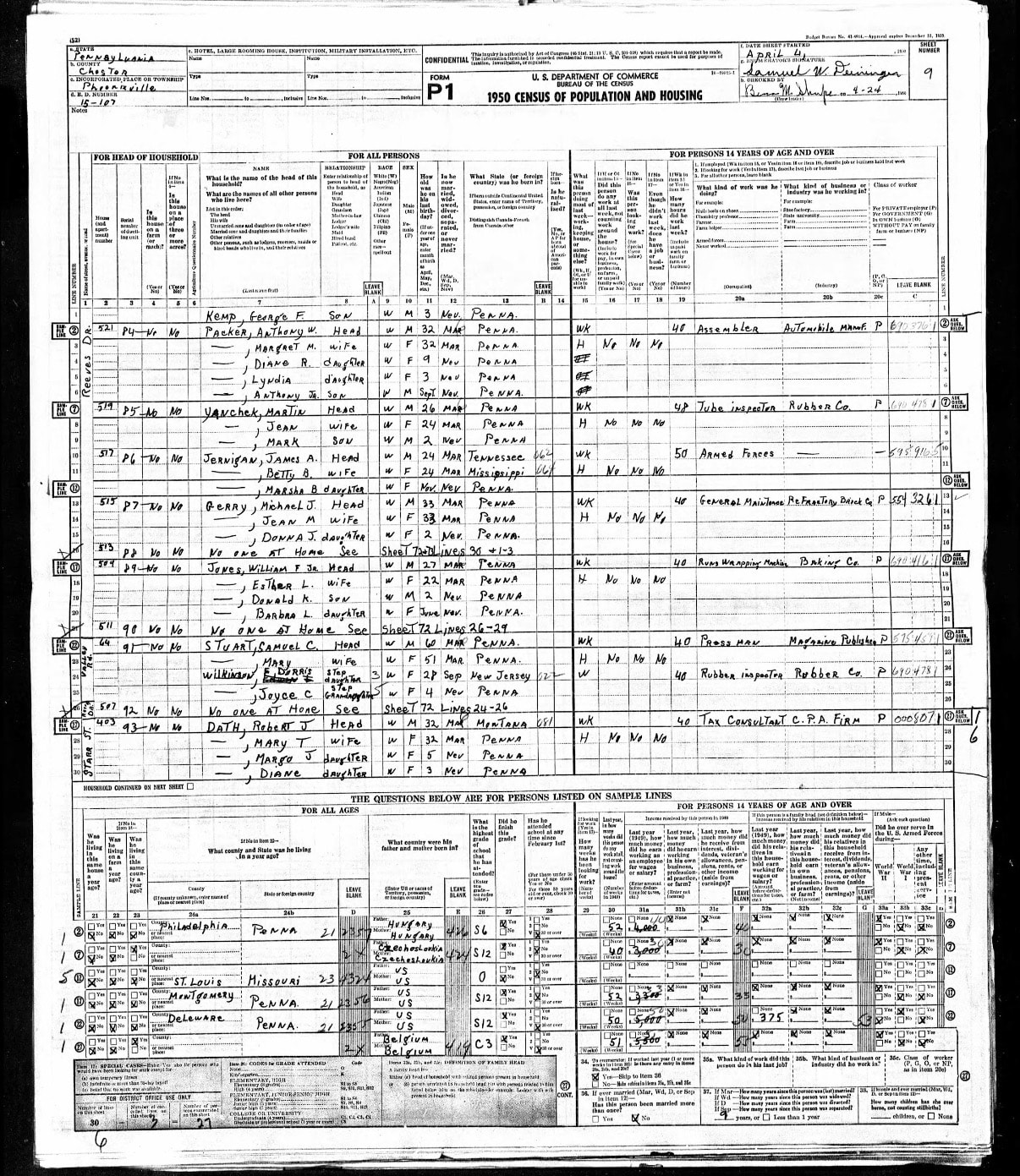
Personal Challenges
George's life also included periods of personal and legal difficulty, some of which began before his military service.
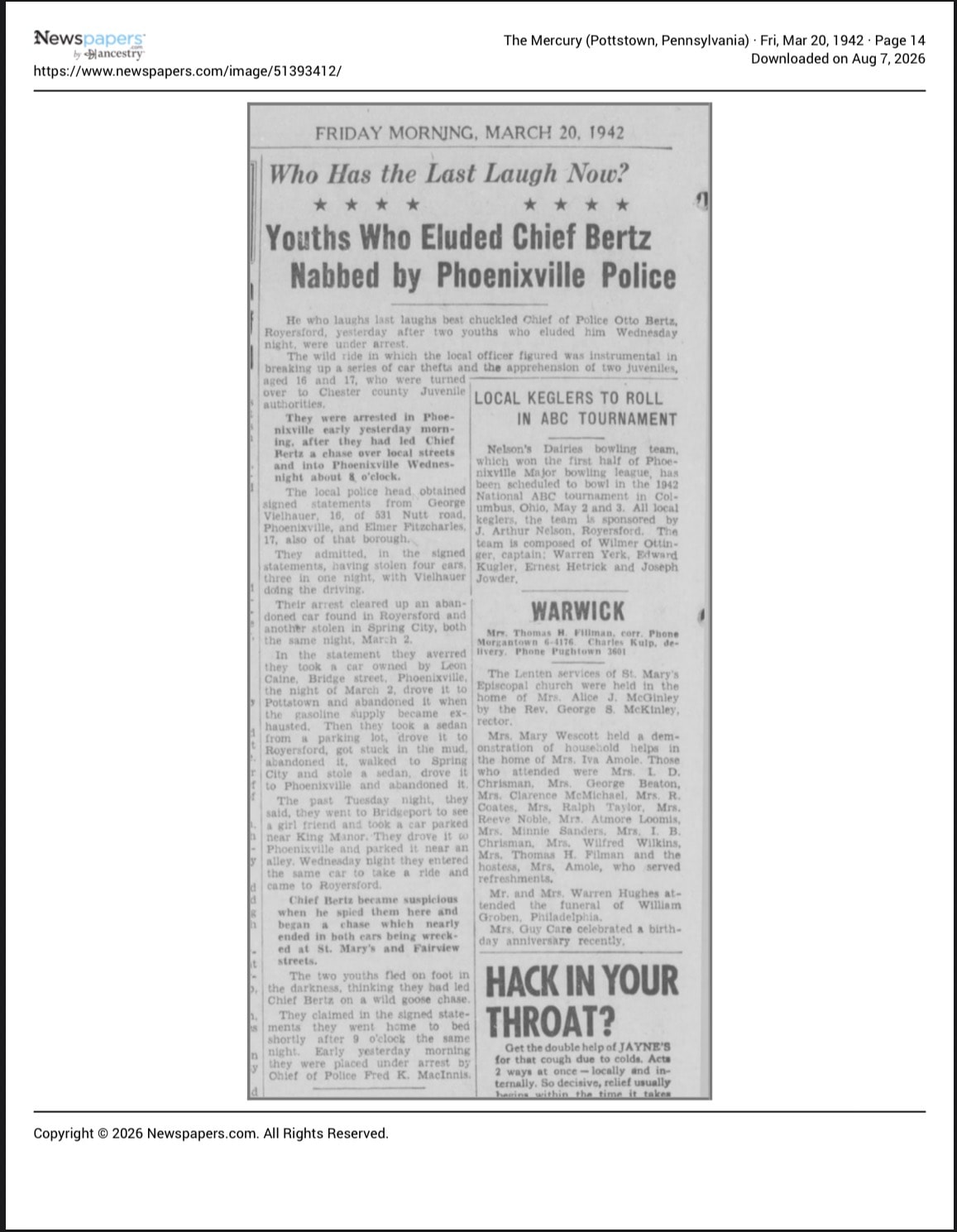
In March 1942, when George was just sixteen years old, a Phoenixville newspaper reported that he and another teenager had been arrested after a series of automobile thefts. According to the contemporary account, the two youths admitted in signed statements to taking four automobiles over the course of three nights, driving them and later abandoning them. George was subsequently turned over to Chester County juvenile authorities.
Just eleven months later, at seventeen, George enlisted in the United States Navy and began the nearly five years of honorable wartime service documented in his military records.
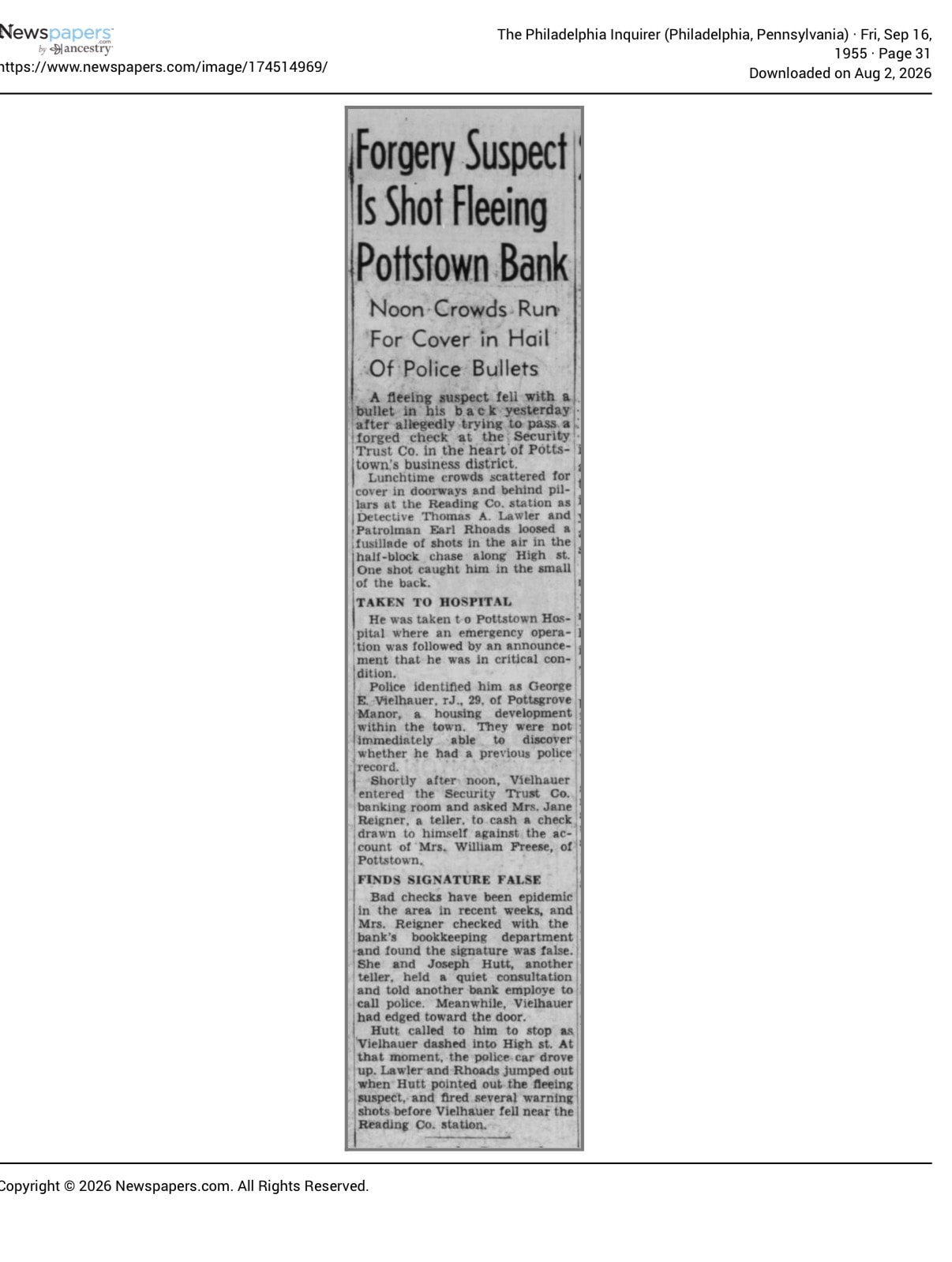
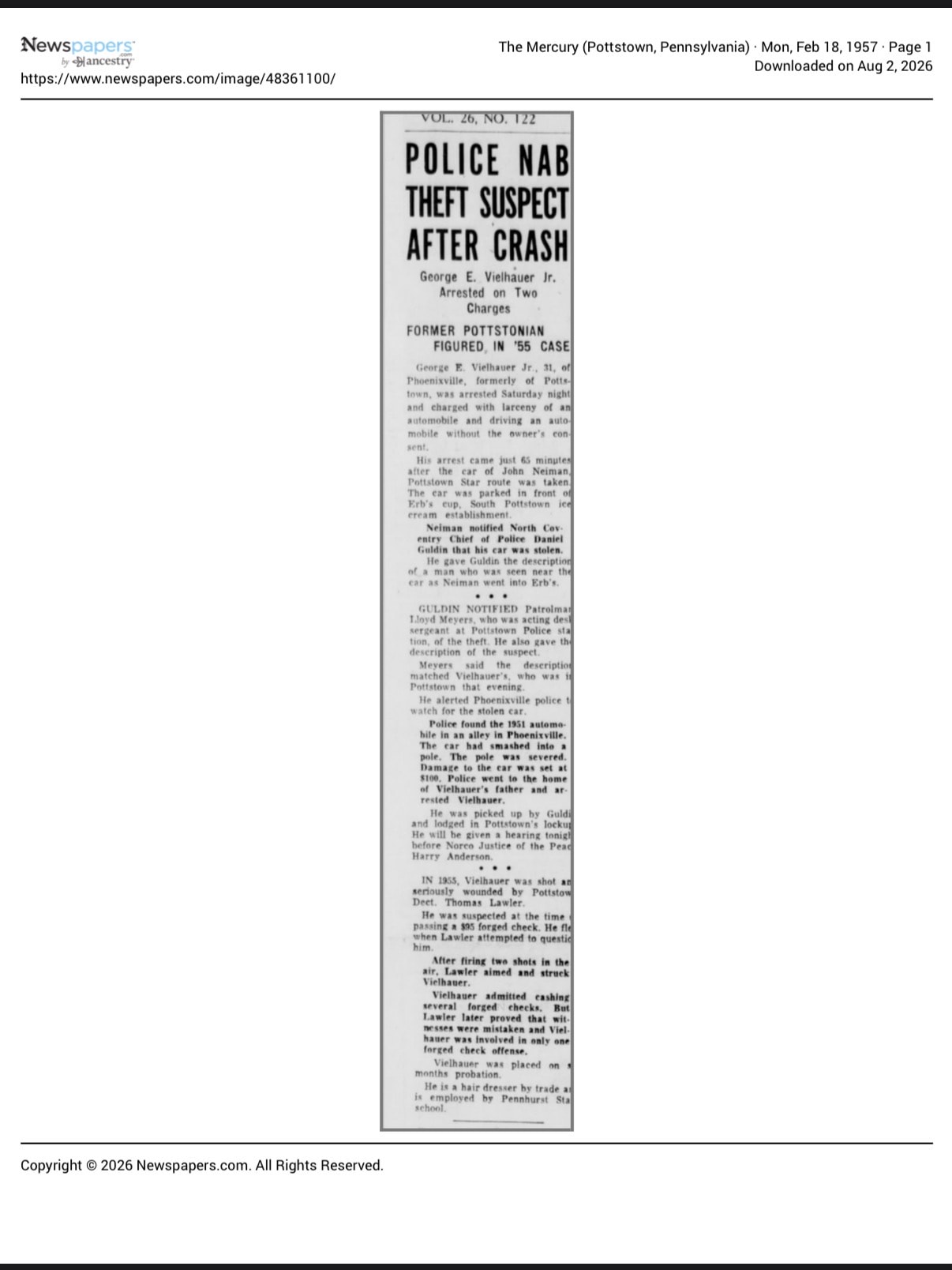
George encountered further difficulties after returning to civilian life. Newspaper accounts from the mid-1950s documented legal troubles involving a forged-check investigation and a later automobile theft conviction. During one incident, George was seriously wounded after being shot by police while fleeing. Later newspaper reporting indicated that his involvement in the forged-check investigation was limited to a single offense, for which he received probation. He later pleaded guilty to an automobile larceny charge.
Records also show that George was among area motorists whose driving privileges were revoked or suspended in March 1955, although the available newspaper notice does not clearly identify the specific reason for the action against him.
These events form a difficult but documented part of George's story. They existed alongside nearly five years of honorable service in the United States Navy, his family life, civilian work, and the other experiences that shaped his forty-one years. Preserving his history means acknowledging both his accomplishments and his struggles without allowing either to erase the other.
Final Years
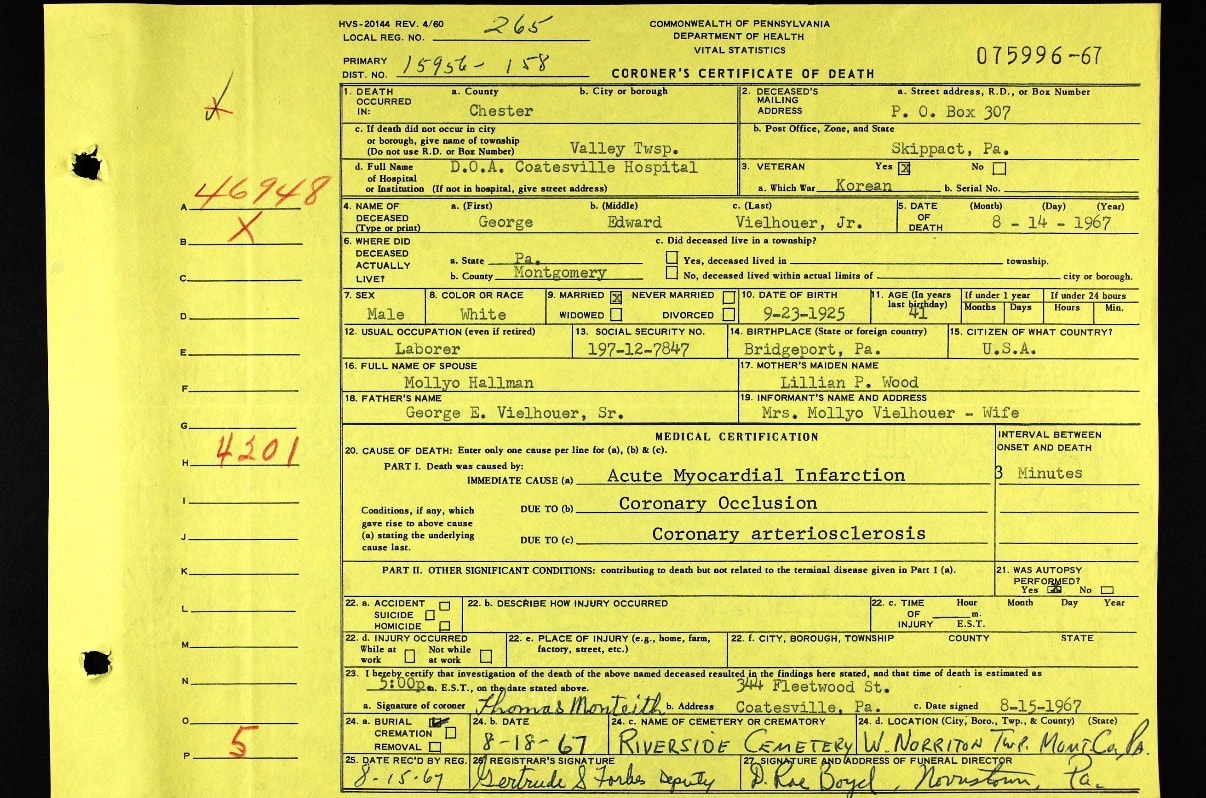
George Edward Vielhauer died on August 14, 1967, at just 41 years of age, after suffering a fatal heart attack caused by coronary artery disease.
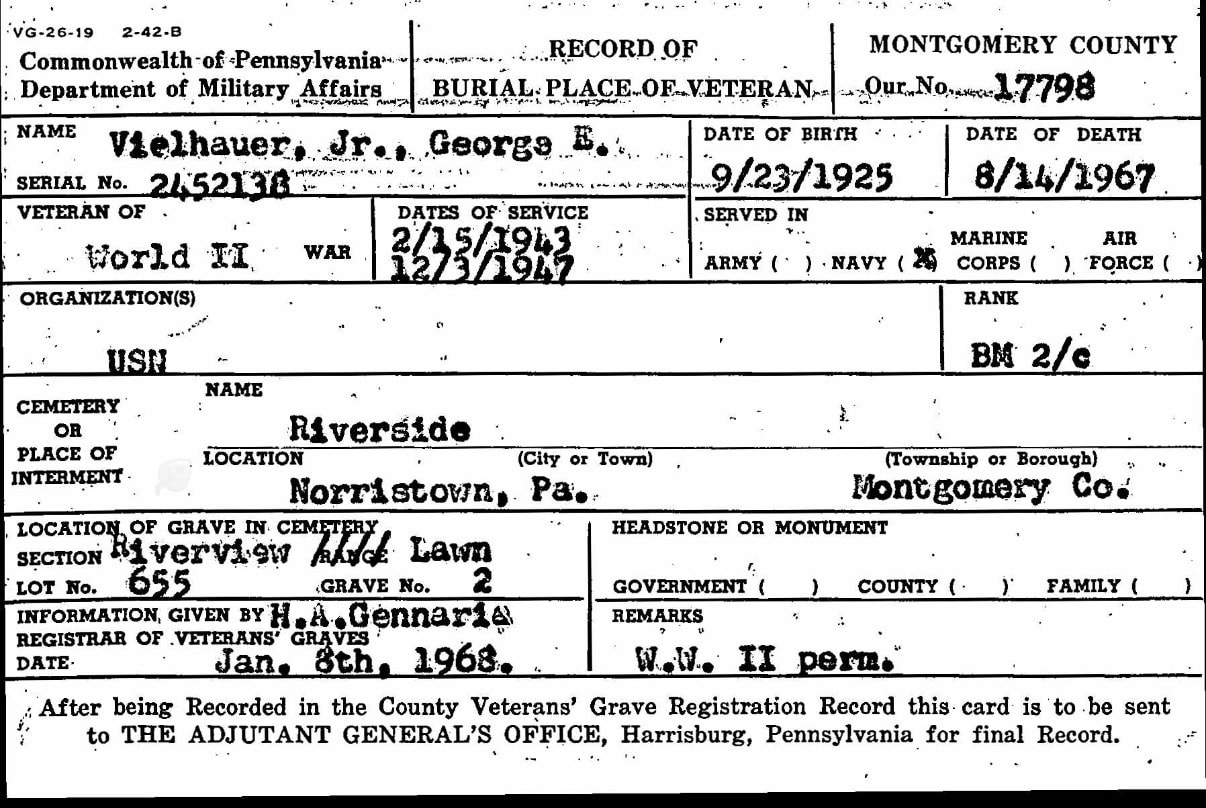
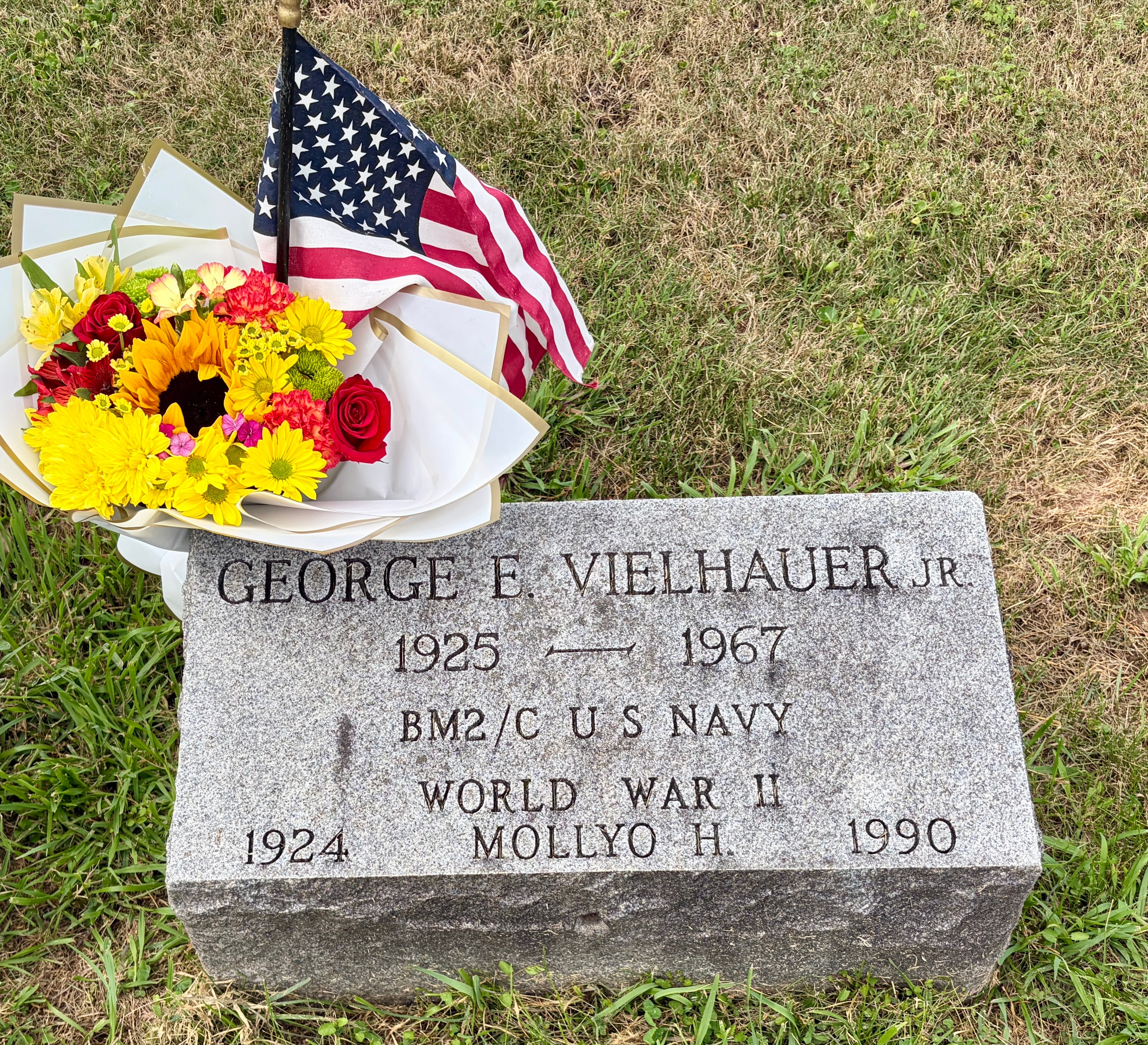
He was laid to rest at Riverside Cemetery in West Norriton Township, Pennsylvania, where his military service is recognized among the veterans of World War II.
At the time of his death, George left behind his children, including Susan Iris Vielhauer, Joann A. Vielhauer, David Charles Vielhauer, and Sharon Vielhauer. His family continued into later generations, carrying forward a life story that, for decades, remained scattered across military records, family photographs, newspapers, and public records.
Legacy
Family photographs and records connected to George's daughter, Susan Iris Vielhauer, later Vecere and Conway (1947–2025), have helped reconstruct her father's story decades after his death. Research has also benefited from records preserved by George's extended family, including descendants of his brother Charles, whose family history has helped confirm portions of the Vielhauer family narrative. Today, George's legacy continues through later generations of his family.
George Edward Vielhauer's life reminds us that history is made not of perfect people, but of real people. His forty-one years encompassed tragedy, military service, family, accomplishment, and hardship. By preserving both his accomplishments and his struggles, we gain a fuller understanding of the man behind the uniform.
Through The Last Watch Project, George's story has been preserved so that future generations may remember not only the sailor who served during World War II, but the son, brother, husband, father, and Pennsylvanian whose life reflected both the triumphs and challenges of his era.
How This Story Was Recovered
This biography was reconstructed through a combination of military records, government documents, historical archives, genealogical research, newspaper collections, and the preserved artifact that started it all — a copy of The Bluejackets' Manual with George's name written inside.
Military Records
U.S. Navy Muster Rolls and Reports of Changes · Fold3 Military Records Collection · National Archives and Records Administration (NARA) · Naval History and Heritage Command · BIRLS Veteran Records · USS Arkansas BB-33 · USS Vulcan AR-5 · USS PCS-1379 service records
Government Records
1930–1950 United States Federal Census Records · World War II Draft Registration Records · Maryland vital records
Genealogical Research
Ancestry.com · FamilySearch · Find A Grave · Cemetery and burial records · Baltimore city directories · Family history documentation
Newspapers & Historical Sources
Newspapers.com · Baltimore Sun archives · Obituaries and community notices
Artifacts & Personal Materials
The Bluejackets' Manual, 1944 edition — with George Edward Vielhauer's name and Baltimore address written inside the front cover
Family Photographs
Personal photographs of George Edward Vielhauer Jr. preserved by family — including his Navy portrait and additional images used throughout this biography
Research Note
This biography reflects the best available evidence at the time of publication. Some aspects of George Edward Vielhauer's postwar family life remain under active research. As additional records become available, this biography may be updated to reflect newly documented information.
George Edward Vielhauer Jr.
September 23, 1925 – August 14, 1967
Boatswain's Mate Second Class · United States Navy · World War II
Share His Story
Research Disclaimer: The biography and historical narrative presented on this page are based on publicly available records, documents, and information provided at the time of research. While every effort has been made to ensure accuracy, The Last Watch Project cannot guarantee that all details are complete or entirely correct. Records may be incomplete, transcribed with errors, or subject to differing interpretations. This biography represents our best understanding of the veteran's life based on available evidence and should be regarded as an informed reconstruction, not a definitive historical record.